
NHTSA ID Number: 10163521
Manufacturer Communication Number: 16-121-19R
Summary
This bulletin provides a procedure for addressing a limited number of concerns involving a tapping-type sound originating from the area where the engine and CVT are joined. On affected vehicles, the sound can be heard easiest after the engine is fully warmed up.
6 Affected Products
Vehicles
INTRODUCTION:
This bulletin provides a procedure for addressing a limited number of concerns involving a tapping -type sound originating from the area where the engine and CVT are joined. On affected vehicles, the sound can be heard easiest after the engine is fully warmed up.
SERVICE PROCEDURE / INFORMATION:
REMINDER: Customer satisfaction and retention starts with performing quality repairs. Always refer to the applicable Service Manual and review the full requirements of the repair being performed. The Service Manual procedures contain information critical to performing an effective repair the first time and every time. This includes but is not limited to: important SAFETY precautions, proper inspection criteria, necessary special tools, required processes and related onetime-use parts needed for a complete and lasting repair.
This procedure involves removing the 6 (six) converter to drive plate bolts, rotating the drive plate 180 degrees on the converter and re-securing / torqueing the bolts.
Step 1: Confirm the customer’s concern. The sound will not be heard after starting a cold engine. As the engine warms up, the sound will become louder and easier to duplicate.
IMPORTANT: The engine oil temperature must be up to at least 100 degrees C (212 F) or higher.
Step 2: After confirming the sound, remove the v-belt following the procedure in the applicable Service Manual and restart the engine to confirm the sound persists. If the sound is no longer present, proceed to Step 3.
Step 3: Record the customer’s radio station presets (and Navigation favorites where applicable) then disconnect the negative (ground) cable from the battery sensor.
Step 4: Remove / disconnect the necessary components to gain access to the rubber service hole plug in the top of the converter housing and the 6-torque converter retaining bolts.
Step 5: Locate the small ignition timing mark on the back edge of the crankshaft pulley as shown below (Fig. 1). Put a mark with a grease pencil or use a small piece of tape 180 degrees opposite of the timing mark for reference. As a general guideline, this mark should approximately align with the 30 degrees before TDC mark on the timing chain cover (Fig. 2) and will be much easier to see and refer to than the timing mark.
Step 10: With the torque converter now loose from the drive plate, rotate the crankshaft pulley 180 degrees from the initial starting point when the additional Reference Mark was applied to it and, the paint mark was applied to the drive plate and torque converter as shown in Steps 5 and 7. The paint mark on the torque converter (NOT the paint mark on the drive plate) should be visible at the service hole. The goal is to have the drive plate 180 degrees from the original position on the torque converter.
Step 11: Align the first torque converter bolt hole with the drive plate and reinstall the first bolt fully but DO NOT tighten it. Rotate the crankshaft pulley (in the direction of engine rotation) and install the remaining 5 bolts. Once all 6 bolts are installed, torque all to 25Nm (18.4 ft. lbs.).
Step 12: Reinstall any components removed to access the rubber service hole plug in reverse order of removal.
Step 13: Reconnect the battery ground cable, torque the nut to 7.5 Nm (5.5 ft. lbs. or 66 inch-lbs.) and start the engine to confirm the repair.
Step 14: Reset the customer’s radio station presets (and Navigation favorites where applicable) to complete the procedure.
SEOCONTENT-START
Bulletin Number: 16-121-19R; Revised: 07/09/19 Page 1 of 3
Continued…
NUMBER: 16-121-19R
DATE: 05/09/19
REVISED: 07/09/19
APPLICABILITY: 2017-19MY Impreza
2017-19MY Crosstrek
SUBJECT: “Tapping” -Type Sound Coming from
Engine to CVT Connection
CAUTION: VEHICLE SERVICING PERFORMED BY UNTRAINED PERSONS COULD
RESULT IN SERIOUS INJURY TO THOSE PERSONS OR TO OTHERS.
Subaru Service Bulletins are intended for use by professional technicians ONLY. They
are written to inform those technicians of conditions that may occur in some vehicles,
or to provide information that could assist in the proper servicing of the vehicle. Properly
trained technicians have the equipment, tools, safety instructions, and know-how to
do the job correctly and safely. If a condition is described, DO NOT assume that this
Service Bulletin applies to your vehicle, or that your vehicle will have that condition.
Subaru of America, Inc. is
ISO 14001 Compliant
ISO 14001 is the international standard for
excellence in Environmental Management
Systems. Please recycle or dispose of
automotive products in a manner that is friendly
to our environment and in accordance with all
local, state and federal laws and regulations.
INTRODUCTION:
This bulletin provides a procedure for addressing a limited number of concerns involving a tapping
-type sound originating from the area where the engine and CVT are joined. On affected vehicles, the
sound can be heard easiest after the engine is fully warmed up.
SERVICE PROCEDURE / INFORMATION:
REMINDER: Customer satisfaction and retention starts with performing quality repairs.
Always refer to the applicable Service Manual and review the full requirements of the repair
being performed. The Service Manual procedures contain information critical to performing an
effective repair the first time and every time. This includes but is not limited to: important SAFETY
precautions, proper inspection criteria, necessary special tools, required processes and related onetime-
use parts needed for a complete and lasting repair.
This procedure involves removing the 6 (six) converter to drive plate bolts, rotating the drive plate
180 degrees on the converter and re-securing / torqueing the bolts.
Step 1: Confirm the customer’s concern. The sound will not be heard after starting a cold engine.
As the engine warms up, the sound will become louder and easier to duplicate. IMPORTANT: The
engine oil temperature must be up to at least 100 degrees C (212 F) or higher.
Step 2: After confirming the sound, remove the v-belt following the procedure in the applicable
Service Manual and restart the engine to confirm the sound persists. If the sound is no longer present,
proceed to Step 3.
SERVICE BULLETIN
ATTENTION:
GENERAL MANAGER q
PARTS MANAGER q
CLAIMS PERSONNEL q
SERVICE MANAGER q
IMPORTANT – All
Service Personnel
Should Read and
Initial in the boxes
provided, right.
©2019 Subaru of America, Inc. All rights reserved.
Bulletin Number: 16-121-19R; Revised: 07/09/19 Page 2 of 3
Continued…
Step 3: Record the customer’s radio station presets (and Navigation
favorites where applicable) then disconnect the negative (ground) cable
from the battery sensor.
Step 4: Remove / disconnect the necessary components to gain access
to the rubber service hole plug in the top of the converter housing and
the 6-torque converter retaining bolts.
Step 5: Locate the small ignition timing mark on the back edge of the crankshaft pulley as shown
below (Fig. 1). Put a mark with a grease pencil or use a small piece of tape 180 degrees opposite of
the timing mark for reference. As a general guideline, this mark should approximately align with the
30 degrees before TDC mark on the timing chain cover (Fig. 2) and will be much easier to see and
refer to than the timing mark.
Fig. 1 Fig. 2
Step 6: Turn the crankshaft pulley (ALWAYS in the direction of engine
rotation) as needed to align the first converter bolt with the service hole.
Step 7: Add a paint mark as shown in Fig. 3 below to “bridge” both the torque
converter and drive plate. This paint mark will be used for reference once all 6
converter bolts have been removed.
Step 8: CAREFULLY remove all 6 torque converter bolts taking extra care to
not drop any of them into the torque converter housing once they are removed.
REMINDER: ALWAYS rotate the crankshaft pulley in the direction of engine
rotation.
Step 9: Once all 6 bolts are removed, rotate the crankshaft pulley and using the
paint mark applied in Step 7, confirm the torque converter remains stationary
and only the drive plate is turning. There is a small possibility the drive plate
and torque converter could be seized together. Use a screw driver or small pry
bar through the service hole to engage the ring gear teeth on the torque converter
while turning the crankshaft pulley to free-up the seizure. If unsuccessful,
remove the starter following the procedure in the applicable Service Manual.
Install the special tool (498277200) to lock the torque converter in position while
turning the crankshaft pulley to free-up the seizure.
Fig. 3
Bulletin Number: 16-121-19R; Revised: 07/09/19 Page 3 of 3
Step 10: With the torque converter now loose from the drive plate, rotate the crankshaft pulley 180
degrees from the initial starting point when the additional Reference Mark was applied to it and,
the paint mark was applied to the drive plate and torque converter as shown in Steps 5 and 7. The
paint mark on the torque converter (NOT the paint mark on the drive plate) should be visible at the
service hole. The goal is to have the drive plate 180 degrees from the original position on the torque
converter.
Step 11: Align the first torque converter bolt hole with the drive plate and reinstall the first bolt fully
but DO NOT tighten it. Rotate the crankshaft pulley (in the direction of engine rotation) and install
the remaining 5 bolts. Once all 6 bolts are installed, torque all to 25Nm (18.4 ft. lbs.).
Step 12: Reinstall any components removed to access the rubber service hole plug in reverse order
of removal.
Step 13: Reconnect the battery ground cable, torque the nut to 7.5 Nm (5.5 ft. lbs. or 66 inch-lbs.)
and start the engine to confirm the repair.
Step 14: Reset the customer’s radio station presets (and Navigation favorites where applicable) to
complete the procedure.
WARRANTY / CLAIM INFORMATION:
For vehicles within the Basic New Car Limited or Powertrain Limited Warranty period or covered by
an active Subaru Added Security Powertrain, Classic or Gold plan, this repair may be submitted using
the following claim information:
Labor Description Labor Operation # Labor Time Fail Code
TORQUE CONVERTER DRIVE PLATE TAPPING SOUND REPAIR A303-128 0.8 LAE-25
IMPORTANT REMINDERS:
• SOA strongly discourages the printing and/or local storage of service information as
previously released information and electronic publications may be updated at any time.
• Always check for any open recalls or campaigns anytime a vehicle is in for servicing.
• Always refer to STIS for the latest service information before performing any repairs.
NUMBER: 16-121-19R
DATE: 05/09/19
REVISED: 07/09/19
NUMBER: 16-121-19
DATE: 05/09/19

- 6 Quarts of genuine Subaru CVTF-II fluid
- SOA427V1660 x6 This is green fluid
- 2013-2019 Crosstrek with CVT NON HYBRID, 2014-2016 Crosstrek CVT HYBRID
- 2014-2023 Forester 2.5 Naturally Aspirated with CVT NON TURBO (NOT FOR WILDERNESS)
- 2010-2019 Legacy 2.5 FB25 with CVT, 2010-2014 Legacy 3.6 with CVT, 2010-2019 Outback 2.5 FB25 with CVT, 2010-2014 Outback 3.6 with CVT, 2012-2023 Impreza 2.0 non turbo with CVT

- [Fine Tune Your Vehicle]: Automatic and manual transmission fluid provides hydraulic pressure, lubrication, and friction to your vehicle’s engine; Use the Idemitsu CVT Type SB2 CVT Transmission Fluids 5 Quart Bottle to top off your vehicle and keep you on the road longer
- [Smoother Shifting]: Continuously variable transmission oil will help your gears shift properly to prevent hard or jerky shifting; Designed with frictional properties for superior performance and high torque
- [Extend Engine Life]: Precisely engineered transmission CVT fluid resists buildup; Anti-wear technology protects your belts, gears, and pullies, while high viscosity properties withstand intense temperatures
- [For Your Vehicle]: SB2 CVT fluid is compatible with Subaru TR580 transmissions; Refer to owner manual specifics to ensure compatibility; CVT transmission oil is crafted to meet Type CVTF-II specifications
- [Contents]: Vehicle lubricant package includes 1 bottle of Idemitsu SB2 CVT oil transmission fluid; 1 bottle of 5 quart (4.7L) CVT trans fluid makes refilling your vehicle more convenient

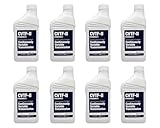
- 8 Quarts of genuine Subaru CVTF-II fluid
- SOA427V1660 x8 This is green fluid
- 2013-2019 Crosstrek with CVT non hybrid, 2014-2016 Crosstrek CVT hybrid
- 2014-2023 Forester 2.5 Naturally Aspirated with CVT non turbo (not for wilderness)
- 2010-2019 Legacy 2.5 FB25 with CVT, 2010-2014 Legacy 3.6 with CVT, 2010-2019 Outback 2.5 FB25 with CVT, 2010-2014 Outback 3.6 with CVT, 2012-2023 Impreza 2.0 non turbo with CVT

- WIDE CVT FIT – NS-3, NS-2, CVTF-II, HCF-2 & CVT FE: Full synthetic CVT transmission fluid formulated for a broad range of belt- and chain-driven CVTs. Compatible with applications requiring Nissan NS-3 / NS-2, Subaru CVTF-II, Lineartronic, Honda HCF-2, Toyota CVT FE, Mitsubishi J4 and many other major CVT fluid specifications.
- ONE FLUID FOR ASIAN, EUROPEAN & DOMESTIC CVTs: Designed for use across a wide range of Nissan, Subaru, Honda, Toyota, Mitsubishi, Hyundai, Kia, BMW, MINI, Mercedes-Benz, Audi, VW and other CVT-equipped vehicles. Helps simplify fluid selection while delivering the friction characteristics required by modern CVT systems
- SMOOTH, QUIET, NON-SLIP PERFORMANCE: Advanced friction control helps reduce CVT shudder, slipping, hesitation and transmission noise while maintaining consistent belt or chain engagement. Delivers smooth acceleration and stable operation across the full CVT operating range.
- FULL SYNTHETIC HIGH-PERFORMANCE FORMULA: Engineered for excellent shear stability, oxidation resistance and film strength under demanding CVT operating conditions. Helps protect belts, chains, pulleys, bearings and other internal components from wear and fluid breakdown.
- ALL-SEASON PROTECTION FROM -40°F TO 230°F: Maintains fluidity during extreme cold starts while providing dependable lubrication and friction stability at elevated operating temperatures. Built for year-round use in severe driving, highway, stop-and-go and high-temperature conditions
This product presentation was made with AAWP plugin.