
January 2, 2020 NHTSA CAMPAIGN NUMBER: 20V002000
Passenger Frontal Air Bag Inflator May Explode
An inflator explosion may result in sharp metal fragments striking the driver or other occupants resulting in serious injury or death.
NHTSA Campaign Number: 20V002
Manufacturer Subaru of America, Inc.
Components AIR BAGS
Potential Number of Units Affected 127,547
Summary
Subaru of America, Inc. (Subaru) is recalling certain 2009-2013 Forester, 2003-2006 Baja, 2004-2011 Impreza, 2004-2014 WRX (including STI), 2003-2014 Legacy and Outback, and 2006 Saab 9-2X vehicles originally sold, or ever registered, in the states of Arizona, Arkansas, Delaware, District of Columbia, Illinois, Indiana, Kansas, Kentucky, Maryland, Missouri, Nebraska, Nevada, New Jersey, New Mexico, North Carolina, Ohio, Oklahoma, Pennsylvania, Tennessee, Virginia, and West Virginia or “Zone B.”
These vehicles had their passenger frontal air bag inflators previously replaced under a prior recall using inflators of the same design. The inflators may explode due to propellant degradation occurring after long-term exposure to high absolute humidity, temperature and temperature cycling.
Remedy
Subaru will notify their owners. General Motors will notify Saab owners. Dealers will replace the passenger air bag inflators, free of charge. The recall began January 7, 2020. Subaru owners may contact Subaru customer service at 1-844-373-6614. Saab owners may contact the Saab Customer Assistance Center at 1-800-955-9007. Subaru’s number for this recall is TKB-20.
Notes
Owners may also contact the National Highway Traffic Safety Administration Vehicle Safety Hotline at 1-888-327-4236 (TTY 1-800-424-9153), or go to www.safercar.gov.
Check if your Subaru has a Recall
NUMBERS:
TKA-20R
TKB-20R
TKC-20R
DATE: 01/06/20
REVISED: 05/02/23
NHTSA ID:
20V001
20V002
20V003
| APPLICABILITY: | 2003-14 MY Legacy |
| 2003-14 MY Outback | |
| 2003-06 MY Baja | |
| 2009-13 MY Forester | |
| 2004-11 MY lmpreza | |
| 2004-14 MY WRX and STI | |
| SUBJECT: | Takata Front Passenger Airbag Module/ lnflator “Like for Like” Recall |
SUBARU OF AMERICA, INC. has determined that a defect, which relates to motor vehicle safety, exists in certain 2003-2014 model year Legacy and Outback vehicles, 2003-2006 model year Baja vehicles, 2009-2013 model year Forester vehicles, 2004-2011 model year Impreza vehicles, and 2004- 2014 WRX (including STI) vehicles equipped with a non-desiccated Takata-sourced passenger-side frontal air bag containing the propellant Phase Stabilized Ammonium Nitrate (PSAN).
| As previously communicated, this phase of the Takata airbag recall includes vehicles which had an interim repair performed under previous Takata airbag recalls.
Interim repairs, also referred to as “like-for-like” repairs, involved the installation of a non-desiccated PSAN Takata-sourced inflator, prior to the availability of final repair parts which do not contain PSAN. The vehicles included in this recall were identified from recall claim data indicating that a “like-for-like” Takata-sourced non-desiccated PSAN inflator may have been installed. |
DESCRIPTION OF THE SAFETY DEFECT AND SAFETY HAZARD
Despite the previous recall repair for a “like-for- ike” air bag inflator replacement, vehicles containing a Takata-sourced passenger-side frontal air bag inflator remain susceptible to propellant degradation occurring after long-term exposure to high absolute humidity, temperature and temperature cycling. Over time, this could cause the inflator within the air bag to explode when the passenger’s frontal air bag deploys in a crash.
If the air bag inflator explodes, sharp metal fragments could strike vehicle occupants, potentially resulting in serious injury or death.
BACKGROUND
The National Highway Traffic Safety Administration (NHTSA) has prioritized the recalls of all non desiccated Takata-sourced passenger side Takata airbag inflators based on the risk of injury or death to vehicle occupants.
The combination of time, high temperature fluctuations , and humidity contribute to the degradation of the propellant in the inflators. Therefore, NHTSA prioritized the Takata recalls by age and location history of the vehicles. To do so, NHTSA has established three geographical Zones – A, B, and C – based on the level of heat and humidity as listed below:
| Zone A: Hot and Humid
Alabama, California, Florida, Georgia, Hawaii, Louisiana , Mississippi, South Carolina, Texas, Puerto Rico, American Samoa, Guam, the Northern Mariana Islands (Saipan), and the U.S. Virgin Islands. Zone B: Less Hot and Humid Arizona, Arkansas, Delaware, District of Columbia, Illinois, Indiana , Kansas, Kentucky, Maryland , Missouri, Nebraska, Nevada, New Jersey, New Mexico, North Carolina, Ohio, Oklahoma, Pennsylvania , Tennessee, Virginia, and West Virginia. Zone C: Least Hot and Humid Alaska, Colorado, Connecticut, Idaho, Iowa, Maine, Massachusetts, Michigan, Minnesota, Montana, New Hampshire, New York, North Dakota, Oregon, Rhode Island, South Dakota, Utah, Vermont, Washington, Wisconsin, and Wyoming. |
AFFECTED VEHICLES
This phase of the Takata recall includes vehicles which may have had an interim (” like- for-like”) repair performed under a previous airbag recall, to reduce the risk of injury before final remedy parts were available:
- Previously repaired Zone A vehicles will be included in recall code TKA-20
- Previously repaired Zone B vehicles will be included in recall code TKB-20
- Previously repaired Zone C vehicles will be included in recall code TKC-20
| If the previous recall claim data is unclear as to whether a PSAN “like-for-like” inflater was installed or not, the vehicle has been included in this phase of the Takata airbag recall out of an abundance of caution. |
Examples of unclear retailer claim data are listed below:
- Missing installed inflator /module serial numbers
- Installed inflator /module serial numbers that do not correspond with the part number claimed
- Returned part information that indicates that a PSAN unit may have been installed
Retailer affected vehicle counts by model year/carline were distributed to all Regional/Distributor offices in December to assist with capacity planning purposes. Lists of the affected VINs will be distributed when owner notification begins.
The status of TKA20, TKB20, and TKC20 coverage will display as “Open – Pending Phased Mailing” until all official owner notification letters have been released. This status is not intended to discourage retailers from scheduling these repairs and will not affect the retailers’ ability to file a claim for repairs performed prior to the official owner notification.
REPAIR
The repair procedures for this recall include a required inspection prior to replacement, to confirm whether a PSAN “like-for-like ” inflator was previously installed or not.
- If inspection confirms the affected vehicle DOES contain a previously-installed PSAN ” like-for like” air bag inflator, it will be replaced with a final remedy non-Takata sourced inflator /module.
- If inspection confirms the vehicle DOES NOT contain a previously-installed PSAN ” lik e-for like ” inflator , Subaru will reimburse retailers for the required inspection procedure.
OWNER NOTIFICATION
Owner notification will begin January 7, 2020 and will be phased in weekly mail drops through the end of February. Listed below is the current mailing plan, based on the model year (MY) of the affected vehicles:
- January 7: affected 2003-2004 MY vehicles
- January 16: affected 2005 MY vehicles
- January 23: affected 2006-2007 MY vehicles
- January 30: affected 2008 MY vehicles
- February 6: affected 2009 MY vehicles
- February 13: affected 2010 MY vehicles
- February 20: affected 2011 MY vehicles
- February 27: affected 2012-2014 MY vehicles
As a reminder, if a customer requests a loaner car, retailers should make every effort to comply with that request and follow normal warranty procedures to obtain reimbursement for the loaner car. See Section 8.4.7 (Alternate Transportation Program) of the Claims Policies and Procedures Manual on subarunet.com under ‘Claims & Warranty Administration’ for details.
RETAILER VIN ASSIGNMENT
Each Subaru retailer will receive an affected VIN list from their Zone office when owner notification begins. Vehicles will be assigned to retailers in the affected VIN list as follows. Please note that this logic has recently changed:
- If there is a preferred retailer on file, the VIN will be assigned to the preferred retailer.
- If there is no preferred retailer on file:
- Original vehicle owners are assigned to the original selling retailer if their current DMV registration address is within a 50-mile radius of that retailer.
- If the original selling retailer is inactive, the VIN is assigned to the nearest active retailer.
- If the owner is not the original owner, the VIN is assigned to the nearest active retailer.
RETAILER PROGRAM RESPONSIBILITY
Any vehicles listed in a recall/campaign that are in retailer stock must be:
- Immediately identified.
- Tagged or otherwise marked to prevent their delivery or use prior to inspection and/or repair.
- Repaired in accordance with the repair procedures outlined in this Product Campaign Bulletin.
Retailers are to promptly perform the applicable service procedures to correct all affected vehicles in their inventory (used, demo & SSLP).
Additionally, whenever a vehicle subject to this recall is taken into retailer invento ry, or in for service, necessary steps should be taken to ensure the recall correction has been made before selling or releasing the vehicle, provided that parts are available to complete this recall.
PARTS INFORMATION
The current part numbers required for this recall are the passenger airbag inflator kits or modules listed below:
| Applicability | Part Number | Type | Order Qty. |
| 2003-2004 MY Legacy
2003-2004 MY Outback 2003-2006 MY Baja | 98279AE04A | Module | 1 |
| 2005-2009 MY Legacy
2005-2009 MY Outback | 98279AG05A
or 98279AG05B | Inflator | 1 |
| SOA963W110* | Non-Woven Material 8 x 11″ Sheet | ||
| 2010-2014 MY Legacy
2010-2014 MY Outback | 98279AJ06A | Module | 1 |
| 2004-2005 MY lmpreza | 98279FE070 | Inflator | 1 |
| 2006-2007 MY lmpreza | 98279FE12A | Module | 1 |
| 2008-2011 MY lmpreza | 98279FG07B | Module | 1 |
| 2009-2013 MY Forester | 98279SC05B | Module | 1 |
* Use part number SOA635079 to claim for non-woven material.
REMINDER:
- Always order the most up-to-date replacement parts based on the specific VIN being repaired.
- One sheet of the SOA963W110 non-woven material is enough for approximately 8 vehicles.
SERVICE PROCEDURE
Refer to the Information In PDF below…
Chronology :
November 3, 2015 – NHTSA and Takata entered into a Consent Order in EA15-001 to resolve issues raised in that investigation, to mitigate and control risks of harm, and to promote public safety.
May 4, 2016 – NHTSA and Takata entered into an Amendment to the November 3, 2015 Consent Order. As stated in that Amendment, on the basis of testing and analysis conducted by Takata and by independent research organizations, NHTSA has concluded that, “at some point in the future all non-desiccated frontal Takata PSAN inflators will reach a threshold level of degradation that could result in the inflator becoming unreasonably dangerous.” As a result of this conclusion, and pursuant to Paragraph 29 of the November 3, 2015 Consent Order, NHTSA ordered Takata to file certain defect information reports (“DIR”), in accordance with the schedule set forth in Paragraph 14 of the Amendment.
May 16, 2016 – As specified in that schedule, Takata submitted the DIR.
May 20, 2016 – Subaru has determined to launch recall according to Section 46 of Coordinated Remedy Order.
January 3, 2017 – As specified in that schedule, Takata submitted the DIR.
January 10, 2017 – Subaru has determined to launch recall according to Section 32 of 3rd amended Coordinated Remedy Order.
January 2, 2018 – As specified in that schedule, Takata submitted the DIR.
January 9, 2018 – Subaru has determined to launch recall according to Section 32 of 3rd amended Coordinated Remedy Order.
January 2, 2019 – As specified in that schedule, TK Global submitted the DIR.
January 8, 2019 – Subaru has determined to launch recall according to Section 32 of 3rd amended Coordinated Remedy Order.
January 2, 2020 – Subaru has determined to launch recall according to Section 32 of 3rd amended Coordinated Remedy Order.
53 Affected Products
Vehicles
| MAKE | MODEL | YEAR |
| SAAB | 9-2X | 2006 |
| SUBARU | BAJA | 2003-2006 |
| SUBARU | FORESTER | 2009-2013 |
| SUBARU | IMPREZA | 2004-2011 |
| SUBARU | LEGACY | 2003-2014 |
| SUBARU | OUTBACK | 2003-2014 |
| SUBARU | WRX | 2004-2014 |
51 Associated Documents
Remedy Instructions and TSB
RCRIT-20V002-9907.pdf 9950.143KB
Remedy Instructions and TSB
RCRIT-20V002-1521.pdf 13292.556KB
ISSUED Owner Notification Letter(Part 577)
RCONL-20V002-0065.pdf 214.337KB
Manufacturer Notices(to Dealers,etc)- GM – FAQs
Manufacturer Notices(to Dealers,etc)- GM – Upcoming Safety Recalls 15047, 15048, 15049, 15050, 15052,15053 Front Passenger Air Bag Inflator Replacement
RCMN-20V002-2242.pdf 105.328KB
Remedy Instructions and TSB
RCRIT-20V002-6579.pdf 9950.816KB
Recall Quarterly Report #1, 2020-1
RCLQRT-20V002-5168.PDF 211.157KB
Remedy Instructions and TSB
RCRIT-20V002-2430.pdf 10674.293KB
ISSUED Owner Notification Letter(Part 577)- GM
RCONL-20V002-4724.pdf 79.019KB
Manufacturer Notices(to Dealers,etc) – Frequently Asked Questions (FAQs) for Safety Recalls 15047, 15048, 15049, 15050, 15052 and 15053 Front Passenger Air Bag Inflator
Manufacturer Notices(to Dealers,etc) – Memo re Safety Recalls 15047, 15048, 15049, 15050, 15052, 15053 Front Passenger Air Bag Inflator Replacement dated 1/16/2020
Remedy Instructions and TSB
RCRIT-20V002-9935.pdf 1064.827KB
Recall Quarterly Report #2, 2020-2
RCLQRT-20V002-7701.PDF 211.26KB
Defect Notice 573 Report
RCLRPT-20V002-8922.PDF 224.465KB
Manufacturer Notices(to Dealers,etc)- UPDATE: Takata Like-for-Like Recalls – TKA20 (Zone A) TKB20 (Zone B) TKC20 (Zone C)
RCMN-20V002-5884.pdf 202.925KB
Recall Acknowledgement
RCAK-20V002-7184.pdf 245.063KB
Remedy Instructions and TSB
RCRIT-20V002-4894.pdf 1067.484KB
Manufacturer Notices(to Dealers,etc)- GM – Subject: Safety Recalls 15047-01, 15048-01, 15049-01, 15050-01, 15052-01, 15053-01 Front Passenger Air Bag Inflator Replacement Customer Letter Added
Recall Quarterly Report #3, 2020-3
RCLQRT-20V002-9721.PDF 211.351KB
Recall Quarterly Report #4, 2020-4
RCLQRT-20V002-5268.PDF 211.461KB
Remedy Instructions and TSB
RCRIT-20V002-1497.pdf 230.048KB
Recall Quarterly Report #5, 2021-1
RCLQRT-20V002-6913.PDF 211.578KB
Recall Quarterly Report #6, 2021-2
RCLQRT-20V002-5931.PDF 211.67KB
Recall Quarterly Report #8, 2021-4
RCLQRT-20V002-6587.PDF 211.841KB
ISSUED Renotification Notice
RCRN-20V002-1738.pdf 228.254KB
Manufacturer Notices(to Dealers,etc)
RCMN-20V002-2052.pdf 288.669KB
Manufacturer Notices(to Dealers,etc)
ISSUED Renotification Notice
Recall Quarterly Report #10, 2022-2
RCLQRT-20V002-8469.PDF 212.007KB
Recall Quarterly Report #11, 2022-3
RCLQRT-20V002-1964.PDF 212.091KB
Manufacturer Notices(to Dealers,etc)
RCMN-20V002-6491.pdf 749.988KB
Manufacturer Notices(to Dealers,etc)
Remedy Instructions and TSB
RCRIT-20V002-5306.pdf 3152.939KB
Recall Quarterly Report #12, 2022-4
RCLQRT-20V002-3040.PDF 212.176KB
ISSUED Renotification Notice
RCRN-20V002-0680.pdf 228.429KB
Manufacturer Notices(to Dealers,etc)
Recall Quarterly Report #13, 2023-1
RCLQRT-20V002-0954.PDF 212.256KB
Remedy Instructions and TSB
RCRIT-20V002-6243.pdf 7851.398KB
Recall Annual Report #1, 2023
RCLYLY-20V002-3978.PDF 212.894KB
Recall Quarterly Report #14, 2023-2
RCLQRT-20V002-6141.PDF 212.332KB
ISSUED Renotification Notice
Remedy Instructions and TSB
RCRIT-20V002-0944.pdf 7593.284KB
Manufacturer Notices(to Dealers,etc)
RCMN-20V002-7736.pdf 282.253KB
Recall Annual Report #1, 2022-1 to 2022-4
RCLYLY-20V002-7539.PDF 213.136KB
Takata GM Online Display
RMISC-20V002-9833.pdf 595.905KB
ISSUED Renotification Notice
Manufacturer Notices(to Dealers,etc)
RCMN-20V002-2824.pdf 148.606KB
ISSUED Renotification Notice
RCRN-20V002-4504.pdf 566.416KB
Remedy Instructions and TSB
RCRIT-20V002-0298.pdf 7581.445KB
Miscellaneous Document – Accounting of Non-Responsive Owners in Recall 20V002
RMISC-20V002-2907.pdf 121.801KB
Recall Annual Report #2, 2023-1 to 2023-4
RCLYLY-20V002-3380.PDF 213.225KB
Latest Recalls Documents
1 Associated Investigation
Air Bag Inflator Rupture
NHTSA ID: EA15001
Dated opened: February 24, 2015
The Office of Defects Investigation (ODI) opened PE14-016 in June 2014 based on six inflator rupture incidents involving consumer owned vehicles produced by five vehicle manufacturers. All six vehicles were operated in Florida or Puerto Rico at the time of the rupture and for the majority of their service life, and were equipped with inflators produced by Takata, a tier-one supplier of automotive air bag systems.
During the course of PE14-016, ODI determined that five additional vehicle manufacturers used inflators of a similar design and vintage also supplied by Takata. No evidence of field failures was found in vehicles produced by these five additional manufacturers. Nonetheless, at ODI’s insistence, all 10 vehicle manufacturers initiated a regional recall within approximately two weeks of the opening of the investigation. The regions recalled initially included Florida, Puerto Rico, Hawaii, and the U.S. Virgin Islands, areas with high absolute humidity and climatic conditions believed to be a significant factor in the inflator ruptures. As part of the recall actions, inflators removed from remedied vehicles are to be returned to Takata for testing.
Takata’s initial test results on passenger inflators from remedied vehicles indicated a much higher than anticipated rupture frequency for inflators returned from Florida. Accordingly ODI requested all 10 manufacturers expand the regional recalls for passenger inflators to include other geographic areas where high absolute humidity conditions exist, including the Gulf States and other coastal areas. Takata’s testing of the passenger inflators to date continues to indicate this geographic area as having the highest risk, with no ruptures occurring from inflators returned from outside the expanded recall regions. During PE14-016 four additional passenger inflator field events occurred, all in vehicles from the same expanded geographic region.
Also during PE14-016 four additional driver inflator field events occurred including two in vehicles from regions not known for high absolute humidity, specifically California and North Carolina. Accordingly, ODI requested all five of the affected vehicle manufacturers currently using the subject Takata driver inflators expand to nationwide recalls. Significantly, neither of the affected vehicle manufacturers or Takata provided any explanation to account for these two driver air bag inflator ruptures outside the area of high absolute humidity. Takata testing of returned driver inflators indicates a lower rupture frequency as compared to passenger inflator testing. All test ruptures reported by Takata to date have occurred on inflators returned from high absolute humidity areas.
The investigation now includes all manufacturers and vehicles known to be affected at this time. ODI’s investigation will focus on, among other things, root cause analysis, other potential defect consequences, identification of affected vehicles scope, and adequacy of the remedy.
The five ODI reports cited above can be reviewed online at https://www-odi.nhtsa.dot.gov/owners/SearchNHTSAID under the following identification numbers: 10537899, 10568848, 10585224, 10605877, 10651492
NHTSA ID Number: 10248223
Manufacturer Communication Number: TKA-20R, TKB-20R
Summary
SUBARU OF AMERICA, INC. has determined that a defect, which relates to motor vehicle safety, exists in certain 2003-2014 model year Legacy and Outback vehicles, 2003-2006 model year Baja vehicles, 2009-2013 model year Forester vehicles, 2004-2011 model year Impreza vehicles, and 2004- 2014 WRX (including STI) vehicles equipped with a non-desiccated Takata-sourced passenger-side frontal air bag containing the propellant Phase Stabilized Ammonium Nitrate (PSAN).
1 Associated Document
Manufacturer Communications
NUMBERS: TKA-20R
TKB-20R
TKC-20R
DATE: 01/06/20
REVISED: 12/28/23
NHTSA ID: 20V001
20V002
20V003
MC-10248223-0001.pdf 7590.218KB
NHTSA ID Number: 10237234
Manufacturer Communication Number: TKA-20R,TKB-20R,
Summary
Takata Front Passenger Airbag Module / Inflator “Like for Like†Recall
1 Associated Document
Manufacturer Communications
NUMBERS: TKA-20R
TKB-20R
TKC-20R
DATE: 01/06/20
REVISED: 05/02/23
NHTSA ID: 20V001
20V002
20V003
MC-10237234-0001.pdf 7851.398KB
NHTSA ID Number: 10235277
Manufacturer Communication Number: TKA, TKB, TKC-20
Summary
Takata Front Passenger Airbag Module / Inflator “Like for Like†Recall
1 Associated Document
Manufacturer Communications
NUMBERS: TKA-20R
TKB-20R
TKC-20R
DATE: 01/06/20
REVISED: 04/04/23
NHTSA ID: 20V001
20V002
20V003
MC-10235277-0001.pdf 7851.375KB
NHTSA ID Number: 10171869
Manufacturer Communication Number: TKA-20R
Summary
SUBARU OF AMERICA, INC. has determined that a defect, which relates to motor vehicle safety, exists in certain 2003-2014 model year Legacy and Outback vehicles, 2003-2006 model year Baja vehicles, 2009-2013 model year Forester vehicles, 2004-2011 model year Impreza vehicles, and 2004-2014 WRX (including STI) vehicles equipped with a non-desiccated Takata-sourced passenger-side frontal air bag containing the propellant Phase Stabilized Ammonium Nitrate (PSAN).
1 Associated Document
Manufacturer Communications
NUMBERS: TKA-20R
TKB-20R
TKC-20R
DATE: 01/06/20
REVISED: 02/04/20
NHTSA ID: 20V001
20V002
20V003
MC-10171869-0001.pdf 10671.65KB
NHTSA ID Number: 10171076
Manufacturer Communication Number: TKA, TKB, TKC-20
Summary
SUBARU OF AMERICA, INC. has determined that a defect, which relates to motor vehicle safety, exists in certain 2003-2014 model year Legacy and Outback vehicles, 2003-2006 model year Baja vehicles, 2009-2013 model year Forester vehicles, 2004-2011 model year Impreza vehicles, and 2004- 2014 WRX (including STI) vehicles equipped with a non-desiccated Takata-sourced passenger-side frontal air bag containing the propellant Phase Stabilized Ammonium Nitrate (PSAN).
1 Associated Document
Manufacturer Communications
NUMBERS: TKA-20R
TKB-20R
TKC-20R
DATE: 01/06/20
REVISED: 01/15/20
NHTSA ID: 20V001
20V002
20V003
MC-10171076-0001.pdf 10674.293KB
NHTSA ID Number: 10171075
Manufacturer Communication Number: Subaru Announcem
Summary
Takata Like for Like recalls- TKA20 (Zone A), TKB20 (Zone B), TKC20 (Zone C).
1 Associated Document
Manufacturer Communications
Date: January 6, 2020
UPDATE: Takata ‘Like-for-Like Recalls’ – TKA20 (Zone A), TKB20 (Zone B), TKC20 (Zone C)
MC-10171075-0001.pdf 199.534KB
NHTSA ID Number: 10169885
Manufacturer Communication Number: Subarunet Announ
Summary
As previously communicated, the nest phase of the Takata recalls will be launched early next year.
1 Associated Document
Manufacturer Communications
Date: December 17, 2019
UPDATE: Takata ‘Like-for-Like Recalls’ – TKA20 (Zone A), TKB20 (Zone B), TKC20 (Zone C)
MC-10169885-0001.pdf 215.913KB
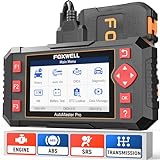
- [Easy to Use—Work Out of the Box] + [FOXWELL 2026 New Version] FOXWELL NT604 Elite scan tool is the 2026 new version from FOXWELL, designed for car owners who want to figure out the cause of issues before fixing car problems by scanning common systems like ABS, SRS, engine, and transmission. The NT604 Elite obd2 scanner diagnostic tool comes with the latest software—no need to waste time downloading software first. Plug the scanner into the OBDII port with OBDII cable to start the diagnosis.
- [Affordable] + [Reliable Car Health Monitor] Will you be confused what happens when the warning light of ABS/SRS/transmission/check engine flashes? Instead of taking your cars to dealership, this FOXWELL scanner will help you do a thorough scanning and detection for your cars and pinpoint the root cause. Note:The device is a diagnostic tool, not a repair tool. To turn off a warning light, you must first physically repair the issue causing it. Only then can the scanner be used to clear the corresponding fault code.
- [5 in 1 Car Diagnostic Scanner] Compared with obd scanners (50-100), NT604 Elite code scanner not only includes their OBDII diagnosis but also serves as ABS/SRS scanner, transmission and check engine code reader. When it’s an odb2 scanner, you can use it to check if your car is ready for annual test through I/M readiness menu. In addition, live data stream, built-in DTC library, data play back and print, all these features are a big plus for it. Note: doesn't support maintenance functions like reset or relearn. For the SRS system, NT604 Elite can read and clear common fault codes not caused by a crash, but crash/collision data cannot be cleared.
- [Fantastic AUTOVIN] + [No extra software fee] Through the AUTOVIN menu, this NT604 Elite car scanner allows you to get your V-IN and vehicle info rapidly, no need to take time to find your V-IN and input one by one. What's more, the NT604 Elite ABS SRS scanner supports 60+ car brands from worldwide (America/Asia/Europe). You don’t need to pay extra software fee. AUTOVIN may not work on some older vehicles or certain vehicle brands. If AUTOVIN fails, please input the vin code manually or go to the Diagnostic Menu to select your vehicle model.
- [Solid protective case KO plastic carrying bag] + [Lifetime update] Almost all same price-level car scanner diagnostic tool only offers plastic bag to hold the scanner.However, NT604 Elite automotive scanner is equipped with solid protective case, preventing your obd2 scanner from damage. Then you don’t need to pay extra money to buy a solid toolbox.

- 【Reset ABS/SRS/Transmission/Engine Lights】 More than an check engine code reader, OBDMATE OM901 obd2 scanner performs comprehensive diagnostics for the 4 most-used systems (ABS/SRS/Engine/Transmission). It quickly clears fault codes, turns off warning lights, read data stream and auto VIN.
- 【3.5" Handheld Scanner with 4 System Diagnose】 3.5" Super large TFT screen equipped displays an intuitive menu and clear readings of various sensors from ABS, SRS, ECM and TCM
 systems. It arrived with a silicone protective case and hard-shell carrying case, ensuring long-lived durability and drop resistance. The car diagnostic tool is plug-to-play designed, plug it and get diagnosis started without any batteries or updates required.
 - 【One-Click I/M Readines&Full OBD2 Functions】 Press F1 to get an intuitive corloured form about whether various emissions-related systems on the vehicle are operating properly. Help you get smog-check ready quickly. OM901 car scanner supports all essential OBD2 functions you need: read & clear codes, view freeze frame, read I/M readiness, retrieve VIN, live data stream (with graphing display), O2 sensor test, onboard monitoring mode, and EVAP leak test.
- 【Battery Voltage Check&DLC Pin Test】 It allows you to monitor battery health by testing current battery voltage. Plus, this obd2 diagnostic tool features DLC 16-PIN test to check current voltage of every pin.
- 【Automotive Scanner Diagnostic Kit】 The package comes with 1 car scanner, 1 USB-type c cable, 1 hard storage bag and 1 user manual(en). Free to update without any hidden fees. 5 languanges available in setting including English, French, Italian, German and Espanish. Valuable and Portable, making it a great tool kit for car owners, DIY enthusiasts, and professional mechanics.
 systems. It arrived with a silicone protective case and hard-shell carrying case, ensuring long-lived durability and drop resistance. The car diagnostic tool is plug-to-play designed, plug it and get diagnosis started without any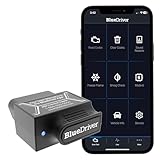
- [Diagnose Like a Pro] BlueDriver Pro is a professional OBD2 scanner and diagnostic tool that helps you scan, understand, and clear vehicle trouble codes with confidence. Turn your phone into a powerful car diagnostic scanner—no guesswork, no unnecessary repairs.
- [Read and Clear More Codes Than Ever] Read and clear more codes than basic car code readers. Access enhanced diagnostics for Check Engine, ABS, SRS, Airbag, TPMS, Transmission.
- [Verified Fixes and Real-Time Data] Get unlimited, technician-verified repair reports matched to your VIN, with definitions, causes, and confirmed fixes. Monitor live vehicle data as you drive, view freeze frames, check smog readiness, and analyze Mode 6 test results.
- [Wireless & Bluetooth Enabled] - Say goodbye to wires. BlueDriver connects with Bluetooth via your phone/tablet to a sensor that plugs into your car's OBDII port. Get all of the capabilities of an expensive code reader & scan tool without any annoying wires.
- [Broad Make & Model Coverage] Strong support for GM, Ford, Stellantis (RAM, Jeep, Chrysler), Toyota, Honda, Nissan, Mazda, Subaru, Hyundai, Mercedes-Benz, BMW, and VW.
- ✔️【Professional SRS Reset for 1994-2003 BMW】 Designed specifically for classic BMW models (1994-2003). This B800 scanner reads & clears SRS airbag fault codes, turns off the warning light, and saves you a costly dealer visit. Confirmed compatible with: E36, E46 (EXCEPT 2001 330i), E34, E38, E39, Z3, and X5 (E53). NOT compatible with any BMW built before 1994 or after 2003.
- ✔️【Important: Two Different Connection Ports – Read Before Use】 To avoid “not working” issues, please note: For 1994–2000 BMWs (most E36, E34, Z3, early E39), the SRS diagnostic port is a round 20-pin connector under the hood. You MUST use the included 16-pin to 20-pin adapter cable. For 2000–2003 models (late E46, E39, X5), use the standard OBD-II port inside the cabin. Incorrect connection is the #1 reason for “incompatibility” reports.
- ✔️【Read & Clear Fault Codes in Minutes】 Quickly diagnose why your SRS light is on. The scanner accurately reads fault codes from airbag and seatbelt pretensioner systems. With one button press, clear the codes and reset the SRS warning light in seconds. No expensive dealer tools needed.
- ✔️【User-Friendly for DIYers – No Mechanic Required】 Easy operation with an intuitive button layout: ‘Enter’ to confirm, ‘Scroll’ to navigate. The clear LCD screen shows results instantly. Includes a step-by-step manual (revised for clarity) to guide you through the entire reset process.
- ✔️【Reliable Support with 1-Year Warranty】 We stand behind the quality of our B800 scanner. It comes with a 1-Year Hassle-Free Warranty. If you have any questions or need support, please contact us with your Order ID, and our dedicated team will assist you promptly.
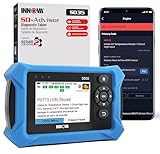
- OBD2 SCANNER FOR ALL SYSTEMS – The INNOVA SD35 is a tablet-based OBD2 scanner designed for advanced diagnostics. Read and clear check engine light, ABS, SRS, and TPMS codes, plus test your car battery and alternator to prevent unexpected failures. Vehicle coverage may vary. Please use Innova’s Coverage Checker to verify compatibility.
- ALL-SYSTEM DIAGNOSTICS & LIVE DATA – Unlike basic code readers, this OBD2 scanner for all vehicles scans engine, transmission, ABS, SRS, and more. Get real-time live data, including RPM, fuel trims, temperature readings, and oxygen sensor performance.
- OBD2 TABLET WITH USER-FRIENDLY INTERFACE – This automotive scan tool features a high-resolution display, making vehicle diagnostics faster and easier.
- ADVANCED TPMS, OIL RESET & SERVICE FUNCTIONS – Perform TPMS sensor checks, oil light reset, and other service resets with ease This professional diagnostic tool provides comprehensive vehicle maintenance capabilities in one device.
- WIDE VEHICLE COVERAGE (1996 & NEWER CARS & TRUCKS) – This OBD2 scanner Bluetooth tablet is compatible with Toyota, Ford, Honda, Chevrolet, Nissan, Dodge, and more. However, feature coverage may vary. Please use Innova's Coverage Checker to verify coverage.
SEOCONTENT-START
Subaru of America, Inc.
P.O. Box 9103
Camden, NJ 08101-9877
844-373-6614
www.subaru.com
Date (Month and Year) – RENOTIFICATION NOTICE
Dear Subaru Owner:
This notice is sent to you in accordance with the National Traffic and Motor Vehicle Safety Act.
SUBARU OF AMERICA, INC. has decided that a defect, which relates to motor vehicle safety, exists in certain 2003-2014 model year Legacy and Outback vehicles, 2003-2006 model year Baja vehicles, 2006-2014 model year Tribeca vehicles, 2009-2013 model year Forester vehicles, 2004-2011 model year Impreza vehicles, 2004-2014 WRX (including STI) vehicles equipped with a non-desiccated Takata-sourced passenger side frontal air bag containing the propellant Phase Stabilized Ammonium Nitrate.
You received this notice because our records indicate that you own one of these vehicles and have not had this urgent safety recall repair performed yet.
DESCRIPTION OF THE SAFETY DEFECT AND SAFETY HAZARD
The affected vehicles are equipped with a Takata-sourced passenger side frontal air bag that may be susceptible to moisture intrusion. Over time, this could cause the inflator within the air bag to explode when the passenger’s frontal air bag deploys in a crash. If the air bag inflator explodes, sharp metal fragments could strike vehicle occupants, potentially resulting in serious injury or death.
WHAT SUBARU WILL DO
Subaru will replace the front passenger air bag inflator in your vehicle with a new one, at no charge to you.
WHAT YOU SHOULD DO
You should immediately contact any authorized Subaru retailer (dealer) for an appointment to have this repair performed for free. To minimize your inconvenience while the repair is being performed, please ask your retailer for alternative transportation options.
Until this repair is performed, do not allow passengers to ride in the front passenger seat.
If you are not the only driver of this vehicle, please advise all other drivers and passengers of this important information.
HOW LONG WILL THE AIR BAG INFLATOR REPLACEMENT TAKE?
The time to replace the front passenger air bag inflator ranges from less than one hour to approximately three hours, depending on the model. Your retailer can provide you with an estimate of the overall time needed for this service visit, as it may be necessary to make your vehicle available for a longer period of time.
OWNER INFORMATION
Government regulations require that recall notifications be sent to the last known owner of record. That information is based primarily on state registration and title data. If you are a lessor of this vehicle, federal regulations require you to forward this notice to your lessee within ten days.
SAFETY RECALL NOTICE
This is an important Safety Recall.
The remedy will be performed at no charge to you. Recall: XXX-XX NHTSA ID: XXX-XXX
If you have moved or sold your vehicle, please complete the enclosed prepaid postcard and mail it to us. Or if you prefer to update this information online, please go to www.subaru.com, select ‘Customer Support,’ then select ‘Address Update’ or ‘Ownership Update’ from the drop-down menu.
IF YOU NEED FURTHER ASSISTANCE:
To locate the nearest Subaru retailer, you can access our website at www.subaru.com and select ‘Find a Retailer.’
For additional information and the most Frequently Asked Questions, please go to:
http://www.subaru.com/vehicle-recalls/airbags.html, or call 1-844-373-6614.
Para información visite nuestro sitio web específico de Takata en español http://www.subaru.com/es/vehicle-recalls/airbags.html, o llame al 1-844-373-6614.
If you need additional assistance, please contact us directly:
• By e-mail: Go to www.subaru.com and select “Customer Support”
• By telephone: 1-844-373-6614
Monday through Friday between 8:00 a.m. and 7:00 p.m. ET
• By U.S. Postal mail: Subaru of America, Inc.
Attn: Customer-Retailer Services Department
P.O. Box 9103, Camden, NJ 08101-9877
To subscribe to the NHTSA Recall Notification email System, please go to:
https://www-odi.nhtsa.dot.gov/nhtsa/subscriptions.
Please contact us immediately if the Subaru retailer fails or is unable to make the necessary repairs free of charge.
You may also contact the Administrator, National Highway Traffic Safety Administration, 1200 New Jersey Ave. SE, West Building, Washington, DC 20590 or call the toll-free Auto Safety Hotline at 1-888-327-4236 (TTY: 1-800-424-9153) or go to http://www.safercar.gov if you believe the Subaru retailer has failed or is unable to remedy your vehicle without charge within a reasonable amount of time.
Your continued satisfaction with your Subaru is important to us. Please understand that we have taken this action in the interest of your safety and your vehicle’s proper operation. We sincerely apologize for any inconvenience this matter may cause and urge you to schedule an appointment as soon as possible.
Sincerely,
Subaru of America, Inc.
A subsidiary of SUBARU CORPORATION
**************************************************************************************************************
Subaru of America, Inc.
P.O. Box 9103
Camden, NJ 08101-9877
844-373-6614
www.subaru.com
Date (Month and Year) – RENOTIFICATION NOTICE
Dear Subaru Owner:
This notice is sent to you in accordance with the National Traffic and Motor Vehicle Safety Act.
SUBARU OF AMERICA, INC. has decided that a defect, which relates to motor vehicle safety, exists in certain 2003-2014 model year Legacy and Outback vehicles, 2003-2006 model year Baja vehicles, 2006-2014 model year Tribeca vehicles, 2009-2013 model year Forester vehicles, 2004-2011 model year Impreza vehicles, 2004-2014 WRX (including STI) vehicles equipped with a non-desiccated Takata-sourced passenger side frontal air bag containing the propellant Phase Stabilized Ammonium Nitrate.
You received this notice because our records indicate that you own one of these vehicles and have not had this urgent safety recall repair performed yet.
DESCRIPTION OF THE SAFETY DEFECT AND SAFETY HAZARD
The affected vehicles are equipped with a Takata-sourced passenger side frontal air bag that may be susceptible to moisture intrusion. Over time, this could cause the inflator within the air bag to explode when the passenger’s frontal air bag deploys in a crash. If the air bag inflator explodes, sharp metal fragments could strike vehicle occupants, potentially resulting in serious injury or death.
WHAT SUBARU WILL DO
Subaru will replace the front passenger air bag inflator in your vehicle with a new one, at no charge to you.
WHAT YOU SHOULD DO
You should immediately contact any authorized Subaru retailer (dealer) for an appointment to have this repair performed for free. To minimize your inconvenience while the repair is being performed, please ask your retailer for alternative transportation options.
Until this repair is performed, do not allow passengers to ride in the front passenger seat.
If you are not the only driver of this vehicle, please advise all other drivers and passengers of this important information.
HOW LONG WILL THE AIR BAG INFLATOR REPLACEMENT TAKE?
The time to replace the front passenger air bag inflator ranges from less than one hour to approximately three hours, depending on the model. Your retailer can provide you with an estimate of the overall time needed for this service visit, as it may be necessary to make your vehicle available for a longer period of time.
OWNER INFORMATION
Government regulations require that recall notifications be sent to the last known owner of record. That information is based primarily on state registration and title data. If you are a lessor of this vehicle, federal regulations require you to forward this notice to your lessee within ten days.
SAFETY RECALL NOTICE
This is an important Safety Recall.
The remedy will be performed at no charge to you. Recall: XXX-XX NHTSA ID: XXX-XXX
If you have moved or sold your vehicle, please go to https://www.subaru.com/support/customer-support.html to send us your information.
IF YOU NEED FURTHER ASSISTANCE:
To locate the nearest Subaru retailer, you can access our website at www.subaru.com and select ‘Find a Retailer.’
For additional information and the most Frequently Asked Questions, please go to:
http://www.subaru.com/vehicle-recalls/airbags.html, or call 1-844-373-6614.
Para información visite nuestro sitio web específico de Takata en español http://www.subaru.com/es/vehicle-recalls/airbags.html, o llame al 1-844-373-6614.
If you need additional assistance, please contact us directly:
• By e-mail: Go to www.subaru.com and select “Customer Support”
• By telephone: 1-844-373-6614
Monday through Friday between 8:00 a.m. and 7:00 p.m. ET
• By U.S. Postal mail: Subaru of America, Inc.
Attn: Customer Advocacy Department
P.O. Box 9103, Camden, NJ 08101-9877
To subscribe to the NHTSA Recall Notification email System, please go to:
https://www-odi.nhtsa.dot.gov/nhtsa/subscriptions.
Please contact us immediately if the Subaru retailer fails or is unable to make the necessary repairs free of charge.
You may also contact the Administrator, National Highway Traffic Safety Administration, 1200 New Jersey Ave. SE, West Building, Washington, DC 20590 or call the toll-free Auto Safety Hotline at 1-888-327-4236 (TTY: 1-800-424-9153) or go to http://www.safercar.gov if you believe the Subaru retailer has failed or is unable to remedy your vehicle without charge within a reasonable amount of time.
Your continued satisfaction with your Subaru is important to us. Please understand that we have taken this action in the interest of your safety and your vehicle’s proper operation. We sincerely apologize for any inconvenience this matter may cause and urge you to schedule an appointment as soon as possible.
Sincerely,
Subaru of America, Inc.
A subsidiary of SUBARU CORPORATION
**************************************************************************************************************
Bulletin Number: TKA-20R / TKB-20R / TKC-20R; Revised: 12/28/23 Page 1 of 47
NUMBERS: TKA-20R
TKB-20R
TKC-20R
DATE: 01/06/20
REVISED: 12/28/23
NHTSA ID: 20V001
20V002
20V003
APPLICABILITY: 2003-14 MY Legacy
2003-14 MY Outback
2003-06 MY Baja
2009-13 MY Forester
2004-11 MY Impreza
2004-14 MY WRX and STI
SUBJECT: Takata Front Passenger Airbag Module /
Inflator “Like for Like” Recall
PRODUCT CAMPAIGN BULLETIN
ATTENTION:
GENERAL MANAGER q
PARTS MANAGER q
CLAIMS PERSONNEL q
SERVICE MANAGER q
IMPORTANT – All
Service Personnel
Should Read and
Initial in the boxes
provided, right.
©2020 Subaru of America, Inc. All rights reserved.
CAUTION: VEHICLE SERVICING PERFORMED BY UNTRAINED PERSONS COULD
RESULT IN SERIOUS INJURY TO THOSE PERSONS OR TO OTHERS.
Subaru Service Bulletins are intended for use by professional technicians ONLY. They
are written to inform those technicians of conditions that may occur in some vehicles,
or to provide information that could assist in the proper servicing of the vehicle. Properly
trained technicians have the equipment, tools, safety instructions, and know-how to
do the job correctly and safely. If a condition is described, DO NOT assume that this
Service Bulletin applies to your vehicle, or that your vehicle will have that condition.
SUBARU OF AMERICA, INC. IS
ISO 14001 COMPLIANT
ISO 14001 is the international standard
for excellence in Environmental
Management Systems. Please recycle
or dispose of automotive products in a
manner that is friendly to our environment
and in accordance with all local, state
and federal laws and regulations.
Continued…
SUBARU OF AMERICA, INC. has determined that a defect, which relates to motor vehicle safety,
exists in certain 2003-2014 model year Legacy and Outback vehicles, 2003-2006 model year Baja
vehicles, 2009-2013 model year Forester vehicles, 2004-2011 model year Impreza vehicles, and 2004-
2014 WRX (including STI) vehicles equipped with a non-desiccated Takata-sourced passenger-side
frontal air bag containing the propellant Phase Stabilized Ammonium Nitrate (PSAN).
As previously communicated, this phase of the Takata airbag recall includes vehicles which had an
interim repair performed under previous Takata airbag recalls.
Interim repairs, also referred to as “like-for-like” repairs, involved the installation of a non-desiccated
PSAN Takata-sourced inflator, prior to the availability of final repair parts which do not contain
PSAN. The vehicles included in this recall were identified from recall claim data indicating that a
“like-for-like” Takata-sourced non-desiccated PSAN inflator may have been installed.
DESCRIPTION OF THE SAFETY DEFECT AND SAFETY HAZARD
Despite the previous recall repair for a “like-for-like” air bag inflator replacement, vehicles containing
a Takata-sourced passenger-side frontal air bag inflator remain susceptible to propellant degradation
occurring after long-term exposure to high absolute humidity, temperature and temperature cycling.
Over time, this could cause the inflator within the air bag to explode when the passenger’s frontal air
bag deploys in a crash.
If the air bag inflator explodes, sharp metal fragments could strike vehicle occupants, potentially
resulting in serious injury or death.
Bulletin Number: TKA-20R / TKB-20R / TKC-20R; Revised: 12/28/23 Page 2 of 47
BACKGROUND
The National Highway Traffic Safety Administration (NHTSA) has prioritized the recalls of all nondesiccated
Takata-sourced passenger side Takata airbag inflators based on the risk of injury or death
to vehicle occupants.
The combination of time, high temperature fluctuations, and humidity contribute to the degradation
of the propellant in the inflators. Therefore, NHTSA prioritized the Takata recalls by age and location
history of the vehicles. To do so, NHTSA has established three geographical Zones – A, B, and C –
based on the level of heat and humidity as listed below:
Zone A: Hot and Humid
Alabama, California, Florida, Georgia, Hawaii, Louisiana, Mississippi, South Carolina, Texas,
Puerto Rico, American Samoa, Guam, the Northern Mariana Islands (Saipan), and the U.S. Virgin
Islands.
Zone B: Less Hot and Humid
Arizona, Arkansas, Delaware, District of Columbia, Illinois, Indiana, Kansas, Kentucky,
Maryland, Missouri, Nebraska, Nevada, New Jersey, New Mexico, North Carolina, Ohio,
Oklahoma, Pennsylvania, Tennessee, Virginia, and West Virginia.
Zone C: Least Hot and Humid
Alaska, Colorado, Connecticut, Idaho, Iowa, Maine, Massachusetts, Michigan, Minnesota,
Montana, New Hampshire, New York, North Dakota, Oregon, Rhode Island, South Dakota, Utah,
Vermont, Washington, Wisconsin, and Wyoming.
AFFECTED VEHICLES
This phase of the Takata recall includes vehicles which may have had an interim (“like-for-like”)
repair performed under a previous airbag recall, to reduce the risk of injury before final remedy parts
were available:
• Previously repaired Zone A vehicles will be included in recall code TKA-20
• Previously repaired Zone B vehicles will be included in recall code TKB-20
• Previously repaired Zone C vehicles will be included in recall code TKC-20
If the previous recall claim data is unclear as to whether a PSAN “like-for-like” inflator was installed
or not, the vehicle has been included in this phase of the Takata airbag recall out of an abundance
of caution.
Examples of unclear retailer claim data are listed below:
• Missing installed inflator/module serial numbers
• Installed inflator/module serial numbers that do not correspond with the part number claimed
• Returned part information that indicates that a PSAN unit may have been installed
Retailer affected vehicle counts by model year/carline were distributed to all Regional/Distributor offices
in December to assist with capacity planning purposes. Lists of the affected VINs will be distributed
when owner notification begins.
The status of TKA20, TKB20, and TKC20 coverage will display as “Open – Pending Phased Mailing”
until all official owner notification letters have been released. This status is not intended to discourage
retailers from scheduling these repairs and will not affect the retailers’ ability to file a claim for repairs
performed prior to the official owner notification.
Continued…
Bulletin Number: TKA-20R / TKB-20R / TKC-20R; Revised: 12/28/23 Page 3 of 47
REPAIR
The repair procedures for this recall include a required inspection prior to replacement, to confirm
whether a PSAN “like-for-like” inflator was previously installed or not.
• If inspection confirms the affected vehicle DOES contain a previously-installed PSAN “like-forlike”
air bag inflator, it will be replaced with a final remedy non-Takata sourced inflator/module.
• If inspection confirms the vehicle DOES NOT contain a previously-installed PSAN “like-forlike”
inflator, Subaru will reimburse retailers for the required inspection procedure.
OWNER NOTIFICATION
Owner notification will begin January 7, 2020 and will be phased in weekly mail drops through
the end of February. Listed below is the current mailing plan, based on the model year (MY) of the
affected vehicles:
• January 7: affected 2003-2004 MY vehicles
• January 16: affected 2005 MY vehicles
• January 23: affected 2006-2007 MY vehicles
• January 30: affected 2008 MY vehicles
• February 6: affected 2009 MY vehicles
• February 13: affected 2010 MY vehicles
• February 20: affected 2011 MY vehicles
• February 27: affected 2012-2014 MY vehicles
As a reminder, if a customer requests a loaner car, retailers should make every effort to comply with
that request and follow normal warranty procedures to obtain reimbursement for the loaner car. See
Section 8.4.7 (Alternate Transportation Program) of the Claims Policies and Procedures Manual on
subarunet.com under ‘Claims & Warranty Administration’ for details.
RETAILER VIN ASSIGNMENT
Each Subaru retailer will receive an affected VIN list from their Zone office when owner notification
begins. Vehicles will be assigned to retailers in the affected VIN list as follows. Please note that this
logic has recently changed:
1. If there is a preferred retailer on file, the VIN will be assigned to the preferred retailer.
2. If there is no preferred retailer on file:
a) Original vehicle owners are assigned to the original selling retailer if their current DMV
registration address is within a 50-mile radius of that retailer.
b) If the original selling retailer is inactive, the VIN is assigned to the nearest active retailer.
c) If the owner is not the original owner, the VIN is assigned to the nearest active retailer.
Continued…
Bulletin Number: TKA-20R / TKB-20R / TKC-20R; Revised: 12/28/23 Page 4 of 47
RETAILER PROGRAM RESPONSIBILITY
Any vehicles listed in a recall/campaign that are in retailer stock must be:
• Immediately identified.
• Tagged or otherwise marked to prevent their delivery or use prior to inspection and/or repair.
• Repaired in accordance with the repair procedures outlined in this Product Campaign Bulletin.
Retailers are to promptly perform the applicable service procedures to correct all affected vehicles
in their inventory (used, demo & SSLP).
Additionally, whenever a vehicle subject to this recall is taken into retailer inventory, or in for
service, necessary steps should be taken to ensure the recall correction has been made before selling
or releasing the vehicle, provided that parts are available to complete this recall.
PARTS INFORMATION
The current part numbers required for this recall are the passenger airbag inflator kits or modules
listed below:
Applicability Part Number Type Order Qty.
2003-2004 MY Legacy
2003-2004 MY Outback
2003-2006 MY Baja
98279AE04A Module 1
2005-2009 MY Legacy
2005-2009 MY Outback
98279AG05A or B Inflator
1
SOA963W110* Non-Woven Material
2010-2014 MY Legacy
2010-2014 MY Outback
98279AJ06A Module 1
2004-2005 MY Impreza
2004-2005 MY WRX & STI
98279FE070 Inflator 1
2006-2007 MY Impreza
2006-2007 MY WRX & STI
98279FE12A Module 1
2008-2011 MY Impreza
2008-2014 MY WRX & STI
98279FG07B Module 1
2009-2013 MY Forester 98279SC05B Module 1
* Use part number SOA635079 to claim for non-woven material.
REMINDERS:
• Always order the most up-to-date replacement parts based on the specific VIN being repaired.
• One sheet of the SOA963W110 non-woven material is enough for approximately 8 vehicles.
Continued…
Bulletin Number: TKA-20R / TKB-20R / TKC-20R; Revised: 12/28/23 Page 5 of 47
Continued…
PART RETURN PROCEDURES
The part return information is susceptible to change. Always refer to the “Takata Airbag Inflator
& Module Returns” information supplied in the link provided in the APPENDIX A section of this
document.
Bulletin Number: TKA-20R / TKB-20R / TKC-20R; Revised: 12/28/23 Page 6 of 47
SOA PART RETURN NOTICE INFORMATION
IMPORTANT NOTE: The following information is applicable to SOA and
Subaru Distributors Corporation (SDC) retailers ONLY. Subaru New England
(SNE) retailers will continue to follow the procedures currently in place as
supplied below.
All SOA and SDC retailers are required to enter BOTH the newly-installed
(replacement) and the removed (original) serial numbers for the airbag
inflator (or module assembly) into the supplied fields as shown in the
screen shot below. Claims will not receive an “Approved” status without
the serial number information being entered in the appropriate fields in
the Recall Claim Entry system. As a result of adding these new required
entry fields, Part Return Notices will no longer be generated.
The information below is applicable to SNE retailers only:
• Upon claim approval and where applicable, Subaru of America, Inc. will generate a Part
Return Notice requesting information only.
• To ensure proper claim credit where applicable, the old and new inflator/module serial
numbers must be recorded on the Part Return Notice and sent to SOA Part Collection Center
(PCC) as instructed on the return notice.
• Where applicable, the completed Part Return Notice should then be sent using the YRC web
portal and utilizing the “Ship Small Parcel” link which will direct the user to the appropriate
UPS web page application to complete the shipment. Please keep the UPS tracking number
for your records.
• DO NOT WAIT FOR TAKATA XPO TO PICK UP THE INFLATOR/MODULE TO
SEND THIS INFORMATION TO THE PCC.
Under no circumstances should any airbag inflators or modules be sent to Subaru of America,
Inc.
Bulletin Number: TKA-20R / TKB-20R / TKC-20R; Revised: 12/28/23 Page 7 of 47
SERVICE PROCEDURE
This safety recall involves the inspection and/or replacement of the passenger-side front air bag inflator
or module.
As previously communicated, this phase of the Takata recall will include vehicles which previously had
an interim repair performed under the current Takata recalls. Interim repairs, also referred to as likefor-
like repairs, involved the installation of a non-desiccated PSAN Takata-sourced inflator, prior to the
availability of final repair parts which do not contain PSAN.
IMPORTANT: Inspection of the airbag inflator MUST be performed on ALL affected vehicles
BEFORE proceeding with any part replacements. Use the charts on pages 10 and 11 as a guide when
performing the inspection to determine if the currently installed airbag inflator is either a Takata or ZF
/ TRW manufactured part. If inspection determines the airbag inflator or module assembly requires
replacement, refer to the Table of Contents below for the applicable Service Procedure.
As previously communicated, this phase of the Takata recall will include vehicles which previously had
an interim repair performed under the current Takata recalls. Interim repairs, also referred to as likefor-
like repairs, involved the installation of a non-desiccated PSAN Takata-sourced inflator, prior to the
availability of final repair parts which do not contain PSAN.
VERY IMPORTANT: Failure to follow these service procedures carefully and correctly may
result in an accidental deployment of the inflator and potentially cause serious injury. Please read
through and understand these procedures COMPLETELY before beginning repairs. In addition,
proper operation of the airbag after reassembly may be compromised if these service procedures
are not followed.
As additional service procedures are developed for the other models affected by the expansion and
implementation of this recall campaign, they will be added to this document and also made available
on STIS.
TABLE OF CONTENTS – SERVICE PROCEDURES
Description Starting Page
Number
Airbag Inflator Inspection Guidelines 10
Service Procedure for 2010-2014MY Legacy / Outback Models, Airbag Module
Assembly, Part Number: 98279AJ06A
12
Service Procedure for 2009-2013MY Forester (Part Number: 98279SC05B) and
2008-2011MY Impreza, and 2008-2014MY WRX & STI Models
(Part Number: 98279FG07B), Airbag Module Assembly
14
Service Procedure for 2003-2004MY Legacy/Outback and 2003-2006MY Baja
Models, Airbag Module Assembly, Part Number: 98279AE04A
16
Service Procedure for 2005-2009MY Legacy / Outback Models, Inflator Type 2,
Part Number: 98279AG05A or B
20
Service Procedure for 2004-2005MY Impreza, WRX, and STI Models,
Inflator Type 2, Part Number: 98279FE070
30
Service Procedure for 2006-2007MY Impreza, WRX and STI Models, Airbag Module
Assembly, Part Number: 98279FE12A
38
Appendix B (2003MY Legacy, Outback, and Baja models ONLY) 47
Continued…
Bulletin Number: TKA-20R / TKB-20R / TKC-20R; Revised: 12/28/23 Page 8 of 47
Tools Required:
DESCRIPTION BRAND OR TYPE QUANTITY
Pliers – 1
Wire Cutters – 1
Needle-Nose Pliers – 1
Torque Wrench Inch-Pound 1
Safety Goggles – 1
Flat-Blade Screwdriver – 1
Scissors – 1
Ratchet
1/4” Drive
1
8 mm and 10 mm Socket 1 ea.
Airbag Deployment Fixture J-39401-B 1
Tether Clip Release Tool
*See Page 9 for more information
SOA635147 1
CAUTION: Before starting this service procedure, perform a visual inspection of both front airbags
looking for any damage or abnormality. Next, turn the ignition switch to the “ON” position and
confirm the airbag warning lamp illuminates then extinguishes normally. If it does not or if ANY
concern is noted with the airbag system, STOP and report these findings to the customer BEFORE
proceeding further. Any concerns identified with the airbag system (when no airbag deployment has
occurred), are not related to this campaign and must be addressed separately. Even if the system has
a concern, this may not preclude completion of this campaign. If you are unsure about proceeding,
document and fully diagnose the concern then contact the SOA Technical Helpline to review your
findings. It is in the best interest of the retailer to fully document any concerns found during this
preliminary inspection and review with the customer BEFORE proceeding with the campaign
service procedure.
• Vehicles that do not contain Genuine Subaru airbags are not eligible for this recall repair.
For more information on identifying counterfeit airbags and how to address related customer
situations, please refer to STIS for the “Counterfeit Airbag Information” Dealer Advisory
Bulletin dated October 25, 2012 by going to Subarunet>Service>STIS>Online Reference –
choose Publication Type: ‘Other/Miscellaneous’ and search keywords: ‘Airbag’).
• Do not proceed with this repair if your inspection reveals a non-Genuine Subaru airbag
module has been installed in the vehicle. Follow the instructions described in the “Counterfeit
Airbag Information” Dealer Advisory Bulletin.
• IMPORTANT: Always examine airbag modules closely before and during removal. Confirm
they match the photos of the Genuine Subaru airbag components supplied throughout this
bulletin BEFORE proceeding. The photo below shows an example of an aftermarket or
counterfeit airbag inflator. This photo is being provided as an example of what may be a wide
variety of non-OEM components.
• If an aftermarket or counterfeit passenger airbag or inflator is identified at any point during
the campaign service procedure, STOP IMMEDIATELY. NEVER attempt to remove or
otherwise disable any aftermarket or counterfeit device.
• Document the presence of the aftermarket or counterfeit device on the repair order and with
photos. Report this information immediately on a Quality Monitoring Report (QMR).
IMPORTANT: When entering a related QMR, use failure code ULF and NOT the campaign fail
code.
• Once the QMR has been submitted, contact the Subaru Claims Helpline to discuss the details.
They will advise you on how to proceed with treatment of the open campaign.
Continued…
Bulletin Number: TKA-20R / TKB-20R / TKC-20R; Revised: 12/28/23 Page 9 of 47
The shape, holes, and
copper-colored stud indicate this
is not a Genuine Subaru inflator.
NOTE: Some models utilize a “tether clip” to secure the upper portion of the “A” pillar trim. The
tether clip is located just below where the “A” pillar trim meets the head liner. If the tether clip
becomes damaged, it MUST be replaced. The illustrations and photos below show the location of the
tether clip and how to release it. It is STRONGLY RECOMMENDED to use the release tool (p.n.
SOA635147) specifically designed for tether clip removal. Each Retailer has been supplied with 2 of
these tools. If the tool is unavailable, a needle-nosed plier can be used to CAREFULLY release the
tether clip as shown in the illustration below.
Continued…
Bulletin Number: TKA-20R / TKB-20R / TKC-20R; Revised: 12/28/23 Page 10 of 47
Continued…
INSPECTION: How To Determine if the Installed Inflator Is Takata or ZF / TRW
Model
Years Carline Part
Number Type Procedure / How to Identify
ZF TRW
End Collar
Color
ZF TRW: OK – Do NOT replace the Inflator
or Module Assembly. Process Claim for
INSPECTION ONLY.
TAKATA: NG – Replace the Inflator or
Module Assembly per the table.
2004-05MY
IMPREZA
WRX
98279FE070
98279FE07A Inflator 1) For these models, there is no need to
remove any parts.
2) Check the inflator collar from the bottom
backside of the instrument panel (IP) on the
passenger side.
• If the color of the collar is Pink, it is a ZF
TRW inflator.
• If no collar is found, it is a Takata inflator.
Pink
2006-07MY 98279FE12A
98279FE12B Module Pink
2005-09MY
LEGACY
OUTBACK 98279AG05B Inflator
1) CAREFULLY remove the air conditioning
vent duct on the passenger side.
2) Check the inflator collar inside the IP.
• If the color of the collar is Pink, it is a ZF
TRW inflator.
• If no collar is found, it is a Takata inflator.
Pink
2003-06MY
Legacy
Outback
Baja
98279AE04A
98279AE04B Module
IMPORTANT: For 2003MY ONLY see
Appendix B on page 47 for more
information.
1) Release the stoppers of the glovebox and
open it fully.
2) Check for the inflator collar from the bottom
(TIP: use a Mechanic’s mirror to make it
easier).
• If the color of the collar is Pink, it is a ZF
TRW inflator.
• If no collar is found, it is a Takata inflator.
Pink
Using a Mechanic’s
Mirror to confirm the
NG inflator.
TIP: In some cases, removal of the module
/ dash cover assembly from the IP may be
easier and quicker.
Bulletin Number: TKA-20R / TKB-20R / TKC-20R; Revised: 12/28/23 Page 11 of 47
Model
Years Carline Part
Number Type Procedure / How to Identify
ZF TRW
End Collar
Color
ZF TRW: OK – Do NOT replace the Inflator
or Module Assembly. Process Claim for
INSPECTION ONLY.
TAKATA: NG – Replace the Inflator or
Module Assembly per the table.
2008-14MY IMPREZA
WRX
98279FG07A
98279FG07B Module
1) CAREFULLY remove the end panel of the
IP on the passenger side.
2) Check the inflator collar inside the IP.
• If the color of the collar is Pink, it is a ZF
TRW inflator.
• If no collar is found, it is a Takata inflator.
Pink
2009-13MY FORESTER 98279SC05A
98279SC05B Module
1) CAREFULLY remove the end panel of the
IP on the passenger side.
2) Check for the inflator collar inside the IP.
• If the color of the collar is Pink, it is a ZF
TRW inflator.
• If no collar is found, it is a Takata inflator.
Pink
2010-14MY
LEGACY
OUTBACK 98279AJ06A Module
1) CAREFULLY remove the end panel of the
IP on the passenger side.
2) Check the harness connector color of the
inflator inside the IP.
• If the connector is Black/Yellow, it is a ZF
TRW inflator.
• If the connector is Solid Yellow, it is a
Takata inflator.
No End
Collars Are
Used
Harness connector is a
combination of Black and Yellow.
Harness connector
is Solid Yellow.
Bulletin Number: TKA-20R / TKB-20R / TKC-20R; Revised: 12/28/23 Page 12 of 47
*SERVICE PROCEDURE FOR 2010-14MY LEGACY / OUTBACK MODELS*
Replacement Airbag Module Assembly Part Number: 98279AJ06A
CAUTION: Refer to the “CAUTION” section in the General Description portion of Airbag
System AB in the Body Section of the Service Manual before handling or servicing any airbag
module!
STEP 1- PREPARATION:
• Record the customer’s radio station presets (and Navigation favorites where applicable).
• Turn the ignition “OFF”.
• Disconnect the Negative (ground) cable from the battery and wait at least 60 seconds before
proceeding further.
• Follow the procedures in the applicable Service Manual for removing the instrument panel
assembly as required to access the passenger side airbag module.
• Disconnect the wiring harness and remove the airbag module.
IMPORTANT: Whenever beginning to remove (or install) the airbag assembly, and periodically
while performing the procedure or after stepping away, remove any possible static charge
from your body by momentarily touching a clean, bare metal ground point on the vehicle (e.g.
the door striker). Remove from your person all electronic devices including cell phones before
proceeding.
IMPORTANT: DO NOT destroy or damage the Shipping Box as it MUST be used for the
original module’s return shipping.
STEP 2- To access the passenger’s airbag module, the complete instrument panel assembly must be
removed. Follow the procedures in the applicable Service Manual for removing the instrument panel
assembly in addition to the necessary related interior trim components.
NOTE: When removing the “A” pillar trim, be VERY CAREFUL not to damage the upper trim
retaining (tether) clip. The clip is located just below where the trim panel meets the head liner. If the
tether clip becomes damaged, it MUST be replaced. The illustrations below show how to release the
tether clip and remove the “A” pillar trim. It is STRONGLY RECOMMENDED to use the release
tool (p.n. SOA635147) specifically designed for tether clip removal. See pg. 8 of this bulletin for
more information.
Once the instrument panel assembly has been removed from the vehicle, CAREFULLY release the
retaining claws and separate the airbag bag module.
Continued…
Bulletin Number: TKA-20R / TKB-20R / TKC-20R; Revised: 12/28/23 Page 13 of 47
STEP 3- Install the new airbag module to the instrument panel.
STEP 4- Reinstall the instrument panel assembly into the vehicle in reverse order of disassembly.
Once the negative battery cable has been reconnected, turn the ignition key “ON” and confirm the
AIRBAG warning light comes on then cycles off properly. Once proper warning light operation is
confirmed, reinstall the remaining components and reset the radio station presets (and Navigation
favorites where applicable) to complete the procedure.
STEP 5- If not already done, place the removed original air bag module in the Shipping Box, with
a completed SOA warranty parts tag (MSA5W1901A) attached to it. The tag must contain the
following information: Claim Number, Repair Date, 17-digit VIN, and vehicle mileage. Refer to
the “PART RETURN PROCEDURES” section of this bulletin for further return shipping instructions
and information. Ensure both the removed and installed module serial numbers have been
recorded correctly as previously instructed on the repair order hard copy before returning the
removed part to your Parts Department.
IMPORTANT: UNDER NO CIRCUMSTANCES SHOULD ANY AIR BAG INFLATORS OR
MODULE ASSEMBLIES BE RETURNED TO SUBARU OF AMERICA, INC.
Continued…
Bulletin Number: TKA-20R / TKB-20R / TKC-20R; Revised: 12/28/23 Page 14 of 47
*SERVICE PROCEDURE FOR 2009-2013MY FORESTER and 2008-2011MY IMPREZA and
2008-2014 MY WRX and STI MODELS* Replacement Airbag Module Assembly Part Number
98279FG07B (Impreza, WRX and STI) and 98279SC05B (Forester)
CAUTION: Refer to the “CAUTION” section in the General Description portion of Airbag
System AB in the Body Section of the Service Manual before handling or servicing any airbag
module!
STEP 1- PREPARATION:
• Record the customer’s radio station presets (and Navigation favorites where applicable).
• Turn the ignition “OFF”.
• Disconnect the Negative (ground) cable from the battery and wait at least 60 seconds before
proceeding further.
• Follow the procedures in the applicable Service Manual for removing the instrument panel
assembly as required to access the passenger side airbag module.
• Disconnect the wiring harness and remove the airbag module.
IMPORTANT: Whenever beginning to remove (or install) the airbag assembly, and periodically
while performing the procedure or after stepping away, remove any possible static charge
from your body by momentarily touching a clean, bare metal ground point on the vehicle (e.g.
the door striker). Remove from your person all electronic devices including cell phones before
proceeding.
IMPORTANT: DO NOT destroy or damage the Shipping Box as it MUST be used for the
original module’s return shipping.
STEP 2- To access the passenger’s airbag module, the complete instrument panel assembly must be
removed. Follow the procedures in the applicable Service Manual for removing the instrument panel
assembly in addition to the necessary related interior trim components.
NOTE: On FORESTER models, when removing the “A” pillar trim, be VERY CAREFUL not to
damage the upper trim retaining (tether) clip. It is STRONGLY RECOMMENDED to use the release
tool (p.n. SOA635147) specifically designed for tether clip removal. See pg. 8 of this bulletin for
more information. The clip is located just below where the trim panel meets the head liner. If the
tether clip becomes damaged, it MUST be replaced. The illustrations below show how to release the
tether clip and remove the “A” pillar trim.
On IMPREZA models, in place of the tether clip, the trim is secured by a screw accessible by
removing the small access cover.
Continued…
Bulletin Number: TKA-20R / TKB-20R / TKC-20R; Revised: 12/28/23 Page 15 of 47
Once the instrument panel assembly has been removed from the vehicle, CAREFULLY release the
retaining claws and separate the airbag bag module.
STEP 3- Install the new airbag module to the instrument panel.
STEP 4- Reinstall the instrument panel assembly into the vehicle in reverse order of disassembly.
Once the negative battery cable has been reconnected, turn the ignition key “ON” and confirm the
AIRBAG warning light comes on then cycles off properly. Once proper warning light operation is
confirmed, reinstall the remaining components and reset the radio station presets (and Navigation
favorites where applicable) to complete the procedure.
STEP 5- If not already done, place the removed original air bag module assembly in the Shipping
Box (or into the returnable shipping box), with a completed SOA warranty parts tag (MSA5W1901A)
attached to it. The tag must contain the following information: Claim Number, Repair Date,
17-digit VIN, and vehicle mileage. Refer to the “PART RETURN PROCEDURES” and Appendix
“A” sections of this bulletin for further return shipping instructions and information. Ensure both
the removed and installed module serial numbers have been recorded correctly as previously
instructed on the repair order hard copy before returning the removed part to your Parts
Department.
IMPORTANT: UNDER NO CIRCUMSTANCES SHOULD ANY AIR BAG INFLATORS OR
MODULE ASSEMBLIES BE RETURNED TO SUBARU OF AMERICA, INC.
Continued…
Bulletin Number: TKA-20R / TKB-20R / TKC-20R; Revised: 12/28/23 Page 16 of 47
*SERVICE PROCEDURE FOR 2003-2004MY LEGACY / OUTBACK AND
2003-2006MY BAJA MODELS* Replacement Airbag Module Assembly Part Number: 98279AE04A
IMPORTANT: For 2003MY vehicles ONLY, see Appendix B on page 47, BEFORE proceeding.
IMPORTANT NOTES:
The new module assembly does not include the lid (outer trim cover). In this procedure, the lid is
transferred to the new module from the original. In an extremely rare case where a lid gets damaged
during the transfer, part numbers for replacements are provided below.
Description Part Number Color
AIR B MOD P KIT LID
98279AE05ADG Brown
98279AE05AML Black
CAUTION: Refer to the “CAUTION” section in the General Description portion of Airbag
System AB in the Body Section of the Service Manual before handling or servicing any airbag
module!
STEP 1- PREPARATION:
Before proceeding, confirm the airbag lamp cycles on and then off normally as part of the self-check
and using SSM, confirm there are no DTCs stored in the airbag system. Inspect the dash area around
the passenger airbag module for any marks or damage. Document and photograph any conditions
observed before starting this procedure.
• Turn the ignition “OFF”.
• Disconnect the Negative (ground) cable from the battery and wait at least 60 seconds before
proceeding further.
• Remove the glove box assembly following the procedure in the applicable Service Manual
and using the tips below.
o The glove box is held in place by 8 screws. The 2 upper left and right hand corner screws
have a distinctive gold finish and 10mm hex head. It is helpful to leave these 2 screws
until last when removing and install first during replacement to support the weight of the
assembly.
o It is necessary to remove the knockout plugs (stopper in the Service Manual) to gain
access to all the mounting screws.
o It is possible to leave the stoppers in place during servicing by carefully bending in the
sides of the glove box until the stoppers are cleared.
• To prevent damage, do not bend them in any further than necessary.
IMPORTANT: Whenever beginning to remove (or install) the airbag assembly, and periodically
while performing the procedure or after stepping away, remove any possible static charge from
your body by momentarily touching a clean, bare metal ground point on the vehicle (e.g. the
door striker). Remove from your person all electronic devices including cell phones before
proceeding.
Continued…
Bulletin Number: TKA-20R / TKB-20R / TKC-20R; Revised: 12/28/23 Page 17 of 47
• Disconnect the airbag module harness
connector (A) and release it from the support
beam bracket.
• Remove the 3 retaining bolts and
CAREFULLY remove the airbag module
from the vehicle by carefully releasing the
cover tabs from the underside of the dash and
pushing the module up and out. Use caution
and protective coverings to avoid damaging the dashboard pad. Place the airbag module on a
clean cloth to protect the module lid from scuffs, scratches or other damage.
STEP 2- TRIM COVER / LID REMOVAL:
VERY IMPORTANT: Before removing the original
trim cover / lid from the module, note the orientation
of the cover in relation to the module as the module can
be installed upside down in the cover. (TIP: The bottom
or harness side goes toward the “SRS AIRBAG” side of the
cover as shown.)
CAUTION: During cold temperatures always let the cover
warm to room temperature before attempting claw removal.
In all cases, limit any distortion of the airbag cover to avoid
damaging it.
• Using a trim clip removal tool and starting on the harness-side of the module assembly as
shown in the sequence below, CAREFULLY insert the tool and twist ONLY AS MUCH AS
IS REQUIRED to release the slightly longer center retaining claw from the trim cover. Once
released with the tool, the other 6 claws will release easily by hand.
• Rotate the inflator portion of the assembly outward from the cover to release the 7 label-side
claws and separate the cover from the module. No tool is required as all the 7 label-side
claws are the same size.
Serial Number
FIGURE1
Continued…
Bulletin Number: TKA-20R / TKB-20R / TKC-20R; Revised: 12/28/23 Page 18 of 47
Trim Clip Removal
Tool Inserted
Twisting the Tool and
Releasing Center Claw
All Harness-Side Claws Released
Center Claw Released
Serial Number
Inside view of a damaged
cover, shows tearing and
material missing. This cover
must be replaced.
OK
Close-up of a witness mark left
behind by the inside of the center
retaining claw. This is normal and
acceptable. There is no need to
replace the cover for this.
Step 3- Confirm the orientation is correct as outlined earlier in this bulletin. Refit the original
cover, if reusable, onto the replacement module assembly. Make sure all the claws are fully engaged
(see Figure 1 above). When properly installed, the cover should feel loose with a small amount of
freeplay. If the cover is tight (no freeplay or looseness), it most likely is not fully engaged onto the
claws.
Continued…
Bulletin Number: TKA-20R / TKB-20R / TKC-20R; Revised: 12/28/23 Page 19 of 47
Step 4- VERY IMPORTANT: Record the alpha-numeric serial numbers for BOTH the original
and the replacement module assemblies on the hard copy of the Repair Order. See pages 17 & 18
for serial number location photos. For SOA and SDC Retailers ONLY, this information will be
required for claim approval. For SNE retailers, this information will be required for completion of
the Part Return Notice which will be forwarded by the retailer to the PCC.
Step 5- After confirming the cover is properly fitted to the module, reinstall the module assembly
in reverse order of disassembly. Before installing the glove box assembly, reconnect the negative
battery cable. Turn the ignition key “ON” and confirm the AIRBAG warning light comes on then
cycles off properly. Once proper warning light operation is confirmed, reinstall the glove box
assembly.
Step 6- Place the removed module assembly into the returnable shipping box. Refer to the
SHIPPING DOCUMENTATION AND INSTRUCTIONS (Appendix A) found toward the end of
this bulletin.
IMPORTANT: UNDER NO CIRCUMSTANCES SHOULD ANY AIRBAG MODULES BE
RETURNED TO SUBARU OF AMERICA, INC.
Continued…
Bulletin Number: TKA-20R / TKB-20R / TKC-20R; Revised: 12/28/23 Page 20 of 47
*SERVICE PROCEDURE FOR 2005-2009MY LEGACY / OUTBACK MODELS*
Inflator Type 2, Inflator Kit Part Number: 98279AG05A or B
CAUTION: Refer to the “CAUTION” section in the General Description portion of Airbag
System AB in the Body Section of the Service Manual before handling or servicing any airbag
module!
STEP 1- PREPARATION:
• Record the customer’s radio station presets (and Navigation favorites where applicable).
• Turn the ignition “OFF”.
• Disconnect the Negative (ground) cable from the battery and wait at least 60 seconds before
proceeding further.
• Follow the procedures in the applicable Service Manual for removing the instrument panel
assembly as required to access the passenger side airbag module.
• Disconnect the wiring harness and remove the airbag module.
• Secure the removed airbag module to the Airbag Deployment Fixture (part number
J-39401-B).
IMPORTANT NOTE: The photos available at the time of this procedure’s preparation do not show
the removed airbag module assembly as being secured to the J-39401-B Airbag Deployment Fixture
during inflator replacement. Subaru of America, Inc. STRONGLY RECOMMENDS ALWAYS utilizing
a J-39401-B fixture whenever performing ANY airbag inflator replacement service procedure.
IMPORTANT: Whenever beginning to remove (or install) the airbag assembly, and periodically
while performing the procedure or after stepping away, remove any possible static charge
from your body by momentarily touching a clean, bare metal ground point on the vehicle (e.g.
the door striker). Remove from your person all electronic devices including cell phones before
proceeding.
IMPORTANT: DO NOT destroy or damage the Kit Box as it MUST be used for the original
inflator’s return shipping.
Open the Kit Box and confirm all the necessary components
are included:
• 4 Self-Locking nuts
• New Type 2 Inflator (pink collars on each end identify it as the replacement part)
• New Inflator Harness
• 1 new Stopper Plate (A)
• Heat Insulating Plate
• Electro-Tap (red shorting crimp connector)
• Shipping Documentation
Inspect the new Type 2 inflator to confirm the locating protrusions on each of the pink collar portions
are aligned as shown below. The “short” collar can be rotated as needed to align it with the protrusion
on the “long” collar if necessary.
Continued…
Bulletin Number: TKA-20R / TKB-20R / TKC-20R; Revised: 12/28/23 Page 21 of 47
STEP 2- To access the passenger’s airbag module, the complete instrument panel assembly must be
removed. Follow the procedures in the applicable Service Manual for removing the instrument panel
assembly in addition to the necessary related interior trim components.
NOTE: When removing the “A” pillar trim, be VERY CAREFUL not to damage the upper metal
retaining clip. The clip is located just below where the trim panel meets the head liner. If the metal
retaining clip becomes damaged or separated from the trim panel, the trim panel MUST be replaced
as the clip is not available separately. Use a plastic trim tool to push and release the upper portion of
the metal clip from the body. Be careful to not pull the trim panel open any further than necessary
to gain access for releasing the clip. There is a plastic retaining clip in the lower portion of the trim
panel which will release easily once the upper retaining clip is loose. At reassembly and using a
plastic trim tool, make sure the inner lip of the door weatherstrip overlaps the outer fabric edge of the
trim panel to help secure it.
Once the instrument panel assembly has been removed from the vehicle, CAREFULLY release the
retaining claws and separate the airbag bag module.
Continued…
Bulletin Number: TKA-20R / TKB-20R / TKC-20R; Revised: 12/28/23 Page 22 of 47
REMINDER: It is STRONGLY RECOMMENDED the removed airbag module ALWAYS be
mounted to the Airbag Deployment Fixture (part number J-39401-B and file photo shown below) to
better secure it during the inflator replacement procedure. When mounting the module to the fixture,
pay close attention to the harness routing. Always perform this work in an area away from others
to reduce chances of inadvertent injury should any deployment occur. Take your surroundings into
account to avoid possible hazards should an inadvertent deployment occur or sources of static or
other electricity that could potentially induce such a deployment.
STEP 3- Remove the harness tube from the retainer bracket holders.
STEP 4- Using a scissor or wire cutter (no knives or razors) CAREFULLY cut the black harness
cover tube (approximately 1 1/2 inches) enough to expose the blue and white wires inside and
provide enough room to install the Electro-Tap (shorting) connector.
TAKE YOUR TIME AND BE CAREFUL TO NOT CUT THE 2 WIRES!
Continued…
Bulletin Number: TKA-20R / TKB-20R / TKC-20R; Revised: 12/28/23 Page 23 of 47
STEP 5- Short the white and blue wires together by installing the Electro-Tap connector. The
connector creates a short circuit which acts as a safeguard to prevent against static discharge that may
deploy the removed inflator. The tab portion of the Electro-Tap connector MUST be cut off prior to
use to insure a good short-circuit is made as shown in the illustration below. Follow the sequence
below for installing the Electro-Tap connector. Use pliers to squeeze closed the two sections of the
connector together, one section at a time.
STEP 6- Once the Electro-Tap connector is fully crimped in place, cut the white and blue wires on
the body harness connector side of the Electro-Tap connector.
Continued…
Bulletin Number: TKA-20R / TKB-20R / TKC-20R; Revised: 12/28/23 Page 24 of 47
STEP 7- Loosen and remove the four (4) 10mm self-locking nuts and discard them.
VERY IMPORTANT: Under no circumstances should any impact or power tools be used when
performing these procedures. HAND TOOLS ONLY!
NOTE: NEVER ATTEMPT TO REMOVE THE HARNESS CONNECTORS FROM THE
INFLATOR!
STEP 8- With the self-locking nuts removed, slide the original inflator out of the mounting bracket.
Place the removed original air bag inflator back into the “cradle” of the Kit Box insert.
STEP 9 – VERY IMPORTANT: Record the 11-digit alpha-numeric serial number for both the
new Type 2 and the original Type 1 inflators on the hard copy of the Repair Order. For SOA and
SDC Retailers ONLY, this information will be required for claim approval. For SNE retailers, this
information will be required for completion of the Part Return Notice which will be forwarded by the
retailer to the PCC.
Continued…
Bulletin Number: TKA-20R / TKB-20R / TKC-20R; Revised: 12/28/23 Page 25 of 47
STEP 10- CAREFULLY remove the airbag from the mounting bracket (case).
STEP 11- CAREFULLY Install the heat insulating plate into the back (inflator) side of the airbag
as shown in photo 1 below. The plate can only be installed in one direction. Make sure the 2
retaining claws come through the corresponding holes in the insulator plate as shown in photo 2. The
airbag is ready to refit to the mounting bracket in photo 3 and is being reinstalled in photo 4.
1 2
3 4
Continued…
Bulletin Number: TKA-20R / TKB-20R / TKC-20R; Revised: 12/28/23 Page 26 of 47
STEP 12- Install the new Stopper Plate (A) onto the mounting bracket.
Stopper Plate (A)
STEP 13- Install the new inflator into the mounting bracket with the short pink collar end toward
the new Stopper Plate (A). Align the protrusion on the end of the collar with the notch in the stopper
plate. There is also a tab on the inside of Stopper Plate (A) which will align with the notch in the end
of the collar. When properly installed the collar will be tight against the plate with no gap.
IMPORTANT: Do not peel the white harness connection dust cover at this time.
Continued…
Bulletin Number: TKA-20R / TKB-20R / TKC-20R; Revised: 12/28/23 Page 27 of 47
STEP 14- Install the original stopper plate onto the opposite end of the mounting bracket / inflator in
the same manner as described in STEP 13 above. Rotate the inflator as needed to insure there is no
gap between the collar and stopper plate. NOTE: Stopper plates only fit one way as their holes are
offset.
STEP 15- Reinstall the 4 NEW self-locking nuts. SLOWLY tighten (to prevent over-tightening)
then torque the nuts to 31-38 inch-pounds. When complete, use a marker to indicate they have been
fully tightened.
STEP 16- The new inflator wiring harness has 2 “sides” with 2-pin connectors on both ends. The
side with the black harness tube goes with the black inflator connector and the other side (yellow
harness tube) will connect to the orange connector. The end of the inflator aligned with the new
Stopper Plate (A) will have a black harness connector while the connector on the opposite end of the
inflator will be orange. This makes it impossible to install the harness backwards as the tangs (shown
in Step 17) are also in different positions.
BEFORE connecting the harness to the inflator, make sure the harness is not twisted as shown below.
Continued…
Bulletin Number: TKA-20R / TKB-20R / TKC-20R; Revised: 12/28/23 Page 28 of 47
STEP 17- Peel off one white dust cover and CAREFULLY align the tang of the new harness
connector with the receiving slot in the inflator connector. This assures proper routing of the harness
in relation to the airbag assembly mounting bracket.
IMPORTANT: NEVER PEEL BOTH THE WHITE DUST COVERS OFF AT THE SAME TIME!
STEP 18- After connecting both sides of the harness, refit the harness cover tube back into the
mounting brackets.
VERY IMPORTANT: After connecting the new harness to the inflator, both sides MUST be
routed as shown in the “New Harness Properly Installed” photo below.
Continued…
Bulletin Number: TKA-20R / TKB-20R / TKC-20R; Revised: 12/28/23 Page 29 of 47
New Harness
Properly
Installed
STEP 19- Refit the airbag module to the instrument panel.
TIP: To eliminate a possible source of a rattling sound from the dash, wrap the 2 hooks and locator pin
with non-woven material, p.n. SOA963W110 (or an equivalent self-adhesive foam) as shown below.
Hook Hook
Locator Pin
REMINDER: One sheet of the SOA963W110 non-woven material is enough for approximately
8 vehicles.
STEP 20- Reinstall the instrument panel assembly into the vehicle in reverse order of disassembly.
Once the negative battery cable has been reconnected, turn the ignition key “ON” and confirm the
AIRBAG warning light comes on then cycles off properly. Once proper warning light operation is
confirmed, reinstall the remaining components and reset the radio station presets (and Navigation
favorites where applicable) to complete the procedure.
STEP 21- If not already done, place the removed original air bag inflator in the “cradle” of the
Kit Box insert, with a completed SOA warranty parts tag (MSA5W1901A) attached to it. The tag
must contain the following information: Claim Number, Repair Date, 17-digit VIN, and vehicle
mileage. Refer to the “PART RETURN PROCEDURES” section of this bulletin for further return
shipping instructions and information. Ensure both the removed and installed inflator serial
numbers have been recorded correctly as previously instructed on the repair order hard copy
before returning the removed part to your Parts Department.
IMPORTANT: UNDER NO CIRCUMSTANCES SHOULD ANY AIR BAG INFLATORS BE
RETURNED TO SUBARU OF AMERICA, INC.
Bulletin Number: TKA-20R / TKB-20R / TKC-20R; Revised: 12/28/23 Page 30 of 47
*SERVICE PROCEDURE FOR 2004-2005MY IMPREZA, WRX AND STI MODELS*
Inflator Type 2, Part Number 98279FE070*
CAUTION: Refer to the “CAUTION” section in the General Description portion of Airbag
System AB in the Body Section of the Service Manual before handling or servicing the airbag
module!
STEP 1- PREPARATION:
• Turn the ignition “OFF”.
• Disconnect the Negative (ground) cable from the battery and wait at least 60 seconds before
proceeding further.
• Remove the glove box assembly following the procedure in the applicable Service Manual.
IMPORTANT: Whenever beginning to remove (or install) the airbag assembly, and
periodically while performing the procedure or after stepping away, remove any possible
static charge from your body by momentarily touching a clean, bare metal ground point on
the vehicle (e.g. the door striker). Remove from your person all electronic devices including
cellphones before proceeding.
• Disconnect the airbag module harness connector
from the support beam bracket.
• Remove the 3 retaining bolts and CAREFULLY
remove the airbag module from the vehicle and
place it on a clean cloth to protect the dash trim
surface portion from damage.
NOTE: There may be a Security Module secured
with the lower airbag module mounting bolt on some models.
IMPORTANT: DO NOT destroy or damage the kit box as it MUST be used for the original
inflator’s return shipping.
• Open the Kit Box and confirm all the necessary components are included:
4 Self-Locking nuts
New Type 2 Inflator (pink collars on each end identify it as the replacement part)
New Inflator Harness
New Stopper Plate
Electro-Tap (red shorting crimp connector)
1 ½” X 2 ¼” piece of self-adhesive Sponge Tape
Shipping Documentation and Instructions
Bulletin Number: TKA-20R / TKB-20R / TKC-20R; Revised: 12/28/23 Page 31 of 47
IMPORTANT: The removed airbag module must be mounted to the Airbag Deployment
Fixture (part number J-39401-B) as shown in the photo below to better secure it during the
inflator and wiring harness component replacement procedures. Always perform this work in an
area away from others to reduce chances of inadvertent injury should any deployment occur. Take your
surroundings into account to avoid possible hazards should inadvertent deployment occur or sources of
static or other electricity that could potentially induce such a deployment.
STEP 2- Peel the Sponge Tape and remove the harness clip from the retainer bracket by pushing
the tangs inward with a flat-blade screwdriver as shown below. Always remove any Sponge Tape
adhesive residue from the airbag mounting bracket using mild solvent on a clean shop cloth.
CAUTION: Never use any silicone-based products for this purpose.
STEP 3- CAREFULLY cut the yellow harness cover enough (approximately 2 inches) to expose
the 2 red (or yellow) wires inside and provide enough room to install the Electro-Tap (shorting)
connector using a wire cutter or scissor (no knives or razors). TAKE YOUR TIME AND BE
CAREFUL TO NOT CUT THE 2 WIRES!
Red Wires Yellow Wires
Bulletin Number: TKA-20R / TKB-20R / TKC-20R; Revised: 12/28/23 Page 32 of 47
STEP 4- Short the 2 wires together by installing the Electro-Tap connector. The connector creates
a short circuit which acts as a safeguard to prevent against static discharge that may deploy the
removed inflator. The tab portion of the Electro-Tap connector MUST be cut off prior to use to insure
a good short-circuit is made as shown in the illustration below. Follow the sequence below for
installing the Electro-Tap connector. Use pliers to squeeze closed the two sections of the connector
together, one section at a time.
This tab MUST
be cut off
Insert 1 wire in
the Electro-Tap
Fold
2 3
4
Crimp closed
with pliers
Place the other
wire in the
Electro-Tap,
fold then crimp
closed with pliers
5
STEP 5- Once the Electro-Tap connector is fully crimped in place, cut the 2 wires on the body
harness connector side of the Electro-Tap connector.
CUT
VERY IMPORTANT: Under no circumstances should any impact or power tools be used when
performing these procedures. HAND TOOLS ONLY!
STEP 6- Remove the two 8mm self-locking nuts securing the stopper plate. Loosen but do not
remove the other two nuts on the mounting bracket as leaving them in place will help keep the airbag
assembly together.
Remove
Bulletin Number: TKA-20R / TKB-20R / TKC-20R; Revised: 12/28/23 Page 33 of 47
STEP 7- With the stopper plate removed and the
other 2 self-locking nuts loosened, unseat the inflator
off the mounting bracket end plate then rotate it
slightly CLOCKWISE to make it easier to remove
as shown in the photo to the right. Slide the inflator
out of its mounting while feeding the cut off portion
of the wiring harness through the “D-Shaped”
hole in the end of the mounting bracket. NEVER
ATTEMPT TO REMOVE THE HARNESS
FROM THE INFLATOR! Place the removed
original air bag inflator in the “cradle” of the Kit
Box insert.
STEP 8- VERY IMPORTANT: Record the 11-digit alpha-numeric serial number for both the
removed (Type 1) and 14-digit numeric serial number for the new (Type 2) inflator on the Repair
Order hard copy. For SOA and SDC Retailers ONLY, this information will be required for claim
approval. For SNE retailers, this information will be required for completion of the Part Return
Notice which will be forwarded by the retailer to the PCC.
TYPE 1 TYPE 2
STEP 9- Inspect the new Type 2 inflator to confirm the locating protrusions on each of the pink
collar portions are aligned as shown below. The “short” collar can be rotated as needed to align it
with the protrusion on the “long” collar if necessary.
NOTE: The Type 2 inflator is installed in the opposite direction of the original. This change puts the
connector on the other end. The new harness has been extended approximately 2” to compensate.
Bulletin Number: TKA-20R / TKB-20R / TKC-20R; Revised: 12/28/23 Page 34 of 47
STEP 10- Install the new inflator into the mounting bracket, short collar with the “blank” (no harness
connector) end going in first. The protrusion on the short collar will fit in the gap at the bottom of the
fixed stopper plate portion. At the same time, the ridge portion of the inflator side of the stopper plate
will fit into the “notch” in the end of the collar. When properly installed, the end of the inflator will be
seated tight against the mounting bracket with NO gap. DO NOT peel the white harness connection
dust cover at this time.
STEP 11- Install the new stopper plate over the harness connector end of the new inflator.
Always hold the
stopper plate tight
against the inflator as
shown when installing
and tightening the
NEW self-locking nuts.
NEVER reuse the
original nuts.
Remove the 2 nuts still installed on the mounting bracket and replace them with 2 NEW self-locking
nuts. Once all 4 NEW nuts are in place, torque to 31 – 38 inch pounds in the new sequence shown
below. Use a marker to mark the nuts after torqueing indicating they have been fully tightened.
Bulletin Number: TKA-20R / TKB-20R / TKC-20R; Revised: 12/28/23 Page 35 of 47
1 3
2 4
STEP 12- Peel off the white dust cover and CAREFULLY align the tang of the new harness
connector with the receiving slot in the inflator connector. This assures proper routing of the harness
in relation to the airbag assembly mounting brackets.
Bulletin Number: TKA-20R / TKB-20R / TKC-20R; Revised: 12/28/23 Page 36 of 47
STEP 13- Reinstall the wiring harness retaining clip into its position on the mounting bracket.
IMPORTANT: Confirm the harness is not twisted at the inflator connector as shown below.
STEP 14- Peel the adhesive backing and install the new Sponge Tape onto the yellow harness tube
first then adhere it to the airbag mounting bracket as shown in the illustrations below.
Placement of Sponge Tape
IMPORTANT: The
Sponge tape must be
installed more than
half-way around the
yellow harness tube.
Harness Sponge Tape
Bulletin Number: TKA-20R / TKB-20R / TKC-20R; Revised: 12/28/23 Page 37 of 47
Completed “Type 2”
Assembly
STEP 15- Reinstall the airbag assembly into the vehicle in reverse order of disassembly. NOTE: If
the accessory security module is installed to one of the airbag module mounting bolts, torque that
specific bolt to 7.5 +/-1ft. lb. rather than the normal 5.4 ft. lb. specified in the Service Manual. Before
installing the glove box assembly, reconnect the negative battery cable. Turn the ignition key “ON”
and confirm the AIRBAG warning light comes on then cycles off properly. Once proper warning
light operation is confirmed, reinstall the glove box assembly while making sure the cord loop for the
opening dampener (if equipped) stays connected to complete the procedure.
STEP 16- Place the removed air bag inflator in the “cradle” of the Kit Box insert, with a completed
SOA warranty parts tag (MSA5W1901A) attached to it. The tag must contain the following
information: Claim Number, Repair Date, 17-digit VIN, and vehicle mileage. Refer to the
“PARTS RETURN PROCEDURES” section of this bulletin (page 4) for further return shipping
instructions and information.
IMPORTANT: UNDER NO CIRCUMSTANCES SHOULD ANY AIR BAG INFLATORS BE
RETURNED TO SUBARU OF AMERICA, INC.
Bulletin Number: TKA-20R / TKB-20R / TKC-20R; Revised: 12/28/23 Page 38 of 47
*SERVICE PROCEDURE FOR 2006-2007MY IMPREZA, WRX and STI MODELS*
Replacement Airbag Module Assembly Part Number: 98279FE12A
IMPORTANT NOTES:
The new module assembly does not include the lid (outer trim cover). In this procedure, the lid is
transferred to the new module from the original. In an extremely rare case where a lid gets damaged
during the transfer, the part number for a replacement lid is 98279FE19AOE.
CAUTION: Refer to the “CAUTION” section in the General Description portion of Airbag
System AB in the Body Section of the Service Manual before handling or servicing any airbag
module!
STEP 1- PREPARATION:
• Turn the ignition “OFF”.
• Disconnect the Negative (ground) cable from the battery and wait at least 60 seconds before
proceeding further.
o Remove the glove box assembly following the procedure in the applicable Service
Manual and using the tips below. The glove box is held in place by 7 screws.
IMPORTANT: Whenever beginning to remove (or install) the airbag assembly, and periodically
while performing the procedure or after stepping away, remove any possible static charge
from your body by momentarily touching a clean, bare metal ground point on the vehicle (e.g.
the door striker). Remove from your person all electronic devices including cell phones before
proceeding.
• Disconnect the airbag module harness connector (A) and release it from the support beam
bracket.
• Remove the 3 retaining bolts and CAREFULLY remove the airbag module from the vehicle
and place it on a clean cloth to protect the dash trim outer surface portion from damage.
Bulletin Number: TKA-20R / TKB-20R / TKC-20R; Revised: 12/28/23 Page 39 of 47
STEP 2- TRIM COVER REMOVAL
• Using a trim clip removal tool and starting on the harness-side of the module assembly as
shown in photos and sequence below, CAREFULLY insert the tool and twist ONLY AS
MUCH AS IS REQUIRED to release the slightly longer center retaining claw from the trim
cover. Once released with the tool, the other 6 claws will release easily by hand.
• Rotate the inflator portion of the assembly outward from the cover to release the 7 label-side
claws and separate the cover from the module. No tool is required as all the 7 label-side
claws are the same size.
Serial Number
Twisting the Tool and
Releasing Center Claw Center Claw Released
• Once all the harness-side retaining claws are released (EASILY done once the center claw is
released), CAREFULLY separate the inflator module from the cover. After the harness-side of
the module is free from the cover (2), simply rotate it to unhook the label-side retaining claws.
Remove the cover completely as shown in (3) below.
Bulletin Number: TKA-20R / TKB-20R / TKC-20R; Revised: 12/28/23 Page 40 of 47
1
Serial Number
2
3
Bulletin Number: TKA-20R / TKB-20R / TKC-20R; Revised: 12/28/23 Page 41 of 47
• Inspect the claw openings on the outside and inside of the cover for damage. If any found to
look like the NG example photo below, the cover must be replaced.
Inside view of a damaged
cover, shows tearing and
material missing. This cover
must be replaced.
Close-up of a witness mark left
behind by the inside of the center
retaining claw. This is normal and
acceptable. There is no need to
replace the cover for this.
OK
Step 3- Refit the cover onto the replacement module assembly, making sure all the claws are fully
engaged (see Figure 1 above). For this application, the cover will only fit on the module one way.
When properly installed, the cover should feel loose with a small amount of freeplay. If the cover is
tight (no freeplay or looseness), it most likely is not fully engaged onto the claws.
Step 4- VERY IMPORTANT: Record the alpha-numeric serial numbers for BOTH the original
and the replacement module assemblies on the hard copy of the Repair Order. See page 39 & 40 for
serial number location photos. For SOA and SDC Retailers ONLY, this information will be
required for claim approval. For SNE retailers, this information will be required for completion of
the Part Return Notice which will be forwarded by the retailer to the PCC.
Step 5- Place the removed module assembly into the
returnable shipping box. Refer to the SHIPPING
DOCUMENTATION AND INSTRUCTIONS:
(Appendix A) found toward the end of this bulletin.
Step 6- After confirming the cover is properly
fitted to the module, reinstall the module assembly
in reverse order of disassembly. The retaining tabs
around the perimeter of the cover must also be fully
seated so it sits flush with the surrounding dash
pad surface. Before installing the glove box assembly, reconnect the negative battery cable. Turn
the ignition key “ON” and confirm the AIRBAG warning light comes on then cycles off properly.
Once proper warning light operation is confirmed, reinstall the glove box assembly to complete the
procedure.
IMPORTANT: UNDER NO CIRCUMSTANCES SHOULD ANY AIRBAG MODULES BE
RETURNED TO SUBARU OF AMERICA, INC.
Bulletin Number: TKA-20R / TKB-20R / TKC-20R; Revised: 12/28/23 Page 42 of 47
RECALL IDENTIFICATION LABEL
Type or print the necessary information
on a Recall Identification Label. The
completed label should be attached to the
vehicle’s upper radiator support.
Additional labels are available through
normal parts ordering channels. The part
number is MSA6P1302, which comes as
one sheet of 20 labels.
Part Number Applicability Description Order Quantity
MSA6P1302 All models
Campaign Completion Labels
(contains one sheet of 20 labels)
1
CLAIM REIMBURSEMENT AND ENTRY PROCEDURES
Credit to perform this recall will be based on the submission of properly completed repair order
information. Retailers may submit claims through ‘Vehicle Claim Entry’ on Subarunet.com.
Carline/MY Applicability for PASSENGER AIRBAG INFLATOR To
be used when claiming for INSPECTION ONLY
(Confirming the vehicle is equipped with a ZF / TRW inflator)
Labor
Operation #
Labor
Time
Fail Code
Claim
Type
2003-04MY Legacy / Outback & 2003-06MY Baja**
A182-038
0.3
TKA-20
TKB-20
TKC-20
RC
2005-09MY Legacy / Outback 0.3
2010-14MY Legacy & Outback 0.3
2009-13MY Forester 0.3
2004-07MY Impreza 0.2
2008-11MY Impreza & 2008-14MY WRX / STI 0.3
Carline / MY Applicability for PASSENGER INFLATOR / MODULE
ASSEMBLY REPLACEMENT (includes Inspection)
Labor
Operation #
Labor
Time
Fail Code
Claim
Type
2003-04MY Legacy / Outback & 2003-06MY Baja (M)
A182-031
0.8
TKA-20
TKB-20
TKC-20
RC
2005-09MY Legacy / Outback (I) 1.8
2010-14MY Legacy & Outback (M) 3.0
2009-13MY Forester (M) 1.6
2004-05MY Impreza, WRX & STI (I) 0.8
2006-07MY Impreza, WRX & STI (M) 0.8
2008-11MY Impreza & 2008-14MY WRX / STI (M) 1.6
(M) = AIRBAG MODULE ASSEMBLY Replacement
(I) = INFLATOR ONLY Replacement
**NOTE: On 2003MY ONLY Legacy Outback and Baja models, the complete quote “7LF” 11-digit airbag module serial
number MUST be recorded during inspection and entered into the Miscellaneous Detail field as part of the campaign
completion/claim entry process. Refer to Appendix B starting on pg. 47 for more information.
TKA-20 TKB-20 TKC-20
Bulletin Number: TKA-20R / TKB-20R / TKC-20R; Revised: 12/28/23 Page 43 of 47
OWNER NOTIFICATION LETTER
SAFETY RECALL NOTICE
This is an important Safety Recall.
The remedy will be performed at no charge to you.
Recall: XXX-20 NHTSA ID: XXX-XXX
URGENT
IMPORTANT SAFETY RECALL
This notice applies to the VIN below
January 2020
Dear Subaru Owner:
This notice is sent to you in accordance with the National Traffic and Motor Vehicle Safety Act.
SUBARU OF AMERICA, INC. has decided that a defect, which relates to motor vehicle safety, exists in certain
2003-2014 model year Legacy and Outback vehicles, 2003-2006 model year Baja vehicles, 2009-2013 model
year Forester vehicles, 2004-2011 model year Impreza vehicles, and 2004-2014 WRX (including STI) vehicles
equipped with a non-desiccated Takata-sourced passenger-side frontal air bag containing the propellant Phase
Stabilized Ammonium Nitrate.
Our records indicate that the vehicles included in this safety recall may have had an interim (“like-for-like”) repair
performed under a previous air bag recall, to reduce the risk of injury before final remedy parts were available.
You received this notice because our records indicate that you own one of these vehicles.
DESCRIPTION OF THE SAFETY DEFECT AND SAFETY HAZARD
Despite the previous recall repair for a “like-for-like” air bag inflator replacement, vehicles containing a Takatasourced
passenger-side frontal air bag inflator remain susceptible to propellant degradation occurring after longterm
exposure to high absolute humidity, temperature and temperature cycling. Over time, this could cause the
inflator within the air bag to explode when the passenger’s frontal air bag deploys in a crash.
If the air bag inflator explodes, sharp metal fragments could strike vehicle occupants, potentially
resulting in serious injury or death.
WHAT SUBARU WILL DO
Subaru will inspect your vehicle to confirm the type of replacement front passenger air bag inflator that was
installed in your vehicle under the previous recall. The inspection will be performed at no charge to you. If it is
confirmed that your vehicle contains a “like-for-like” air bag inflator, Subaru will replace it with a final remedy
non-Takata sourced inflator at no charge to you.
WHAT YOU SHOULD DO
You should immediately contact any authorized Subaru retailer (dealer) for an appointment to have this
repair performed for free. To minimize your inconvenience while the repair is being performed, please ask
your retailer for alternative transportation options.
HOW LONG WILL THE AIR BAG INFLATOR REPLACEMENT TAKE?
The time to replace the front passenger air bag inflator ranges from less than one hour to approximately three
hours, depending on the model. Your retailer can provide you with an estimate of the overall time needed for this
service visit, as it may be necessary to make your vehicle available for a longer period of time.
Continued…
Subaru of America, Inc
PO Box 9103
Camden, NJ 08101-9877
844-373-6614
www.subaru.com
Bulletin Number: TKA-20R / TKB-20R / TKC-20R; Revised: 12/28/23 Page 44 of 47
Notice to Lessors: Under Federal law the lessor of a vehicle who receives this letter must provide a copy of it to the vehicle lessee(s)
within 10 business days from receipt. The lessor must also keep a record of the lessee(s) to whom this letter is sent, the date sent, and the
applicable vehicle identification number (VIN). (For the purposes of this section, a lessor means a person or entity that in the last twelve
months prior to the date of this notification has been the owner, as referenced on the vehicle’s title, of any five or more leased vehicles. A
leased vehicle is a vehicle leased to another person for a term of at least four months.)
A subsidiary of Fuji Heavy Industries Ltd.
OWNER INFORMATION
Government regulations require that recall notifications be sent to the last known owner of record. That
information is based primarily on state registration and title data. If you are a lessor of this vehicle, federal
regulations require you to forward this notice to your lessee within ten days.
If you have moved or sold your vehicle, please update this information online at www.subaru.com, select
‘Customer Support,’ then select ‘Address Update’ or ‘Ownership Update’ from the Quick Links menu.
IF YOU NEED FURTHER ASSISTANCE:
To locate the nearest Subaru retailer, you can access our website at www.subaru.com and select ‘Find a
Retailer.’
For additional information and the most Frequently Asked Questions, please go to:
http://www.subaru.com/vehicle-recalls/airbags.html, or call 1-844-373-6614.
Para información visite nuestro sitio web específico de Takata en español http://www.subaru.com/es/
vehicle-recalls/airbags.html, o llame al 1-844-373-6614.
If you need additional assistance, please contact us directly:
• By e-mail: Go to www.subaru.com and select “Customer Support”
• By telephone: 1-844-373-6614
Monday through Friday between 8:00 a.m. and 7:00 p.m. ET
• By U.S. Postal mail: Subaru of America, Inc.
Attn: Customer-Retailer Services Department
P.O. Box 9103, Camden, NJ 08101-9877
To subscribe to the NHTSA Recall Notification email System, please go to:
https://www-odi.nhtsa.dot.gov/nhtsa/subscriptions.
Please contact us immediately if the Subaru retailer fails or is unable to make the necessary repairs free of
charge.
You may also contact the Administrator, National Highway Traffic Safety Administration, 1200 New Jersey Ave.
SE, West Building, Washington, DC 20590 or call the toll-free Auto Safety Hotline at 1-888-327-4236 (TTY:
1-800-424-9153) or go to http://www.safercar.gov if you believe the Subaru retailer has failed or is unable to
remedy your vehicle without charge within a reasonable amount of time.
Your continued satisfaction with your Subaru is important to us. Please understand that we have taken
this action in the interest of your safety and your vehicle’s proper operation. We sincerely apologize for any
inconvenience this matter may cause and urge you to schedule an appointment as soon as possible.
Sincerely,
Subaru of America, Inc.
Continued…
Bulletin Number: TKA-20R / TKB-20R / TKC-20R; Revised: 12/28/23 Page 45 of 47
Continued…
SHIPPING DOCUMENTATION AND INSTRUCTIONS (Appendix A)
IMPORTANT NOTE: There are 2 different sets of instructions supplied in this section. The first
page outlines the procedure for INFLATOR returns while the following page provides instructions for
returning a COMPLETE MODULE assembly.
5. Shipping Instructions – Prepare the Pallet
a) Accumulate and palletize Kits
b) Arrange Kits on Pallet as pictured here
• 20 boxes per row/layer (5×4)
• 10 rows/layers per pallet (200 boxes)
c) Shrink-wrap Kits to Pallet
d) Affix Over-pack Label on (1) side of Pallet (Not on Top)
NOTE
INFLATOR RETURNS
These Return Instructions are for the Continental US dealerships (48 States).
NOTE: Locations outside of the Continental United States (Hawaii, Alaska, Puerto Rico, Virgin Islands INCLUDING Mexico and Canada
CANNOT follow below shipping instructions. Instead, dealerships in these locations MUST contact the following Takata/XPO USA
representative directly for shipping instructions: Miguel Prigadaa – Tel #: 210-250-5078 or Email:
[email protected]
1. Shipping Documents
8. Requesting a New Box / Shipping Labels
If a new box or replacement shipping labels are needed, please contact the
representative listed below by phone or email to request replacement
materials.
Primary Contact: Armando Gonzalez – Tel #: 210-250-5079
E-Mail: [email protected]
To help expedite your request, please be prepared to provide the following
information:
a) Serial number on the original box
b) What Type of shipping material needed
• Replacement Box
• Two Part Return Label
• Bill of Lading
• ERG Form
c) Dealer Shipping Information
• Contact name
• Dealer Address
• Phone Number
4b. Shipping Instructions – Label each Box
a) If you continue receiving Inflator Kits with the original Fedex Documentation:
1. Peel off the backing of the Fedex Ground PRP Shipping label and
affix to top of box to left of the Class 9 label.
• Use the scribe line on the box as a guide
• The FedEx Ground PRP Shipping label must not touch any
portion of the printing to the right of the scribe line.
2. Discard the remaining Documentation
3. Do Not contact FedEx
3. Closure Instructions
a) Close the top box flap, per box closure instructions located on front panel of
box.
2. Packing Instructions
a) Confirm box is in acceptable condition. If a new box
is needed, follow the New Box instructions located
In Box 8 of this page.
b) Place the un-deployed air bag inflator in
the “cradle” of the box insert.
6. Shipping Instructions – Schedule LTL Pickup
a) Upon Accumulating 200 kits (1 Over-pack/Pallet) Minimum
• Call XPO at 1-877-650-3476
• If 200 Kits have not been accumulated in 30 days, please call XPO for
direction
c) Have the following Information Available
• Dealer #
• Quantity of Over-packs/Pallets
• Quantity of Passenger Inflator Kits on each Pallet
• Email Address where shipping Documentation can be received
a) Box Label
• Supplied with each Kit
• To be affixed to each box b) Over-pack Label
• To be supplied by
XPO.
• To be affixed to the
outside of each pallet
c) Bill of Lading
• To be supplied by
XPO.
• Print 2 copies: 1 for
Dealer Records, 1 for
LTL Driver
d) ERG Document
• To be supplied by
XPO.
• To be provide by the
Dealer to the LTL
Driver for each
shipment
4a. Shipping Instructions – Label each Box
a) New Labels will begin shipping in each kit starting mid August, 2015
Subaru Inflator Kit will
contain this two-part
label:
Peel off ‘Ship To’
Label.
Affix Label to Box.
Do not cover up Class 9 Marking.
7. Shipping Instructions – Ship
a) Give 1 Copy of BOL and 1 Copy of ERG to Driver
b) Retain 1 Copy of BOL for Dealership records and archive for 2 Years
https://www.subarunet.com/home/content/1505
Bulletin Number: TKA-20R / TKB-20R / TKC-20R; Revised: 12/28/23 Page 46 of 47
APPENDIX B
NOTE: This information is applicable to 2003MY Legacy, Outback, and Baja models ONLY.
Subaru of America, Inc. (Subaru) has been notified by SUBARU CORPORATION (SBR) that some
early production 2003 MY Legacy, Outback, and Baja vehicles may have been incorrectly included in
the list of vehicles requiring inflator replacement as part of the on-going Takata recalls listed above.
• These early production 2003 MY vehicles (77,000) were equipped with inflators which do not
contain ammonium nitrate.
• These inflators which do not contain ammonium nitrate do not require replacement as part of any
Subaru airbag recall.
Description of the Remedy
The inspection involves lowering of the glovebox to provide enough access to visually inspect the
label on the airbag module. Labels containing “7LF” identify inflators WITHOUT ammonium nitrate
and those with “7LG” identify inflators WITH ammonium nitrate as shown in the photos below. If
the vehicle in question is identified as having an airbag inflator without ammonium nitrate installed,
STOP and note the 11-digit serial number ONLY as no further action is required other than
refitting the glove box. Only vehicles with airbag inflators containing ammonium nitrate are
affected by this campaign.
See the Claim Reimbursement and Entry Procedures at the end of this announcement for instructions
on how to submit a claim for “Inspection Only” when an inflator without ammonium nitrate is
identified.
Inflator WITHOUT Ammonium Nitrate- Serial Number Label Location (2003 Legacy, Outback
and Baja models only): Record this 11-digit number for claims purposes.
• Additional 2003 Leg / Obk / Baja Module / Inflator Inspection info to add:
If the serial number label is missing, illegible or if there is any uncertainty if the airbag module is
affected by this Recall Campaign, follow the Counterfeit / Non-Genuine airbag inspection process
provided above. Always take photos of the module showing the entire inflator along with an
additional photo showing the area where the label should be as seen in the photos below. Next,
submit a Quality Monitoring Report (QMR) requesting SOA review. A member of the Claims Team
will contact the Retailer following review of the QMR submission with information on how to
proceed.
Continued…
Bulletin Number: TKA-20R / TKB-20R / TKC-20R; Revised: 12/28/23 Page 47 of 47
Inflator WITH Ammonium Nitrate- Serial Number Label Location
Label Detail
Inflator WITH
Ammonium Nitrate
“7LG”
AFFECTED
Inflator WITHOUT
Ammonium Nitrate
“7LF”
NOT AFFECTED
Labor Description
Labor
Operation #
Labor
Time
Fail
Code
Claim
Type
2003MY LEGACY / OUTBACK / BAJA PASSENGER FRONT
AIRBAG INFLATOR – INSPECTION ONLY
(Vehicles equipped with inflator WITHOUT ammonium nitrate.)
A182-038 0.3
TKA-20
TKB-20
TKC-20
(which ever is applicable)
RC
IMPORTANT NOTE: The complete 11-digit airbag module Serial Number MUST be recorded
during inspection and entered into the Miscellaneous Detail field as part of the campaign completion /
claim entry process.
If you have any questions, please contact the Claims Helpline at 1-866-782-2782.
**************************************************************************************************************
Subaru of America, Inc.
One Subaru Drive
Camden, NJ 08103
844-373-6614
www.subaru.com
January 2020
Dear Subaru Owner:
This notice is sent to you in accordance with the National Traffic and Motor Vehicle Safety Act.
SUBARU OF AMERICA, INC. has decided that a defect, which relates to motor vehicle safety, exists in certain 2003-2014 model year Legacy and Outback vehicles, 2003-2006 model year Baja vehicles, 2009-2013 model year Forester vehicles, 2004-2011 model year Impreza vehicles, and 2004-2014 WRX (including STI) vehicles equipped with a non-desiccated Takata-sourced passenger-side frontal air bag containing the propellant Phase Stabilized Ammonium Nitrate.
Our records indicate that the vehicles included in this safety recall may have had an interim (“like-for-like”) repair performed under a previous air bag recall, to reduce the risk of injury before final remedy parts were available. You received this notice because our records indicate that you own one of these vehicles.
DESCRIPTION OF THE SAFETY DEFECT AND SAFETY HAZARD
Despite the previous recall repair for a “like-for-like” air bag inflator replacement, vehicles containing a Takata-sourced passenger-side frontal air bag inflator remain susceptible to propellant degradation occurring after long-term exposure to high absolute humidity, temperature and temperature cycling. Over time, this could cause the inflator within the air bag to explode when the passenger’s frontal air bag deploys in a crash.
If the air bag inflator explodes, sharp metal fragments could strike vehicle occupants, potentially resulting in serious injury or death.
WHAT SUBARU WILL DO
Subaru will inspect your vehicle to confirm the type of replacement front passenger air bag inflator that was installed in your vehicle under the previous recall. The inspection will be performed at no charge to you. If it is confirmed that your vehicle contains a “like-for-like” air bag inflator, Subaru will replace it with a final remedy non-Takata sourced inflator at no charge to you.
WHAT YOU SHOULD DO
You should immediately contact any authorized Subaru retailer (dealer) for an appointment to have this repair performed for free. To minimize your inconvenience while the repair is being performed, please ask your retailer for alternative transportation options.
HOW LONG WILL THE AIR BAG INFLATOR REPLACEMENT TAKE?
The time to replace the front passenger air bag inflator ranges from less than one hour to approximately three hours, depending on the model. Your retailer can provide you with an estimate of the overall time needed for this service visit, as it may be necessary to make your vehicle available for a longer period of time.
SAFETY RECALL NOTICE
This is an important Safety Recall.
The remedy will be performed at no charge to you.
Recall: TKB-20 NHTSA ID: 20V-002
URGENT
IMPORTANT SAFETY RECALL
This notice applies to the VIN below
OWNER INFORMATION
Government regulations require that recall notifications be sent to the last known owner of record. That information is based primarily on state registration and title data. If you are a lessor of this vehicle, federal regulations require you to forward this notice to your lessee within ten days.
If you have moved or sold your vehicle, please update this information online at www.subaru.com, select ‘Customer Support,’ then select ‘Address Update’ or ‘Ownership Update’ from the Quick LInks menu.
IF YOU NEED FURTHER ASSISTANCE:
To locate the nearest Subaru retailer, you can access our website at www.subaru.com and select ‘Find a Retailer.’
For additional information and the most Frequently Asked Questions, please go to:
http://www.subaru.com/vehicle-recalls/airbags.html, or call 1-844-373-6614.
Para información visite nuestro sitio web específico de Takata en español http://www.subaru.com/es/vehicle-recalls/airbags.html, o llame al 1-844-373-6614.
If you need additional assistance, please contact us directly:
• By e-mail: Go to www.subaru.com and select “Customer Support”
• By telephone: 1-844-373-6614
Monday through Friday between 8:00 a.m. and 7:00 p.m. ET
• By U.S. Postal mail: Subaru of America, Inc.
Attn: Customer-Retailer Services Department
P.O. Box 9103, Camden, NJ 08101-9877
To subscribe to the NHTSA Recall Notification email System, please go to:
https://www-odi.nhtsa.dot.gov/nhtsa/subscriptions.
Please contact us immediately if the Subaru retailer fails or is unable to make the necessary repairs free of charge.
You may also contact the Administrator, National Highway Traffic Safety Administration, 1200 New Jersey Ave. SE, West Building, Washington, DC 20590 or call the toll-free Auto Safety Hotline at 1-888-327-4236 (TTY: 1-800-424-9153) or go to http://www.safercar.gov if you believe the Subaru retailer has failed or is unable to remedy your vehicle without charge within a reasonable amount of time.
Your continued satisfaction with your Subaru is important to us. Please understand that we have taken this action in the interest of your safety and your vehicle’s proper operation. We sincerely apologize for any inconvenience this matter may cause and urge you to schedule an appointment as soon as possible.
Sincerely,
Subaru of America, Inc.
A subsidiary of SUBARU CORPORATION
**************************************************************************************************************
To: All Subaru Retailers
From: Subaru of America, Inc.
Date: November 28, 2022
UPDATE: TAKATA Airbag Inflator and Module Returns LTL Shipping Instructions
Dear Subaru Retailer,
There is a contact change for Subaru’s Airbag retrieval vendor, TK Services/TK Global.
There is an email address change for domestic (Takata Airbag) USA PSAN parts collections. The logistics
team members have undergone a reorganization and name change. Formerly XPO, the staff are now
RXO. As part of the final transition, XPO’s email address has changed. The new RXO group mailbox for
all United States retailers to use is [email protected].
The best method for the retailers to request a pickup will remain email communications. The old XPO
email address will continue to work for several more months, to allow some time for the retailers to be
notified.
The RXO staff have advised the retailers of the address change that have recently submitted a
request. In addition to the email change, there is now an escalation contact phone number documented
on the forms. If retailers do not receive an email response from an RXO logistics specialists within 48 to
72 hours, then they can utilize the escalation number (210) 317-6436 for further assistance.
Updated retailer Shipping Instructions and 2 Collection Forms (booking templates) can be found in the
following links. The retailer can choose the Collection Form that works best for them.
Shipping Instructions
Collection Forms (PDF file) (Excel file)
These forms can also be found in the Subarunet, Recalls & Campaigns/ Resources & Links area.
Thank you,
Subaru of America
**************************************************************************************************************
OMB Control No.: 2127-0004
Part 573 Safety Recall Report 20V-002
The information contained in this report was submitted pursuant to 49 CFR §573
Manufacturer Name : Submission Date :
Subaru of America, Inc. JAN 02, 2020 NHTSA Recall No. : 20V-002 Manufacturer Recall No. : TKB-20 Manufacturer Information :
Manufacturer Name : Subaru of America, Inc.
Address : One Subaru Drive
Camden NJ 08103 Company phone : 844-373-6614
Population :
Number of potentially involved : 127,547 Estimated percentage with defect : 100 %
Vehicle Information : Vehicle 1 : 2009-2013 Subaru Forester Vehicle Type : LIGHT VEHICLES Body Style : SUV Power Train : GAS
Descriptive Information : -Description of the issue: In accordance with the terms specified in the May 4, 2016 Amendment to the November 3, 2015 Consent Order in EA15-001. Subaru is submitting this DIR (Zone B) in accordance with section 46 of Coordinated Remedy Order. -The basis for how the recall population was determined: This recall affects vehicles which may have had an interim “like-for-like” repair performed under a previous air bag recall using Takata Non-Desiccated Frontal Passenger-side Air Bag Inflators containing Phase Stabilized Ammonium Nitrate for Zone B. Zone B includes states with moderate temperature cycling and absolute humidity. It includes: Arizona, Arkansas, Delaware, District of Columbia, Illinois, Indiana, Kansas, Kentucky, Maryland, Missouri, Nebraska, Nevada, New Jersey, New Mexico, North Carolina, Ohio, Oklahoma, Pennsylvania, Tennessee, Virginia, and West Virginia. -How the recalled products differ from products that were not included in the recall: Vehicles that did not have an interim “like-for-like” repair performed under a previous air bag recall are not included. The recall population includes certain 2009 to 2013 model year Forester vehicles. The number of affected Forester vehicles is 22,540.
Production Dates : DEC 03, 2007 – NOV 14, 2012
VIN Range 1 : Begin : NR End : NR Not sequential
Vehicle 2 : 2003-2006 Subaru Baja Vehicle Type : LIGHT VEHICLES Body Style : SUV
Power Train : GAS Part 573 Safety Recall Report 20V-002 Page 2 Descriptive Information : -Description of the issue: In accordance with the terms specified in the May 4, 2016 Amendment to the November 3, 2015 Consent Order in EA15-001. Subaru is submitting this DIR (Zone B) in accordance with section 46 of Coordinated Remedy Order. -The basis for how the recall population was determined: This recall affects vehicles which may have had an interim “like-for-like” repair performed under a previous air bag recall using Takata Non-Desiccated Frontal Passenger-side Air Bag Inflators containing Phase Stabilized Ammonium Nitrate for Zone B. Zone B includes states with moderate temperature cycling and absolute humidity. It includes: Arizona, Arkansas, Delaware, District of Columbia, Illinois, Indiana, Kansas, Kentucky, Maryland, Missouri, Nebraska, Nevada, New Jersey, New Mexico, North Carolina, Ohio, Oklahoma, Pennsylvania, Tennessee, Virginia, and West Virginia. -How the recalled products differ from products that were not included in the recall: Vehicles that did not have an interim “like-for-like” repair performed under a previous air bag recall are not included. The recall population includes certain 2003 to 2006 model year Baja vehicles. The number of affected Baja vehicles is 4,348.
Production Dates : MAY 16, 2002 – APR 12, 2006
VIN Range 1 : Begin : NR End : NR Not sequential Vehicle 3 : 2004-2011 Subaru Impreza Vehicle Type : LIGHT VEHICLES Body Style : STATIONWAGON Power Train : GAS
Descriptive Information : -Description of the issue: In accordance with the terms specified in the May 4, 2016 Amendment to the November 3, 2015 Consent Order in EA15-001. Subaru is submitting this DIR (Zone B) in accordance with section 46 of Coordinated Remedy Order. -The basis for how the recall population was determined: This recall affects vehicles which may have had an interim “like-for-like” repair performed under a previous air bag recall using Takata Non-Desiccated Frontal Passenger-side Air Bag Inflators containing Phase Stabilized Ammonium Nitrate for Zone B. Zone B includes states with moderate temperature cycling and absolute humidity. It includes: Arizona, Arkansas, Delaware, District of Columbia, Illinois, Indiana, Kansas, Kentucky, Maryland, Missouri, Nebraska, Nevada, New Jersey, New Mexico, North Carolina, Ohio, Oklahoma, Pennsylvania, Tennessee, Virginia, and West Virginia. -How the recalled products differ from products that were not included in the recall: Vehicles that did not have an interim “like-for-like” repair performed under a previous air bag recall are not included. The recall population includes certain 2004 to 2011 model year Impreza Stationwagon vehicles. The number of affected Impreza Stationwagon vehicles is 11,424.
Production Dates : JAN 09, 2003 – JUL 09, 2011
VIN Range 1 : Begin : NR End : NR Not sequential The information contained in this report was submitted pursuant to 49 CFR §573 Part 573 Safety Recall Report 20V-002 Page 3 Vehicle 4 : 2004-2011 Subaru Impreza Vehicle Type : LIGHT VEHICLES Body Style : 4-DOOR Power Train : GAS
Descriptive Information : -Description of the issue: In accordance with the terms specified in the May 4, 2016 Amendment to the November 3, 2015 Consent Order in EA15-001. Subaru is submitting this DIR (Zone B) in accordance with section 46 of Coordinated Remedy Order. -The basis for how the recall population was determined: This recall affects vehicles which may have had an interim “like-for-like” repair performed under a previous air bag recall using Takata Non-Desiccated Frontal Passenger-side Air Bag Inflators containing Phase Stabilized Ammonium Nitrate for Zone B. Zone B includes states with moderate temperature cycling and absolute humidity. It includes: Arizona, Arkansas, Delaware, District of Columbia, Illinois, Indiana, Kansas, Kentucky, Maryland, Missouri, Nebraska, Nevada, New Jersey, New Mexico, North Carolina, Ohio, Oklahoma, Pennsylvania, Tennessee, Virginia, and West Virginia. -How the recalled products differ from products that were not included in the recall: Vehicles that did not have an interim “like-for-like” repair performed under a previous air bag recall are not included. The recall population includes certain 2004 to 2011 model year Impreza 4-Door vehicles. The number of affected Impreza 4-Door vehicles is 8,726.
Production Dates : JAN 10, 2003 – JUN 27, 2011
VIN Range 1 : Begin : NR End : NR Not sequential Vehicle 5 : 2004-2014 Subaru WRX Vehicle Type : LIGHT VEHICLES Body Style : STATIONWAGON Power Train : GAS
Descriptive Information : -Description of the issue: In accordance with the terms specified in the May 4, 2016 Amendment to the November 3, 2015 Consent Order in EA15-001. Subaru is submitting this DIR (Zone B) in accordance with section 46 of Coordinated Remedy Order. -The basis for how the recall population was determined: This recall affects vehicles which may have had an interim “like-for-like” repair performed under a previous air bag recall using Takata Non-Desiccated Frontal Passenger-side Air Bag Inflators containing Phase Stabilized Ammonium Nitrate for Zone B. Zone B includes states with moderate temperature cycling and absolute humidity. It includes: Arizona, Arkansas, Delaware, District of Columbia, Illinois, Indiana, Kansas, Kentucky, Maryland, Missouri, Nebraska, Nevada, New Jersey, New Mexico, North Carolina, Ohio, Oklahoma, Pennsylvania, Tennessee, Virginia, and West Virginia. -How the recalled products differ from products that were not included in the recall: Vehicles that did not have an interim “like-for-like” repair performed under a previous air bag recall are not included. The recall population includes certain 2004 The information contained in this report was submitted pursuant to 49 CFR §573 Part 573 Safety Recall Report 20V-002 Page 4 to 2014 model year WRX Stationwagon vehicles. The number of affected WRX Stationwagon vehicles is 2,613.
Production Dates : JAN 09, 2003 – JAN 28, 2014
VIN Range 1 : Begin : NR End : NR Not sequential Vehicle 6 : 2004-2014 Subaru WRX Vehicle Type : LIGHT VEHICLES Body Style : 4-DOOR Power Train : GAS
Descriptive Information : -Description of the issue: In accordance with the terms specified in the May 4, 2016 Amendment to the November 3, 2015 Consent Order in EA15-001. Subaru is submitting this DIR (Zone B) in accordance with section 46 of Coordinated Remedy Order. -The basis for how the recall population was determined: This recall affects vehicles which may have had an interim “like-for-like” repair performed under a previous air bag recall using Takata Non-Desiccated Frontal Passenger-side Air Bag Inflators containing Phase Stabilized Ammonium Nitrate for Zone B. Zone B includes states with moderate temperature cycling and absolute humidity. It includes: Arizona, Arkansas, Delaware, District of Columbia, Illinois, Indiana, Kansas, Kentucky, Maryland, Missouri, Nebraska, Nevada, New Jersey, New Mexico, North Carolina, Ohio, Oklahoma, Pennsylvania, Tennessee, Virginia, and West Virginia. -How the recalled products differ from products that were not included in the recall: Vehicles that did not have an interim “like-for-like” repair performed under a previous air bag recall are not included. The recall population includes certain 2004 to 2014 model year WRX 4-Door vehicles. The number of affected WRX 4-Door vehicles is 4,436.
Production Dates : JAN 09, 2003 – DEC 19, 2013
VIN Range 1 : Begin : NR End : NR Not sequential Vehicle 7 : 2003-2014 Subaru Legacy Vehicle Type : LIGHT VEHICLES Body Style : 4-DOOR Power Train : GAS
Descriptive Information : -Description of the issue: In accordance with the terms specified in the May 4, 2016 Amendment to the November 3, 2015 Consent Order in EA15-001. Subaru is submitting this DIR (Zone B) in accordance with section 46 of Coordinated Remedy Order. -The basis for how the recall population was determined: This recall affects vehicles which may have had an interim “like-for-like” repair performed under a previous air bag recall using Takata Non-Desiccated Frontal Passenger-side Air Bag Inflators containing Phase Stabilized Ammonium Nitrate for Zone B. Zone B includes states with moderate temperature cycling and absolute humidity. It includes: Arizona, Arkansas, Delaware, District of Columbia, Illinois, Indiana, Kansas, Kentucky, Maryland, Missouri, Nebraska, Nevada, New Jersey, New Mexico, North Carolina, Ohio,
The information contained in this report was submitted pursuant to 49 CFR §573 Part 573 Safety Recall Report 20V-002 Page 5 Oklahoma, Pennsylvania, Tennessee, Virginia, and West Virginia. -How the recalled products differ from products that were not included in the recall: Vehicles that did not have an interim “like-for-like” repair performed under a previous air bag recall are not included. The recall population includes certain 2003 to 2014 model year Legacy vehicles. The number of affected Legacy vehicles is 21,363.
Production Dates : MAY 03, 2002 – MAY 23, 2014
VIN Range 1 : Begin : NR End : NR Not sequential Vehicle 8 : 2003-2014 Subaru Outback Vehicle Type : LIGHT VEHICLES Body Style : SUV Power Train : GAS
Descriptive Information : -Description of the issue: In accordance with the terms specified in the May 4, 2016 Amendment to the November 3, 2015 Consent Order in EA15-001. Subaru is submitting this DIR (Zone B) in accordance with section 46 of Coordinated Remedy Order. -The basis for how the recall population was determined: This recall affects vehicles which may have had an interim “like-for-like” repair performed under a previous air bag recall using Takata Non-Desiccated Frontal Passenger-side Air Bag Inflators containing Phase Stabilized Ammonium Nitrate for Zone B. Zone B includes states with moderate temperature cycling and absolute humidity. It includes: Arizona, Arkansas, Delaware, District of Columbia, Illinois, Indiana, Kansas, Kentucky, Maryland, Missouri, Nebraska, Nevada, New Jersey, New Mexico, North Carolina, Ohio, Oklahoma, Pennsylvania, Tennessee, Virginia, and West Virginia. -How the recalled products differ from products that were not included in the recall: Vehicles that did not have an interim “like-for-like” repair performed under a previous air bag recall are not included. The recall population includes certain 2003 to 2014 model year Outback vehicles. The number of affected Outback vehicles is 51,851.
Production Dates : MAR 08, 2002 – MAY 27, 2014
VIN Range 1 : Begin : NR End : NR Not sequential Vehicle 9 : 2006-2006 Saab 9-2X Vehicle Type : LIGHT VEHICLES Body Style : STATIONWAGON Power Train : GAS
Descriptive Information : -Description of the issue: In accordance with the terms specified in the May 4, 2016 Amendment to the November 3, 2015 Consent Order in EA15-001. Subaru is submitting this DIR (Zone B) in accordance with section 46 of Coordinated Remedy Order. -The basis for how the recall population was determined: This recall affects vehicles which may have had an interim “like-for-like” repair performed under a previous air
The information contained in this report was submitted pursuant to 49 CFR §573 Part 573 Safety Recall Report 20V-002 Page 6 bag recall using Takata Non-Desiccated Frontal Passenger-side Air Bag Inflators containing Phase Stabilized Ammonium Nitrate for Zone B. Zone B includes states with moderate temperature cycling and absolute humidity. It includes: Arizona, Arkansas, Delaware, District of Columbia, Illinois, Indiana, Kansas, Kentucky, Maryland, Missouri, Nebraska, Nevada, New Jersey, New Mexico, North Carolina, Ohio, Oklahoma, Pennsylvania, Tennessee, Virginia, and West Virginia. -How the recalled products differ from products that were not included in the recall: Vehicles that did not have an interim “like-for-like” repair performed under a previous air bag recall are not included. The recall population includes certain 2006 model year Saab 9-2X vehicles. The number of affected Saab 9-2X vehicles is 246.
Production Dates : SEP 26, 2005 – MAR 31, 2006
VIN Range 1 : Begin : NR End : NR Not sequential Description of Defect :
Description of the Defect : In accordance with the terms specified in the May 4, 2016 Amendment to the November 3, 2015 Consent Order in EA15-001. Subaru is submitting this DIR (Zone B) in accordance with section 46 of Coordinated Remedy Order. Subaru intends to implement the “other” reporting category for removed vehicles in Quarterly Reporting as permitted in the Third Amendment to the Coordinated Remedy Order (“ACRO”), Paragraphs 45 through 49. As a condition of the ACRO, all affected vehicles will remain active, or “live,” across Subaru’s data systems such that any search of “other” removed VINs will return an open recall status. For this reason, the number of potentially involved vehicles in this report will remain the same. Future changes to overall Total Removed counts, including “other,” will be reflected in quarterly reporting.
FMVSS 1 : NR FMVSS 2 : NR
Description of the Safety Risk : Activation of a non-desiccated ammonium nitrate inflator with degraded
propellant may result in an inflator rupture. An inflator rupture may cause metal fragments to pass through the air bag and into the vehicle interior at high speed, which may result in injury or death to vehicle occupants.
Description of the Cause : Based upon Takata’s investigation to date, the propellant wafers in some of the subject inflators may degrade over time, which could lead to overaggressive combustion in the event the air bag is activated. Overly aggressive combustion creates excessive internal pressure when the inflator is activated, which may cause the inflator body to rupture. Identification of Any Warning
that can Occur : None. Supplier Identification : The information contained in this report was submitted pursuant to 49 CFR §573 Part 573 Safety Recall Report 20V-002 Page 7 Component Manufacturer
Name : TK Global LLC. Address : 111 Peyerk Court
Bruce Township MICHIGAN 48065
Country : United States Chronology :
November 3, 2015 – NHTSA and Takata entered into a Consent Order in EA15-001 to resolve issues raised in that investigation, to mitigate and control risks of harm, and to promote public safety.
May 4, 2016 – NHTSA and Takata entered into an Amendment to the November 3, 2015 Consent Order. As stated in that Amendment, on the basis of testing and analysis conducted by Takata and by independent research organizations, NHTSA has concluded that, “at some point in the future all non-desiccated frontal Takata PSAN inflators will reach a threshold level of degradation that could result in the inflator becoming unreasonably dangerous.” As a result of this conclusion, and pursuant to Paragraph 29 of the November 3, 2015 Consent Order, NHTSA ordered Takata to file certain defect information reports (“DIR”), in accordance with the schedule set forth in Paragraph 14 of the Amendment.
May 16, 2016 – As specified in that schedule, Takata submitted the DIR.
May 20, 2016 – Subaru has determined to launch recall according to Section 46 of Coordinated Remedy Order. January 3, 2017 – As specified in that schedule, Takata submitted the DIR.
January 10, 2017 – Subaru has determined to launch recall according to Section 32 of 3rd amended Coordinated Remedy Order.
January 2, 2018 – As specified in that schedule, Takata submitted the DIR.
January 9, 2018 – Subaru has determined to launch recall according to Section 32 of 3rd amended Coordinated Remedy Order.
January 2, 2019 – As specified in that schedule, TK Global submitted the DIR.
January 8, 2019 – Subaru has determined to launch recall according to Section 32 of 3rd amended Coordinated Remedy Order.
January 2, 2020 – Subaru has determined to launch recall according to Section 32 of 3rd amended Coordinated Remedy Order. Description of Remedy :
Description of Remedy Program : The remedy plan calls for dealers to replace the passenger airbag inflator. How Remedy Component Differs from Recalled Component : The remedy components do not contain PSAN. The recalled component is “AIR B MOD ASSY P” (part number: 98279SC010 for Forester, 98279AE00A for 2003-2004MY Legacy/ Outback and 2003-2006MY Baja, 98279AG00A for 2005-2009MY Legacy/ Outback, 98279AJ02A for 2010-2014MY Legacy/Outback, 98279FE000 for 2004-2005MY Impreza/WRX, 98279FE160 for 2006-2007MY Impreza/ WRX, 98279FG010 for 2008-2011MY Impreza and 2008-2014MY WRX). The information contained in this report was submitted pursuant to 49 CFR §573 Part 573 Safety Recall Report 20V-002
Page 8
The information contained in this report was submitted pursuant to 49 CFR §573
Identify How/When Recall Condition was Corrected in Production :
As for Impreza from 2012MY, Forester from 2014MY, and WRX, Legacy/ Outback from 2015MY, parts which are different from Takata Non- Desiccated Frontal Passenger-side Air Bag Inflators containing Phase Stabilized Ammonium Nitrate are being installed in their production. Baja and Saab 9-2X ended production, with 2006MY as the last. Recall Schedule :
Description of Recall Schedule : Subaru will send owner notification letters advising the customer to schedule a repair within 60 days.
Planned Dealer Notification Date : JAN 07, 2020 – JAN 07, 2020
Planned Owner Notification Date : JAN 07, 2020 – FEB 27, 2020
* NR – Not Reported
**************************************************************************************************************
Subarunet Announcement
To: All Subaru Retailers
From: Subaru of America, Inc.
Date: January 6, 2020
UPDATE: Takata ‘Like-for-Like Recalls’ – TKA20 (Zone A), TKB20 (Zone B), TKC20 (Zone C)
Owner notification will begin on Tuesday, January 7, 2020. Affected VINs will be loaded into the system and the TKA20/TKB20/TKC20 bulletin will be posted to STIS later today. Please refer to the remainder of this message for additional detail.
As previously communicated, the next phase of the Takata recalls will be launched early next year.
That phase will include approximately 500,000 Subaru vehicles which previously had an interim repair performed under the current Takata recalls. Interim repairs, also referred to as like-for-like repairs, involved the installation of a non-desiccated PSAN Takata-sourced inflator, prior to the availability of final repair parts which do not contain PSAN.
Background
The National Highway Traffic Safety Administration (NHTSA) is prioritizing the recalls of all non-desiccated Takata-sourced air bag inflators containing the propellant Phase Stabilized Ammonium Nitrate (PSAN) based on the risk of injury or death to vehicle occupants.
NHTSA has ordered the affected automakers to prioritize the Takata recalls by age and location history of the vehicles. To do so, NHTSA has established three geographical Zones – A, B, and C – based on the level of heat and humidity.
For general information regarding the Takata recalls, you may visit NHTSA’s website at https://www.nhtsa.gov/equipment/takata-recall-spotlight.
Parts Information and Repair Procedures
The TKA20/TKB20/TKC20 bulletin will be posted to STIS once affected vehicle information is loaded into the system later today.
Affected Vehicles and Owner Notification
Retailer affected vehicle counts by MY/carline were distributed in December to all Regional/Distributor offices to assist with capacity planning purposes. Lists of the affected VINs will be distributed shortly.
Owner notification will begin January 7, 2020 and will be phased in weekly mail drops through the end of February. Listed below is the current mailing plan, based on the model year (MY) of the affected vehicles:
• January 7: 2003-2004 MY
• January 16: 2005 MY
• January 23: 2006-2007 MY
• January 30: 2008 MY
• February 6: 2009 MY
• February 13: 2010 MY
• February 20: 2011 MY
• February 27: 2012-2014 MY
If you have any questions, please contact the SOA Claims Helpline.
**************************************************************************************************************
**************************************************************************************************************
SEOCONTENT-END
This product presentation was made with AAWP plugin.