
NHTSA ID Number: 10235862
Manufacturer Communication Number: MSA5P0136C
Summary
Technician reference book
Technician Reference Booklet
Supplemental Restraint System
Module 604
(SRS-604)
MSA5P0136C
June 2013
1 Affected Product
Vehicle
1 Associated Document
Manufacturer Communications
SUPPLEMENTAL
RESTRAINT SYSTEM (SRS)
Module 604
MSA5P0136C
June 2013
MC-10235862-9999.pdf 3878.604KB
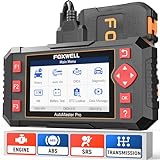
- [Easy to Use—Work Out of the Box] + [FOXWELL 2026 New Version] FOXWELL NT604 Elite scan tool is the 2026 new version from FOXWELL, designed for car owners who want to figure out the cause of issues before fixing car problems by scanning common systems like ABS, SRS, engine, and transmission. The NT604 Elite obd2 scanner diagnostic tool comes with the latest software—no need to waste time downloading software first. Plug the scanner into the OBDII port with OBDII cable to start the diagnosis.
- [Affordable] + [Reliable Car Health Monitor] Will you be confused what happens when the warning light of ABS/SRS/transmission/check engine flashes? Instead of taking your cars to dealership, this FOXWELL scanner will help you do a thorough scanning and detection for your cars and pinpoint the root cause. Note:The device is a diagnostic tool, not a repair tool. To turn off a warning light, you must first physically repair the issue causing it. Only then can the scanner be used to clear the corresponding fault code.
- [5 in 1 Car Diagnostic Scanner] Compared with obd scanners (50-100), NT604 Elite code scanner not only includes their OBDII diagnosis but also serves as ABS/SRS scanner, transmission and check engine code reader. When it’s an odb2 scanner, you can use it to check if your car is ready for annual test through I/M readiness menu. In addition, live data stream, built-in DTC library, data play back and print, all these features are a big plus for it. Note: doesn't support maintenance functions like reset or relearn. For the SRS system, NT604 Elite can read and clear common fault codes not caused by a crash, but crash/collision data cannot be cleared.
- [Fantastic AUTOVIN] + [No extra software fee] Through the AUTOVIN menu, this NT604 Elite car scanner allows you to get your V-IN and vehicle info rapidly, no need to take time to find your V-IN and input one by one. What's more, the NT604 Elite ABS SRS scanner supports 60+ car brands from worldwide (America/Asia/Europe). You don’t need to pay extra software fee. AUTOVIN may not work on some older vehicles or certain vehicle brands. If AUTOVIN fails, please input the vin code manually or go to the Diagnostic Menu to select your vehicle model.
- [Solid protective case KO plastic carrying bag] + [Lifetime update] Almost all same price-level car scanner diagnostic tool only offers plastic bag to hold the scanner.However, NT604 Elite automotive scanner is equipped with solid protective case, preventing your obd2 scanner from damage. Then you don’t need to pay extra money to buy a solid toolbox.

- 【Reset ABS/SRS/Transmission/Engine Lights】 More than an check engine code reader, OBDMATE OM901 obd2 scanner performs comprehensive diagnostics for the 4 most-used systems (ABS/SRS/Engine/Transmission). It quickly clears fault codes, turns off warning lights, read data stream and auto VIN.
- 【3.5" Handheld Scanner with 4 System Diagnose】 3.5" Super large TFT screen equipped displays an intuitive menu and clear readings of various sensors from ABS, SRS, ECM and TCM
 systems. It arrived with a silicone protective case and hard-shell carrying case, ensuring long-lived durability and drop resistance. The car diagnostic tool is plug-to-play designed, plug it and get diagnosis started without any batteries or updates required.
 - 【One-Click I/M Readines&Full OBD2 Functions】 Press F1 to get an intuitive corloured form about whether various emissions-related systems on the vehicle are operating properly. Help you get smog-check ready quickly. OM901 car scanner supports all essential OBD2 functions you need: read & clear codes, view freeze frame, read I/M readiness, retrieve VIN, live data stream (with graphing display), O2 sensor test, onboard monitoring mode, and EVAP leak test.
- 【Battery Voltage Check&DLC Pin Test】 It allows you to monitor battery health by testing current battery voltage. Plus, this obd2 diagnostic tool features DLC 16-PIN test to check current voltage of every pin.
- 【Automotive Scanner Diagnostic Kit】 The package comes with 1 car scanner, 1 USB-type c cable, 1 hard storage bag and 1 user manual(en). Free to update without any hidden fees. 5 languanges available in setting including English, French, Italian, German and Espanish. Valuable and Portable, making it a great tool kit for car owners, DIY enthusiasts, and professional mechanics.
 systems. It arrived with a silicone protective case and hard-shell carrying case, ensuring long-lived durability and drop resistance. The car diagnostic tool is plug-to-play designed, plug it and get diagnosis started without any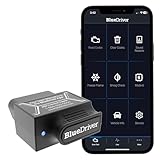
- [Diagnose Like a Pro] BlueDriver Pro is a professional OBD2 scanner and diagnostic tool that helps you scan, understand, and clear vehicle trouble codes with confidence. Turn your phone into a powerful car diagnostic scanner—no guesswork, no unnecessary repairs.
- [Read and Clear More Codes Than Ever] Read and clear more codes than basic car code readers. Access enhanced diagnostics for Check Engine, ABS, SRS, Airbag, TPMS, Transmission.
- [Verified Fixes and Real-Time Data] Get unlimited, technician-verified repair reports matched to your VIN, with definitions, causes, and confirmed fixes. Monitor live vehicle data as you drive, view freeze frames, check smog readiness, and analyze Mode 6 test results.
- [Wireless & Bluetooth Enabled] - Say goodbye to wires. BlueDriver connects with Bluetooth via your phone/tablet to a sensor that plugs into your car's OBDII port. Get all of the capabilities of an expensive code reader & scan tool without any annoying wires.
- [Broad Make & Model Coverage] Strong support for GM, Ford, Stellantis (RAM, Jeep, Chrysler), Toyota, Honda, Nissan, Mazda, Subaru, Hyundai, Mercedes-Benz, BMW, and VW.
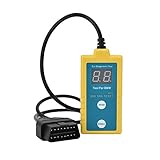
- ✔️【Professional SRS Reset for 1994-2003 BMW】 Designed specifically for classic BMW models (1994-2003). This B800 scanner reads & clears SRS airbag fault codes, turns off the warning light, and saves you a costly dealer visit. Confirmed compatible with: E36, E46 (EXCEPT 2001 330i), E34, E38, E39, Z3, and X5 (E53). NOT compatible with any BMW built before 1994 or after 2003.
- ✔️【Important: Two Different Connection Ports – Read Before Use】 To avoid “not working” issues, please note: For 1994–2000 BMWs (most E36, E34, Z3, early E39), the SRS diagnostic port is a round 20-pin connector under the hood. You MUST use the included 16-pin to 20-pin adapter cable. For 2000–2003 models (late E46, E39, X5), use the standard OBD-II port inside the cabin. Incorrect connection is the #1 reason for “incompatibility” reports.
- ✔️【Read & Clear Fault Codes in Minutes】 Quickly diagnose why your SRS light is on. The scanner accurately reads fault codes from airbag and seatbelt pretensioner systems. With one button press, clear the codes and reset the SRS warning light in seconds. No expensive dealer tools needed.
- ✔️【User-Friendly for DIYers – No Mechanic Required】 Easy operation with an intuitive button layout: ‘Enter’ to confirm, ‘Scroll’ to navigate. The clear LCD screen shows results instantly. Includes a step-by-step manual (revised for clarity) to guide you through the entire reset process.
- ✔️【Reliable Support with 1-Year Warranty】 We stand behind the quality of our B800 scanner. It comes with a 1-Year Hassle-Free Warranty. If you have any questions or need support, please contact us with your Order ID, and our dedicated team will assist you promptly.
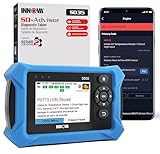
- OBD2 SCANNER FOR ALL SYSTEMS – The INNOVA SD35 is a tablet-based OBD2 scanner designed for advanced diagnostics. Read and clear check engine light, ABS, SRS, and TPMS codes, plus test your car battery and alternator to prevent unexpected failures. Vehicle coverage may vary. Please use Innova’s Coverage Checker to verify compatibility.
- ALL-SYSTEM DIAGNOSTICS & LIVE DATA – Unlike basic code readers, this OBD2 scanner for all vehicles scans engine, transmission, ABS, SRS, and more. Get real-time live data, including RPM, fuel trims, temperature readings, and oxygen sensor performance.
- OBD2 TABLET WITH USER-FRIENDLY INTERFACE – This automotive scan tool features a high-resolution display, making vehicle diagnostics faster and easier.
- ADVANCED TPMS, OIL RESET & SERVICE FUNCTIONS – Perform TPMS sensor checks, oil light reset, and other service resets with ease This professional diagnostic tool provides comprehensive vehicle maintenance capabilities in one device.
- WIDE VEHICLE COVERAGE (1996 & NEWER CARS & TRUCKS) – This OBD2 scanner Bluetooth tablet is compatible with Toyota, Ford, Honda, Chevrolet, Nissan, Dodge, and more. However, feature coverage may vary. Please use Innova's Coverage Checker to verify coverage.
SEOCONTENT-START
Technician Reference Booklet MSA5P0136C June 2013 SUPPLEMENTAL RESTRAINT SYSTEM (SRS) Module 604 SUBARU® ConFidence in Motion ~M lPlPlbrn~rn~lf n ~lf~~lf ~~lfrn~ «~~» © Subaru of America, Inc. 2013 912 to 924 © Copyright 2013 Subaru of America, Inc. All rights reserved. This book may not be reproduced in whole or in part without the express permission of Subaru of America, Inc. Specifications in this Guide are based on the latest product information available at the time of publication. Some images shown are for illustration purposes only. Subaru of America, Inc. reserves the right at any time to make changes or modifications to systems, procedures, descriptions, and illustrations contained in this book without necessarily updating this document. Information contained herein is considered current as of June 2013. SRS Disclaimer: The airbag Supplemental Restraint System (SRS) affords the driver and the front passenger additional protection in moderate to severe frontal and side-impact collisions and outboard 2nd row passengers additional protection in moderate to severe side impact collisions. This system provides supplemental protection only, and seat belts must be worn in order to avoid injuries to out-of-position occupants upon bag deployment and to provide the best combined protection in a serious accident. *Children should always be properly restrained in one of the rear seats. See Owner’s Manual for recommended seating position. This Technical Reference Booklet (TRB) is designed to be used in a classroom environment or as a guide for self study. The TRB is not intended to be used as a supplement or substitute for the Subaru Service Manual. Always consult the appropriate Service Manual when performing any diagnostics, maintenance or repair to any Subaru vehicle. Supplemental Restraint System (SRS-604) 4 June 2013 Table of Contents SRS Airbag Syst em Overview…………………………………………………………. 6 SRS System Precautions………………………………………………………………… 6 Component Overview…………………………………………………………………….. 7 Component Operatio n…………………………………………………………………… 8 Roll Connector Phasi ng…………………………………………………………….. 10 Connector Double Loc k Sensors ………………………………………………11 Airbag Module……………………………………………………………………………….. 12 Airbag ……………………………………………………………………………………………… 13 Airbag Deployment……………………………………………………………………….. 13 Airbag War ning Lamps………………………………………………………………….. 14 Diagnostics and Servicing…………………………………………………………….. 14 SRS System Servicing………………………………………………………………….. 15 1996 Model Legac y and Outbac k…………………………………………………. 17 1998 Model Forest er……………………………………………………………………. 18 2000 Model Legac y and Outbac k…………………………………………………. 20 2001 Model Legac y…………………………………………………………………………. 21 2002 Model Impreza WRX………………………………………………………………. 22 2003 Supplementa l Restrai nt Syst em (SRS)………………………………. 23 2005 Legac y Airbag Syst em…………………………………………………………… 26 Calibratio n Proc ess…………………………………………………………………….. 30 SRS Interior…………………………………………………………………………………… 33 Side Impact Sensor……………………………………………………………………… 35 Subaru B9 Tribeca …………………………………………………………………………. 36 Pressure Sensor Type-Occupant Detection System………………………….. 36 2007 and Newer Tribeca Airbag Syst ems…………………………………… 38 2008 Supplementa l Restrai nt Syst em (SRS)………………………………. 39 2009 Forest er SRS Airbags ………………………………………………………….. 42 2010MY Legac y and Outbac k…………………………………………………………. 43 2012MY Impreza Airbag Syst ems…………………………………………………… 45 Occupa nt Detection Syst em (ODS)…………………………………………….. 51 2014 Forest er………………………………………………………………………………… 56 Driver Side Front Airbag………………………………………………………………… 56 Curtain Airbag……………………………………………………………………………… 57 Knee Airbag………………………………………………………………………………… 58 Dual Deployment Seatbelt Pretensioners………………………………………… 59 Supplemental Restraint System (SRS-604) 5 June 2013 SRS Test Harnesses……………………………………………………………………… 62 Special Tools………………………………………………………………………………… 62 Service Bulletins ………………………………………………………………………… 63 Tech TIPS…………………………………………………………………………………………. 64 Supplemental Restraint System (SRS-604) 6 June 2013 SRS Airbag System Overview The SRS Airbag System is a safety device designed to function in conjunction with a knee bolster, seat belts, and shoulder belts. Similar to other manufacturers, it deploys in frontal and side collisions. It is an electrically operated system which uses a chemical deployment device. SRS Components The SRS System features built-in Self- Diagnostics and a redundant Safety Design built into the SRS control module. The system safeguards include double locking connectors with Diagnostic Sensors, a selfshorting inflator SRS Airbag Module connector to prevent accidental deployment during servicing, and a Steering Roll Connector. A capacitor supplies backup power. Finally, for redundancy, there are two front Inertia Sensors and two Safety Sensor Circuits. NOTE: THE SRS Airbag SYSTEM IS THOROUGHLY DESIGNED TO PREVENT ACCIDENTAL DEPLOYMENT, HOWEVER, CAUTION SHOULD ALWAYS BE USED WHEN SERVICING OR DIAGNOSING THE SYSTEM. THE SRS SYSTEM, WHEN HANDLED PROPERLY, IS LESS HAZARDOUS TO SERVICE THAN A CAR BATTERY OR FUEL SYSTEM. SRS System Precautions 1. W henever servicing the SRS System disconnect the battery and wait at least 10 minutes before proceeding. 2. Always store the SRS Airbag Module (steering wheel pad) facing up. 3. All of the SRS components are sealed – DO NOT DISASSEMBLE. 4. All of the SRS wiring is enclosed in a yellow housing for quick identification. Use care whenever working near a yellow housing. These wires may not be repaired if they are damaged. They MUST be replaced. 5. Do not drop any of the components. This could alter their sensitivity. 6. The SRS Module must avoid extreme heat exposure (200 degrees F. or greater). NOTE: EXPOSURE TO TEMPERATURES OF 300 DEGREES F. OR GREATER WILL CAUSE DEPLOYMENT. 7. W ear protective clothing when handling deployed Airbag components. Always use gloves and eye protection. Although the residue is NON toxic, it may cause minor eye and skin irritation. 8. N ever place yourself or test equipment between the Airbag Module and seat when serving the Airbag System. NOTE: REVIEW ALL CAUTIONS OUTLINED IN THE SERVICE MANUAL REGARDING SKIN AND EYE EXPOSURE TO DEPLOYED Airbag RESIDUES. 5 Supplemental Restraint System (SRS-604) 7 June 2013 Component Overview The following is an overview of the first Subaru vehicle (1992 SVX) to be equipped with the SRS Airbag system. The Airbag and Inflator Module are attached to the steering wheel and covered by the steering wheel pad. It contains the Deployment module, Airbag and cover pad. Front Sensors and ECM Front Sensor There are two (2) front sensors located inside the front fenders behind each inner fender liner. In addition, there are two Safety Sensors located inside the ECM. Steering Roll Connector The steering roll connector is mounted between the steering wheel and the combination switch. It is an integral part of the combination switch assembly. The design of this assembly allows for steering wheel rotation. It also provides the hard wire connection between the Airbag module and the SRS system harness. Double Lock Connector All SRS connectors are equipped with double locks and sensors. The sensors are used to indicate that the connector is not doublelocked. For identification purposes, they are green in color. 7 8 9 10 Supplemental Restraint System (SRS-604) 8 June 2013 SRS ECM Location The ECM is located under the center console. It receives sensor input signals in the event of a frontal impact. It then sends a signal to trigger Airbag deployment. The ECM has selfdiagnostic capabilities, incorporating long term memory. The ECM sends a continuous low voltage signal to monitor the sensors, the harness, the deployment module, and to check for connector integrity. Combination Meter There are two (2) Airbag warning lamps located in the combination meter. For safety purposes, there are also two (2) independent drive circuits. Only one lamp should illuminate at time. Component Operation The ECM controls the SRS Airbag System by constantly monitoring the input signals from the front sensors, the Safety Sensors and the double lock circuit. It also generates output signals to the warning lamps and to the inflator module. Open ECM The ECM contains two Safety Sensors which provide input signals, and two capacitors which supplement low battery voltage. The capacitors also provide backup voltage in the event of a total loss of battery voltage. They are triggered by an internal voltage regulator. NOTE: THE CAPACITORS CAN ACTIVATE THE SRS Airbag UP TO 10 MINUTES AFTER A TOTAL LOSS OF BATTERY VOLTAGE. THE REGULATOR MONITORS BATTERY VOLTAGE AND CAN SUPPLEMENT BATTERY VOLTAGE AS NEEDED IN THE EVENT OF A COLLISION. 11 12 14 Supplemental Restraint System (SRS-604) 9 June 2013 Front Sensor Cut-Away Redundancy is provided by the front left hand and right hand sensors. The hollow roller design provides a movable mass. The roller is mounted on a flat surface and held in place by a flat roller spring. The roller spring allows forward roller movement during frontal impacts of 12.5 MPH or greater. In this case, the roller and spring assembly makes contact with the circuit terminal. When the roller makes contact with the circuit terminal, it sends a collision signal to the ECM. This completes the sensor circuit and provides a ground circuit to the inflator. The metal housing of the front sensors are surrounded by resin and filled with inert gas to prevent moisture damage. CAUTION: DO NOT OPEN THE SENSOR HOUSING. THE INTERNAL COMPONENTS ARE NOT SERVICEABLE. The continuous sensor harness is molded directly into the sensor body. The harness has only one sensor connector, which is located at the ECM. This provides a one-piece circuit path to the ECM. A damaged harness or sensor must be replaced as an assembly. Safety Sensor Two Safety Sensors located inside the ECM provide redundancy. They operate similar to the Front Sensors in that they provide a B+ circuit to the Inflator. Although they are similar in construction and operation to the Front Sensors, the Safety Sensors are more sensitive. Weight added to the center of the roller makes it heavier, which in turn, makes the sensor more sensitive to impact. The ECM must be replaced if one of the Safety Sensors fail. 15 16 Supplemental Restraint System (SRS-604) 10 June 2013 Steering Roll Connector The Steering Roll Connector is a continuous flat ribbon-type cable. The cable coils around the hub which allows 2.65 turns (either direction) from the center steering position. This provides a direct hard wire connection between the SRS Airbag Module and the ECM harness. It also includes the Horn Circuit. This eliminates the potential circuit interruption inherent to sliding contact-type connectors, which also prevents false trouble codes. Two guide pins are used to align the roll connector with the steering wheel. Roll Connector Phasing The roll connector MUST be phased to the steering system. With the front wheels centered, align the inner “center” indicator (early versions of the SRS Airbag system) located behind the window in the roll connector, with the “center” indicator located on the rotating cover next to the window. There is also an alignment arrow on the connector case. Roll Connector Indicator If the inner indicator shows “1R” in the window, rotate the cover one full rotation to the right. If the inner indicator shows “2R” in the window, rotate the cover two full rotations to the right. Similarly, if the indicator shows either “1L” or “2L”, rotate the cover one or two left hand rotations. Consult the service manual phasing of newer model roll connectors. NOTE: TO MAINTAIN PROPER STEERING WHEEL ALIGNMENT, CENTER THE FRONT WHEELS AND SCRIBE AN ALIGNMENT MARK BETWEEN THE STEERING WHEEL HUB AND THE SHAFT, PRIOR TO DISASSEMBLY. 17 19 Supplemental Restraint System (SRS-604) 11 June 2013 Connector Double Lock Sensors The following are examples from the 1992 SVX. Double lock sensor mechanisms are identified by a green color. They are used on all SRS electrical connectors. The system uses four 4 double lock sensors between: 1. The main ECM connection 2. The system power supply and the warning light. 3. The ECM harness and the roll connector at the combination switch. 4. The roll connector and the Airbag module located behind the steering wheel pad. Schematic (Artwork) These sensors connect the double lock detecting circuit to the negative side of the igniter circuit. This provides a ground signal circuit for the warning light system. If any green double-lock lever is not properly latched, the SRS warning lamp will be illuminated and a Trouble Code will be displayed (Code 14). The primary double lock at the ECM secures the main harness connector as well as the two front sensor harness connectors. Primary Double Lock Connector (unlocked) Double lock sensor terminals make contact when they are unlocked and they separate when they are locked. The green tabs mechanically prevent the connector from being removed. The primary double lock will not latch unless the connectors are completely inserted. Releasing Primary Double Lock In order to release the primary double lock, use a small screw driver. Press in on the metal loop and simultaneously raise the green latch. Then to remove the individual connectors, press down on the primary connector locks. 21 22 23 SRS ECU Supplemental Restraint System (SRS-604) 12 June 2013 Connector Lock Operation Secure the primary double lock by pressing the green latch down until a click is heard. Two Step Lock The procedure for locks #2 and #3 are similar to the primary double lock, except that they are released at the primary lock in two steps. First, press down once on the spring-loaded green latch and it will pop out. Then press it down a second time in order to remove the connector. To secure the double lock, push in the green latch until a click is heard. Double lock locations: 1. The main ECM connection 2. The system power supply and the warning light. 3. The ECM harness and the roll connector at the combination switch. 4. The roll connector and the Airbag module located behind the steering wheel pad. Note: Double locks are utilized on all models; however the double lock sensing circuits have been discontinued. Airbag Module The Airbag module comes as a one piece assembly with the horn buttons. It is mounted to the steering wheel with two or four #30 tamper-proof Torx bolts. Airbag Module (Artwork) The Airbag module consists of three subcomponents: 1. Inflator 2. Airbag 3. Inflator harness with connector NOTE: The Airbag Module is serviced only as an assembly. DO NOT attempt to disassemble or repack the airbag. 24 25 27 AIIRBAG MODULE Airbag Harness Connector St,eeriin,g Wheell lnHalor Supplemental Restraint System (SRS-604) 13 June 2013 Inflator Igniter The inflator igniter is designed to ignite a squib after it receives an input from the ECM. The igniter is an electrically heated device which generates temperatures in excess of 300 degrees F. to ignite the squib. Squib (Artwork) The squib consists of fire transmissive material used to ignite nitrogen pellets. The nitrogen pellets generate nitrogen gas (N2) during combustion. This creates rapid gas expansion which, in turn, inflates the Airbag. The built-in screen cools and removes hot cinders from the N2 before the N2 enters the Airbag. Airbag The Airbag itself is located behind the steering wheel center pad. It is made out of nylon material which expands to a diameter of approximately 30 inches (762mm) when inflated. (The design and shape of the Airbags has changed over the years to provide increased safety to the vehicle occupants and to comply with government regulations). The bag is coated on the inside with silicone and is coated on the outside with talcum powder or cornstarch. This provides lubrication for deployment. These inner and outer coatings produce the majority of the residue found after deployment. Airbag Deployment In order to activate the system, a frontal force of 12.5 MPH or greater is required. This force overcomes the inertia and the tension of the roller springs of the rollers in the front sensors and the Safety Sensors. The rollers then make contact with the circuit terminals. The front sensors provide a ground circuit while the Safety Sensors provide a positive circuit. In order for the ECM to activate the inflator, it must receive at least one collision signal from the front sensors and at least one collision signal from the Safety Sensors. After receiving a signal from the ECM, the igniter instantly heats up to 300 degrees F., igniting the squib which burns the nitrogen pellets to create nitrogen gas. The generated N2 goes through the screen into the Airbag. The outer skin (steering wheel pad) of the inflator Airbag module then ruptures as the Airbag deploys. The driver’s forward movement is absorbed by the Airbag as it vents the N2 through two 1.58 inch (40mm) holes. The Operational Time Sequence is almost instantaneous: 1. Collision: Zero seconds 2. Operation of the inflator: 30 millisecond 3. Discharge of the N2: About 60 millisecond 4. Completion: About 110 milliseconds NOTE: A VEHICLE WITH A DEPLOYED Airbag MUST BE TOWED TO THE DEALER FOR SERVICE. 29 To Airbag ftnltor Pellets TnJyet ot Flame – Flow ol N lrogen Ga Supplemental Restraint System (SRS-604) 14 June 2013 Airbag Warning Lamps Two (2) Airbag warning lamps are located on the lower right-hand corner of the combination meter. Two bulbs are used with independent drive circuits for redundancy. The assembly is replaced as one unit. Airbag Warning Lamps The lamp illuminates for 8 seconds after the key is turned to the “ON” position. It communicates to the operator when service is required and it communicates trouble codes to the technician. Diagnostics and Servicing The following procedure describes pre- CAN (Controller Area Network) SRS Airbag diagnostics. The self-diagnostic system employs three modes similar to the fuel system selfdiagnostics: 1. U -Check (User Check) 2. D-Check (Dealer Check) 3. Read Memory The U-Check Mode warns the driver of a system fault by illumination of the “Airbag” light on the dash. The light will turn off if the trouble source corrects itself. Trouble codes are stored in long term memory and displayed similar to the fuel system codes. They are indicated by the “Airbag” light with the following values: 1. 1.2 Second (Long) Flash = 10 2. 0.3 Second (Short) Flash = 1 3. Continuous 0.6 Second Flashes = no trouble Diagnostic Connector There is also an additional factory long-term memory which can only be accessed by the factory. The purpose of this is for the ECM to maintain a vehicle trouble code history. The long term memory cannot be cleared in the field. CAUTION: Do not unlock “Double Lock” connectors or disconnect system connectors with the ignition “ON”. The ECM will set a trouble code immediately. These codes will also be set in hidden memory and cannot be cleared. 33 34 \ \ 1 2 3 4 5 6 7 8 9 10 \ \ . Test mode of MPFI Read memory of MPFI Clear memory of SAS Diagnosis connector (Black) Select monitor connector (Yellow) Test mode of power steering Read memory of power steering Diagnosis of power steering Diagnosis of passive belt Diagnosis of SRS Ground Supplemental Restraint System (SRS-604) 15 June 2013 SRS System Servicing An SRS inspection is required every ten (10) years. Perform the Self-Diagnostic Checks and verify that the Airbag warning lights are functioning. Also verify that there are no codes in memory and no current codes existing. Sample List of Test Harnesses NOTE: REFER TO THE APPROPRIATE MODEL YEAR SUBARU SERVICE MANUAL ON THE STIS WEB SITE FOR COMPLETE TEST HARNESS LIST. CAUTION: NEVER USE TEST HARNESS “C” TO CHECK THE RESISTANCE OF THE Airbag MODULE. CAUTION: THE DEPLOYMENT HARNESS SHOULD NEVER BE CONNECTED TO THE Airbag MODULE WHILE THE MODULE IS IN THE VEHICLE. CAUTION: NEVER TURN A SRS CONTROL UNIT UPSIDEDOWN OR MOVE AN SRS CONTROL UNIT THAT IS CONNECTED TO IT’S HARNESS. CAUTION: ALWAYS US A DIGITAL TYPE OHM METER WITH AN OUTPUT SPECIFICATION OF 100 MILLIAMPS OR LESS WHEN TESTING THE Airbag SRS CIRCUITS. USE OF THE INCORRECT TYPE OF METER MAY CAUSE ACCIDENTAL DEPLOYMENT. IF YOU ARE NOT SURE ABOUT THE SPECIFICATION OF YOUR METER, DO NOT USE IT UNTIL THE SPECIFICATIONS CAN BE VERIFIED. 35 98299AEOOO Test Harness K 98299FA030 Test Harness H 98299FCOOO Test Harness E 98299FC010 Test Harness F 98299FC020 Test Harness G 98299FC040 Test Harness I 98299FC041 Test Harness 12 98299FEOOO Test Harness L 98299FE020 Test Harness M 98299PAOOO Test Harness A 98299PA011 Test Harness B 98299PA020 0 Test Harness C 98299PA040 Test ~ Resistor 1 of 2 needed 98299PA040 ~ Airbag Resistor 2 of 2 needed Supplemental Restraint System (SRS-604) 16 June 2013 1995 Model Legacy Steering Wheel Dual Supplemental Restraint System Airbags is standard equipment on all 1995MY Legacy and functions are similar to previous Model Year Legacy. Dash Board Airbag The passenger front Airbag Module is wired in parallel with the driver’s side. Both sides will deploy in the event of a frontal collision of 12.5 mph or greater. Seat Belt Four (4) position, three (3) point seat belts with ELRS are used in the front seats. The outer rear seat positions use a three (3) point seat belt with ALR assemblies. The center rear seat position uses a two (2) point seat belt. CAUTION: BEFORE SERVICING ANY SRS COMPONENT, DISCONNECT THE BATTERY AND WAIT 30 SECONDS FOR THE CAPACITORS TO DISCHARGE. 37 38 39 Supplemental Restraint System (SRS-604) 17 June 2013 1996 Model Legacy and Outback ECM Location All 1996MY Legacy and Outback vehicles have dual Airbags. However, the electrical systems operating them will differ. ECM on Bench The Outback utilizes the same system as was used on the 1995MY Legacy which have front sensors and Safety Sensors incorporated in the SRS control unit. The 1996MY Legacy vehicles no longer have separate front sensors. A “G” sensor located in the control unit performs all impact sensing. Steering Wheel Steering Wheel Side View Both models use a floating type SRS Airbag module. The 1996MY Legacy steering wheel will no longer have horn buttons. To use the horn, press on the SRS Airbag module, which activates a switch plate. 41 42 43 44 Supplemental Restraint System (SRS-604) 18 June 2013 1998 Model Forester Dash The SRS Airbag system for the 1998MY Forester employs both a driver and passenger Airbag. Please observe all warning precautions listed on the appropriate service publications and warning labels of the vehicle. The driver side Airbag is unchanged from that of the 1997 Impreza. Dashboard configuration for the passenger side requires a new Airbag design. The Airbag module can be removed or installed with the instrument panel in place. The inflator of the passenger side Airbag is a new design. During deployment, a liquid fuel (Alcohol 10 milliliters) is ignited. The expansion of gasses during the burning of the fuel inflates the Airbag. Gasses produced during burning include Argon and Helium. Control Unit Location Control unit location is just forward of the shifter assembly. Control Unit on Bench The connector appearance and double lock feature have changed. The control unit connector plate is designed for use with other Subaru SRS systems as well as the North American models. The connector is yellow with 20 pins. The connector is disengaged by pushing down on the top tab and gently pulling, applying force to the tab and the connector. A plastic tab inside the connector area separates the contacts that monitor the circuit for loose connections (Code 14). Double Lock The connector “double-locks” for the driver side and passenger side Airbag modules have also changed. 46 47 48 49 Supplemental Restraint System (SRS-604) 19 June 2013 To disengage, push down on the yellow tab and slide the green tab. Next, release the tab and pull gently on the connector. Failure to release the tab before attempting separation will result in the connector remaining engaged. The new test harnesses are labeled, respectfully: E, F, and G. The same test resistor is used when checking driver or passenger Airbag module integrity. Steering Roll Connector The window of the Steering Roll Connector has been deleted. Follow the direction on the Steering Roll Connector and the service manual when working with an area that will change the wheel to Steering Roll Connector phasing. Side Airbag The Legacy SRS Airbag system utilizes the same type of control unit and connectors with the addition of two (2) front sub-sensors mounted just forward of the wheel arch area. Their input to the SRS ECM influences deployment, however, deployment is not dependent on the front sensors switches closing. The ECM makes the final determination to deploy or not using logic that contains preset values. Side SRS Airbags are equipped on GT Limited and Outback Limited models. They are designed to deploy on impact to the side of the vehicle. The severity of the impact is determined by the side Airbag sensor located in the B-Pillar. Side impacts to the rear door of the vehicle are absorbed by the door and body of the vehicle as well as to the shield under the rear passenger seat. The transferred force is then distributed through the shield and back to the body of the vehicle. 50 51 Supplemental Restraint System (SRS-604) 20 June 2013 2000 Model Legacy and Outback Vehicle Electrical (Artwork) The SRS Airbag control unit has been changed to include the addition of inputs and provide the output necessary for side Airbag and seat belt pretensioner operation. Pretensioner Schematic (Artwork) This diagram illustrates the electrical layout of the SRS Airbag system without side Airbags. The front sub-sensors are located in the front bumper area. The seat belt pretensioners will activate at the same time the front Airbags activate. System Schematic (Artwork) This diagram illustrates the total SRS Airbag system electrical layout. During a frontal impact, the front sub-sensors and sensors contained in the SRS control unit determine the severity of impact. If the impact exceeds preestablished parameters, the front Airbags, driver and passenger side, as well as both front seat belt pretensioners activate. Seat belt pretensioner operation winds the belt to restrain the occupant. Pretensioner The gas generator, when activated, pushes a piston which is made onto a rack-type gear. This gear rotates the winding gear creating the motion and force necessary to wind the belt inward. When the force of the belt reaches a fixed value, the force limiter contained in the seat belt assembly operates to control the restraint force so it does not increase further. 53 54 55 56 Side air bag module-LH Driver seat air bag module Side air bag sensor-RH Passenger seat air bag module Pre-tensioner-RH Driver see! ai rblilgmodule P11sengersee1 ai rbag module Fron1st.tM= RH LH Supplemental Restraint System (SRS-604) 21 June 2013 Front Seat The GT and Outback models have a 6-way power driver seat. When servicing this seat, disconnect the side SRS Airbag connector after positioning the seat for mounting bolt removal and disconnecting the battery. (Wait 30 seconds before proceeding). Side Airbag Harness 2001 Model Legacy Passenger Airbag All Legacy vehicles will share an enhancement to the passenger side SRS Airbag System. Passenger Harness The Airbag module now contains 2 inflation units. Each one independently controlled by the SRS ECM. During an impact of lower speeds (above the deployment minimum specification) one side of the module will be activated followed by the other side. The time between the two sides activating for deployment is controlled by the ECM to decrease the impact of the bag with the passenger. The higher the impact speed, the shorter the time between the two sides activating for deployment. The two sides will be activated together above a higher impact speed. 57 58 60 61 Supplemental Restraint System (SRS-604) 22 June 2013 Harness Connector A new style of connector is used for the passenger side Airbag module. The connector is disengaged by pulling down on the wider portion of the body harness while supporting the lower portion. Driver Side Airbag There is no change to the driver side SRS Airbag. 2002 Model Impreza WRX WRX models will have side Airbags as standard equipment. Under Seat Connector Caution must be observed while removing the front seats to ensure the SRS wiring harness is not damaged. Side Impact Sensor The Side Impact Sensor is mounted on the left and right B pillars behind the seat belt trim panels. 62 63 65 66 Supplemental Restraint System (SRS-604) 23 June 2013 Seat Belt Pretensioner The SRS Airbag for Impreza 2002 will include the addition of seat belt pretensioners for all models (Passenger side Airbag module is the single deployment type). Control Unit The Control Unit is located in front of the gate type shifter. 2003 Supplemental Restraint System (SRS) Seat Tag All Forester models are equipped with front side Airbags. The seat covers are tagged as a reminder for technicians. Upper Seat Frame The Airbag is attached to the upper seat frame and inflates to form a larger pillow when activated in a side collision. All Forester front seats are also equipped with active head restraint. SRS wires routed through the seat are not covered with the yellow plastic cover. 67 68 70 71 Supplemental Restraint System (SRS-604) 24 June 2013 Normal Position Rear Impact Position during rear impact. Airbag Module All 2003 Forester models will be equipped with driver and passenger front SRS Airbags, seat belt pretensioners and driver and passenger side Airbags. Side Airbag (Artwork) The side Airbags when deployed are larger and provide additional protection for the chest and head. Satellite Discrimination Sensor The location of the front Satellite Discrimination Sensor has been relocated due to the new vehicle design. 72 73 74 75 76 Supplemental Restraint System (SRS-604) 25 June 2013 Connector Connector Lock Lock-Up Lock Down The connector and connector lock on all deployment devices have changed. The new style requires the release of the yellow tab by pulling up on the tab and then separating the connector from the deployment device. Note: Front seat head / and chest side-impact Airbags (SRS) are standard on all WRX and WRX STi Models. 77 78 79 80 Supplemental Restraint System (SRS-604) 26 June 2013 2005 Legacy Airbag System Warning Label Driver’s Visor All 2005 Legacy vehicles are equipped with the Occupant Detection System (ODS). Designed to identify the front seat passenger’s weight, the system determines if the front passenger seat is empty or occupied by a person exceeding approximately 80 pounds. NOTE: This system is also equipped on Forester Models beginning on the 2006 model year. Under Passenger Seat A load cell or strain gauge is located in the corners of the lower seat frame on the passenger side. The weight of the passenger is distributed into the frame and is sensed by the 4 load cells. Occupant Detection System (ODS) Control Unit Signals from each load cell are amplified and send to the Occupant Detection Control Module. The Occupant Detection Control Module sends its determination of the front passenger occupancy to the SRS Airbag control unit. Should the need for deployment occur the data from the Occupant Detection Control Module determines if the passenger side Airbag module will deploy. 82 83 84 85 Supplemental Restraint System (SRS-604) 27 June 2013 Airbag Module With the seat empty the passenger side Airbag will not deploy, but the seat belt pretensioner will activate. With the weight of a person exceeding approximately 80 pounds the passenger Airbag will deploy and activate the seat belt pretensioners. Passenger Airbag Light Off The vehicle communicates the front passenger Airbag status to the dash using the center Pass Airbag Off/On light. Passenger Airbag Light On With the seat empty the light will indicate off. When a passenger exceeding approximately 80 pounds occupies the seat the light will change to On. Passenger Seat Belt Light When this light changes to On the warning light above the rear view mirror indicates the status of the passenger side seat belt. The light will illuminate as a reminder for the front passenger to buckle their seat belt. NOTE: The passenger seat belt light will also illuminate with a weight below the threshold on the sear even with the airbag in passive mode. 86 87 88 89 Supplemental Restraint System (SRS-604) 28 June 2013 Seat Bottom Corner Seat Frame The load cell construction attaches to the slide rail and the seat frame. Force from the downward movement of the seat cushion transfers to the seat frame. Load Cell Slide Rail View This force changes the output of the load cell. Load Cell Seat Frame View The output is a very low voltage and must be amplified before it is sent to the Occupant Recognition System control module. Load Cell Bottom View 90 91 92 93 94 Supplemental Restraint System (SRS-604) 29 June 2013 Bridge Circ uit (Artwork) The sensitivity and low voltage output of the load cell makes it necessary to ensure the relationship of the load cell and the parts, they attach to remain constant. The load cell operates by comparing the voltage output of two branches of a parallel circuit. One branch is fixed and the other is variable and its output (millivolts) varies by the load placed on the seat. The two outputs are amplified at the load cell by the built in amplifier and compared to each other to form the signal that is sent to the Occupant Detection Control Module. The components of the ODS located on the lower seat are not serviceable. The lower seat frame and rails are replaced as a unit. Seat Belt Anchor Cover Seat Belt Anchor Cover Removed If the seat is removed or the bolts of the seat loosened, the load cells will need to be recalibrated. Calibration is accomplished using the select monitor and special tools 98399AG000 and 98399AG010. Before seat removal the front passenger seat belt must be removed from the right side of the front seat. ODS Seat Harness Carefully disconnect all connectors before seat removal. 95 96 97 98 Example of load cell operation + Vin ~-… Vout (MV) Supplemental Restraint System (SRS-604) 30 June 2013 Calibration Process Using the Select Monitor and car tridge 24082AA260 or SMIII scroll over “Occupant Detection System” Press “yes” and follow the instructions on the Select Monitor. System Selection Menu 2005 Load Cell Type Occupant Detection System Complete All Calibration Checks Adjust the Passenger Seat 100 101 102 103 104 I System Se 1 ect ion Menu I Engine Control System Transmission Control System Cruise Control System Brake Control System Image Processing Preview Control Tire pressure monitor Integ. unit mode Radar sensor Occupant Detection System 2005MY Load Cell Type Occupant Detection System Press “YES” I Occupant Det ed ion System I 1 . System Ca 1 i brat ion 2.Sensor Data Output 3.Diagnostic Code(s) Display 4.Clear Memory 5.Digital Multi-meter 6.0scilloscope Complete all calibration checks, or the A/B warning lamp will be illuminated and a trouble code saved. Continue “YES”, Quit “NO” Adjust the passenger seat to the condition shown 1n service manual Cont i nue : “YES” , Ou it “NO” Supplemental Restraint System (SRS-604) 31 June 2013 In Process Threshold Adjustment Empty the Passenger Seat Adjust the Passenger Seat In Process Input Threshold Weight Note: (See appropriate Subaru Service Manual on STIS for this information) 105 106 107 109 110 108 In process … Please wait for a while without touching vehicle Threshold adjustment is successfully completed Weight inspection will be carried out Cont i nue : “YES,, , Ou it : “NO,, Empty the passenger seat Cont i nue “YES,, , Ou it “NO,, Adjust the passenger seat to the conditi on shown 1n service manual Continue “YES ” , Ouit “NO” In process … Please wait for a while without t ouching vehicle Input threshold weight mass(lbs) [~0.0] Press “YES” After inputting weight mass Supplemental Restraint System (SRS-604) 32 June 2013 Lower Weight on Seat Upper Weight on Lower Weight Place the lower calibration weight in place, followed by the upper weight. Be certain to engage the alignment notches before releasing the upper weight. Put Threshold Weight Press “YES” In Process System Calibration NOTE: THE SMIII CAN ALSO BE USED TO CALIBRATE THE SYSTEM 111 112 113 114 115 116 Put threshold weight in the position on the passenger seat shown in service manual Cont i nue “YES,, , Ou it “NO,, Press “YES” after putting threshold weight on the seat Cont i nue “YES,, , Ou it “NO,, In process … Please wait for a while without touching vehicle System calibration is successfully completed Press “YES” to END Supplemental Restraint System (SRS-604) 33 June 2013 SRS Interior Steering Wheel Driver Seat Bottom The driver seat is equipped with a sensor that is used to judge how close a driver is sitting to the steering wheel. Hall Type Sensor Back of Driver Airbag When the driver is sitting close to the steering wheel the Hall type sensor sends a signal to the SRS control unit which during deployment will activate the SRS Airbag in 2 stages, reducing the deployment force to the driver. 2005 Legacy vehicles are equipped with Curtain Airbags. These Airbags will deploy in a side impact which exceeds the preset values of the curtain Airbag sensors or the side Airbag sensors. A Pillar 118 119 120 121 122 Supplemental Restraint System (SRS-604) 34 June 2013 B Pillar The curtain Airbag module is mounted above the head liner along the entire length of the roof line. C Pillar D Pillar The connector for the curtain Airbag module is located in the D pillar area. Curtain Beginning Deployment Curtain Airbag Deployed During deployment the curtain Airbag will push the far side of the headliner down and form a curtain that will provide protection to the head and shoulder areas of the front and rear seat occupants. Curtain Airbag Side View The curtain Airbag will maintain an extended inflation time which will continue to provide protection during secondary impacts. 123 124 125 126 127 128 Supplemental Restraint System (SRS-604) 35 June 2013 Close up of Curtain Airbag Side Impact Sensor Curtain Airbag Sensor Side Airbag Sensor The side impact sensors (side Airbag sensor, curtain Airbag sensor) are installed at the bottom of the center pillars and the rear quarter pillars. If a sensor detects an impact exceeding the specified level from the side, it sends a signal which is used for Airbag system deployment judgement to the Airbag control module. Side Impact Sensors (Artwork) Signals from the side Airbag sensors are effective for both the side Airbags and Curtain Airbags, while signals from the curtain Airbag sensors detect impact to the rear seat sides and let only the Curtain Airbags deploy. 129 130 131 132 ::: : -:- –B—::: (A) Side airbag sensor (C) Side airbag module (1) 0R (B) Curtain airbag sensor (D) Curtain airbag module Supplemental Restraint System (SRS-604) 36 June 2013 Subaru B9 Tribeca Pressure Sensor Type-Occupant Detection System Seat Frame Top Side Seat Frame Bottom View Pressure Sensor All Subaru B9 Tribeca models are equipped with driver and passenger front Airbags. Front seat active headrests, front seat belt pretensioners, front side Airbags and Curtain Airbags. The front passenger seat is equipped with the Passenger Occupancy Detection system. This enhanced system provides the Occupancy Detection System (ODS) with improved diagnostics and calibration. The 2006 Subaru Tribeca introduces a new Occupant Detection System, PODS-B. This system is described as a Pressure Sensor Type and appears on the SMIII screen for identification during diagnosis. This Pressure Sensor Type ODS will be phased into all models. This system will be used to determine if the passenger side Airbag will be deployed or not in a frontal collision. Note: Do not disconnect any electrical connector of the SRS or ODS until the battery has been disconnected. The PODS system determines the weight of the occupant by measuring the pressure created in a silicon filled bladder. The weight placed on the bladder pushes the silicon through a tube to the pressure sensor. The pressure sensor will then send the value of the weight to the PODS control module. The PODS control module will then send a signal to the SRS control unit, indicating deploy or do not deploy. 134 135 136 Supplemental Restraint System (SRS-604) 37 June 2013 Replacement parts for the PODS system are supplied as a service kit, which includes the foam for the lower seat cushion, bladder with pressure sensor, seat harness and PODS control module. Additional replacement items are the Belt Tension Sensor and the seat belt buckle switch. Never change any part of the service kit without changing the contents of the entire kit. Service kit components are calibrated together and calibration of these parts can only be performed at the seat manufacture. After installation of the service kit or when the seat cover has been removed or replaced, Zero the PODS system with the select monitor. Zeroing tells the PODS control module that the seat is empty and allows the calibration of the service kit items to be compared to empty seat conditions. Zeroing does not need to be performed when the seat is removed to access other vehicle parts. Unnecessary Zeroing will not harm the system. Seat Belt Tension Sensor A seat belt Tension Sensor is used with this system. It will send a signal to the PODS Control Unit regarding the current seat belt tension which changes dependant on ALR (Automatic Locking Retractor) function. ALR function of the seat belt is used when child seats are anchored in the front seat. Note: Children under the age of 12 years should always be seated in the back row seats. Input of high belt tension will cancel the on status of the passenger side Airbag, disregarding the weight value of the lower seat. Passenger Airbag Light OFF Note : The number 2 on the status light is an international symbol for the passenger side. Passenger Airbag Light ON Status is indicated on the dash in sight of the front seat passenger and works in conjunction with the front passenger seat belt warning light. When the passenger Airbag status changes to on the seat belt warning light will be activated and will be continue to flash until the passenger has connected the seat belt. 137 138 139 Supplemental Restraint System (SRS-604) 38 June 2013 Driver Side Airbag Module The driver seat is equipped with a Hall effect type sensor that indicates the proximity of the driver to the steering wheel. The Hall effect type sensor will send a signal to the SRS control unit. A driver sitting close to the steering wheel will activate a dual deployment of the driver side Airbag in a frontal collision, reducing the force of the Airbag to the driver. The timing of the dual deployment is dependant on the severity of the frontal collision. 2007 and Newer Tribeca Airbag Systems The SRS 2007 Tribeca Airbag System has been designed to detect vehicle roll over. Vehicle Banked (1) (1) Pretensioners (2) Curtain Airbag (2) Pretensioners and Curtain Airbags Activated A roll over sensor, housed in the SRS ECU, detects vehicle rollover utilizing a lateral G sensor and a Z axis (detects up and down motion) sensor to differentiate rollover from driving on banked road surfaces. Rollover is identified when the combined output value of both sensors crosses a specific level. When rollover is detected the Curtain Airbags on both sides as well as the front seat belt pretensioners activate. This will provide additional crash protection for vehicle occupants. Warning: Never perform any diagnostics or repair to the SRS Airbag System without disconnecting the battery and waiting at least 30 seconds. Refer to the appropriate Subaru Service Manual ON STIS for complete servicing procedures. 140 142 143 Lateral Force Up Force Supplemental Restraint System (SRS-604) 39 June 2013 2008 Supplemental Restraint System (SRS) 2008 Impreza SRS standard equipment includes frontal dual deployment Airbags, side Airbags, Curtain Airbags and front seat belt pretensioners. WRX models are equipped with front seat active headrest. A new Satellite Safing Sensor and the SRS sensor BU S improve the accuracy of collision judgment and SRS Airbag system operation. The SRS sensor BU S carries signals from all sensors to the SRS control unit. The signals, similar to CAN communications, provide circuit and sensor conditions to the SRS control unit. As a result of the improved system operation new DTCs have become available. This system is also equipped on the 2008 Tribeca and 2009 Forester. (See next Page) Ft Ft ECU C S C Front Sensor Side Airbag Sensor Curtain Airbag Sensor Satellite Safing Sensor B B Satellite Safing Sensor Schematic Satellite Safing Sensor Location 145 146 Supplemental Restraint System (SRS-604) 40 June 2013 E2 E3 E4 Front Sensor Bus RH Communication error • Open or short circuit in harness (RH) between airbag control module and front sub sensor. • Front sub sensor (RH) is faulty. • Airbag control module is faulty. E6 E7 E8 Front Sensor Bus LH Communication error • Open or short circuit in harness (LH) between airbag control module and front sub sensor. • Front sub sensor (LH) is faulty. • Airbag control module is faulty. E9 EA EB EC Side Sensor Bus RH Communication error • Open or short circuit in harness (RH) between airbag control module and side sensor. • Side airbag sensor (RH) or curtain airbag sensor (RH) is faulty. • Airbag control module is faulty. ED EE Side Sensor Bus RH Communication error • Open or short circuit in harness (RH) between airbag control module and side sensor. • Side airbag sensor (RH) or curtain airbag sensor (RH) is faulty. • Airbag control module is faulty. DTC Display Diagnosis content F1 F2 F3 F4 Side Sensor Bus LH Communication error • Open or short circuit in harness (LH) between airbag control module and side sensor. • Side airbag sensor (LH) or curtain airbag sensor (LH) is faulty. • Airbag control module is faulty. F5 F6 Side Sensor Bus LH Communication error • Open or short circuit in harness (LH) between airbag control module and side sensor. • Side airbag sensor (LH) or curtain airbag sensor (LH) is faulty. • Airbag control module is faulty. F8 F9 FA Satellite Sensor Bus Communication error • Open or short circuit in harness between airbag control module and satellite safing sensor. • Satellite safing sensor is faulty. • Airbag control module is faulty. 3A Front Sub Sensor RH False installation • Front sensor (RH) is misinstalled. • Airbag control module is faulty. 3B Front Sub Sensor LH False installation • Front sensor (LH) is misinstalled. • Airbag control module is faulty. 3C Satellite Sensor Bus failure Satellite safing sensor is faulty. 3D Satellite Sensor False installation • Satellite safing sensor is misinstalled. • Airbag control module is faulty. 5A Side Airbag Sensor RH False installation • Side A/B sensor is misinstalled. • Airbag control module is faulty. 5B Side Airbag Sensor LH False installation • Side A/B sensor is misinstalled. • Airbag control module is faulty. 5C Curtain Airbag Sensor RH False installation • Curtain A/B sensor is misinstalled. • Airbag control module is faulty. 5D Curtain Airbag Sensor LH False installation • Curtain A/B sensor is misinstalled. • Airbag control module is faulty. 2008 Airbag Trouble Codes 147 Supplemental Restraint System (SRS-604) 41 June 2013 AB28 2 YR 1 YL AB26 YW 5 YG 6 YW YG AB33 AIRBAG CONTROL MODULE PRETENSIONER RH 1 B 2 G 3 L 4 W G B CURTAIN AIRBAG MODULE RH CURTAIN AIRBAG SENSOR RH Y YB AB24 AB34 SIDE AIRBAG MODULE RH SIDE AIRBAG SENSOR RH Y YB L W 18 17 YR 4 YL 3 8 7 AB18 B 16 Lg 24 REF.TO OCCUPANT DETECTION SYSTEM [ODS-01] 3 4 3 2 1 2 Airbag Wiring Schematic Connector Lock release tab W hite Locking Plate The connector at the SRS/Control unit unifies the body harness and the two SRS harnesses. Push down on the indicated tab and pull outward on the connector lock to release from the control unit. Remove or loosen the white locking plate and apply pressure at the indicated release tab to disengage the connectors from the connector collar. 148 149 150 0 0 0 o–· 0 Supplemental Restraint System (SRS-604) 42 June 2013 2009 Forester SRS Airbags (1) (1) Pretensioners (2) Curtain Airbag (2) Pretensioners and Curtain Airbags Activated Curtain Airbags and Roll Over Curtain Airbag deployment / Front Seat belt Pretensioner operation have been added to the Forester for rollover protection. A roll over sensor inside the SRS ECU detects vehicle roll over utilizing a lateral G sensor and a Z axis (up and down) sensor to differentiate roll over from driving on banked road surfaces. Roll over is identified when the combined output value of both sensors cross a specific level (similar to Tribeca). 152 Supplemental Restraint System (SRS-604) 43 June 2013 2010MY Legacy and Outback (2) (1) (3) (7) (11) (13) (15) (16) (17) (5) (6) (4) AB13 AB18 AB17 AB19 AB23 AB21 AB32 AB24 AB2 AB7 B495 AB1 AB6 AB16 (8) (10) (12) AB28 (14) AB26 AB34 (18) (19) AB31 AB33 AB35 AB9 (22) AB37 AB38 AB53 AB59 AB61 AB60 (20 ) (21) (9) Airbag System for the 2010MY Legacy and Outback NOTES: 154 “t \ \ ::===~HO ~7 -~-~ __J Supplemental Restraint System (SRS-604) 44 June 2013 The SRS Airbag System for the 2010 Legacy and Outback is dual deployment type. Outback models are equipped with a rollover sensor that will activate the Curtain Airbags and front seat pretensioners in a rollover accident. Driver Airbag rear view Steering Roll connector and Airbag connectors All models are equipped with front seat driver and passenger Airbags, Seat belt pretensioners and Curtain Airbags. The Centralized Safing Sensor is now incorporated into the SRS control unit. This consolidation requires the placement of the control unit to be further back in the vehicle than in previous models. SRS Control unit between rear mounting points of center console SRS Control unit mounted rear view The SRS control unit is now located between the rear mounting points of the center console. NOTE: Both the driver and passenger front Airbags are dual deploy – ment type. NOTE: Do not disconnect or remove the SRS Control Unit until the battery has been disconnected for at least 3 minutes. 155 156 157 158 Supplemental Restraint System (SRS-604) 45 June 2013 2012MY Impreza Airbag Systems The 2012 Impreza is equipped with a knee airbag that is designed to deploy in a frontal collision. Knee Airbag Trim The knee airbag is located below the driver side lower center lower trim. Knee Airbag Module Additional side impact sensors have been added to enhance side impact detection. 160 161 Supplemental Restraint System (SRS-604) 46 June 2013 AB-02922 T Front Doors Impact Sensors Both front doors have impact sensors. (1) (2) Front Sub Sensors 1) Front sub sensor RH 2) Front sub sensor LH 162 163 – 7 I I Supplemental Restraint System (SRS-604) 47 June 2013 Sensors and Modules 1) Airbag control module (including impact sensors) 2) Frontal airbag module (driver’s side) 3) Frontal airbag module (front passenger’s side) 4) Front sub sensor (left-hand side) 5) Front sub sensor (right-hand side) 6) Side airbag module (driver’s side) 7) Side airbag module (front passenger’s side) 8) Side airbag sensor (center pillar left-hand side) 9) Side airbag sensor (center pillar right-hand side) 10) Airbag wiring 11) Seat belt pretensioner (driver’s side) 12) Seat belt pretensioner (front passenger’s side) 13) Curtain airbag sensor (rear wheel house right-hand side) 14) Curtain airbag sensor (rear wheel house left-hand side) 15) Curtain airbag module (right-hand side) 16) Curtain airbag module (left-hand side) 17) Seat belt buckle switch (front passenger’s side) 18) K nee airbag module (driver’s side 19) Front passenger’s occupant detection system sensor 20) Front passenger’s occupant detection control module 21) Front passenger’s frontal airbag ON and OFF indicator 22) SRS airbag system warning light 23) Satellite safing sensor (under the rear center seat) 24) Front door impact sensor (left-hand side) 25) Front door impact sensor (right-hand side) 164 116 15 8 6 .24 2. 22 18 1 21 4 14 1,0 11 23 3, 17′ 112 ,g 19 210 25 7 3 5 101584 Supplemental Restraint System (SRS-604) 48 June 2013 three holes on Steering Wheel The driver side SRS Airbag is equipped with a new attachment mechanism. Locate the three (3) holes on the back side of the Steering Wheel. Prepare a long hex wrench with tape to preventing scratching the Steering Wheel. Right side Steering Wheel Left side of Steering Wheel center of Steering Wheel Guide the Hex Wrench into one of the holes. Place the end of the Hex Wrench against the edge of the attachment mechanism and apply gently pressure. Lift that section of the SRS Airbag away from the Steering Wheel. Perform this procedure for each attachment point. 165 166 167 168 Supplemental Restraint System (SRS-604) 49 June 2013 Position the Hex Wrench bottom side with an angle towards the front of the vehicle. The Center Locking Mechanism is the easiest to disengage. The side Locking Mechanisms are more difficult and may require several attempts before the SRS Airbag is disengaged from the Steering Wheel. center of Steering Wheel Right side of Steering Wheel 169 170 Supplemental Restraint System (SRS-604) 50 June 2013 Left side of Steering Wheel B ack side of airbag module L ocking tab close up Locking tab compressed Installation of the SRS Airbag is accomplished by connecting the 2 SRS Connectors and aligning the module over the Locking Mechanisms. Push down on the module until all Locking Mechanisms engage the module. 171 172 173 174 Supplemental Restraint System (SRS-604) 51 June 2013 Occupant Detection System (ODS) E lectrostatic Capacitance Sensor System OD S Control Unit The Occupant Detection System (ODS) installed on the 2012 Impreza models is classified as an Electrostatic Capacitance Sensor System. Included with this new system is a redesigned airbag. The New Airbag is described as a Groove Type Airbag and increases the safety to the front seat passenger. Groove Type Airbag 176 177 178 Supplemental Restraint System (SRS-604) 52 June 2013 This type of ODS requires no calibration or zeroing. The system consists of the Seat Sensor and the ODS Control Unit. As in previous systems, the ODS Control Unit communicates with the SRS Control Unit. The ODS functions by determining the Electrostatic Capacitance of the object placed onto the Front Passenger Seat. A review of capacitor operation is necessary to understand the operation of the ODS Sensor. Capacitor Construction A capacitor is constructed of two conductive plates and at least one insulating plate or dielectric. The Dielectric Plate stores electrons while the circuit the capacitor is wired into is complete. The capacitor releases the stored electrons when the circuit is turned off or opened. During circuit operation electrons from the negative side of the circuit flow into the negative conductive plate and at the same time a positive charge or lack of electrons exists on the positive plate. The result is a flow of electrons through the dielectric but not all of the electrons entering the capacitor exit. Some of the electrons are stored on the dielectric material. Electricity will only flow through the capacitor until the dielectric is saturated or fully charged. The stored electrons on the negative end of the capacitor repel the electrons trying to enter the capacitor and this stops the electrical flow through the capacitor. At this point the capacitor voltage is equal to the supply voltage and a balanced condition exists. The capacitor will release the stored electrons only after the supply voltage is removed or reduced. The ODS Electrostatic Capacitance sensor functions nearly the same as the capacitor explanation. The electrode in the seat represents the positive side of the circuit and vehicle body ground represents the negative. The front seat passenger becomes the dielectric material. Voltage output potential from the Human (as measured with a DVOM), is approximately 500 millivolts. This value is based on weight or water mass of the passenger and will be higher than the voltage output from the ODS System. (Human body is 70% water) 179 Conductive plates Dielectric Conductive plates Supplemental Restraint System (SRS-604) 53 June 2013 This system sends and receives AC voltage instead of DC. The capacitor formed by the seat electrode, front seat passenger, and the body ground , charges and discharges with the rise and fall of an AC Sine Wave. The AC Sine Wave is generated and received by the ODS Control Unit. ODS Sensor Mat Operation An empty seat has only the seat cushion and the air to act as the dielectric material. Both of these materials have a very low dielectric constant so they have a low capacitance (very reluctant to store electrons). The input back to the ODS Control Module will be HIGH. A person of sufficient weight creates a dielectric with a higher dielectric constant. The human body has a higher capacitance or higher dielectric constant compared to air or seat material. The amount of electrons that a person can store is determined by the mass of the person. This enables the ODS to determine the size of the person occupying the seat. The higher dielectric constant or higher capacitance results in a LOWER input of voltage back to the ODS Control Unit. The human body has a dielectric constant of about 50 and water has a dielectric constant of 80. Since these two values are close, a means of detecting water or fluids that contain a high percentage of water needs to be wired into the ODS circuit. A second electrode of the Electrostatic Capacitance Sensor is located around the main electrode. Water spilled onto the seat will eventually soak down to the main electrode and act as a high capacitance dielectric, completing a path to ground through the seat cushion or seat cover. This condition would keep the passenger airbag status on regardless of the occupancy condition. 180 Supplemental Restraint System (SRS-604) 54 June 2013 The second electrode detects the water in the seat cushion by shorting to the main electrode and the system will go into fail-safe operation (off) until the seat is dry. Water will dry from the surface first and may allow for normal operation until sufficient weight presses’ water, deep in the cushion, to surface. This will create another fail-safe condition (off). This cycle may repeat several times until the seat is completely dry. Before beginning any diagnostics confirm that the vehicle is not being operated with any electrical devices or materials with a high dielectric constant on the front passenger seat. Note: Electrical devices powered by inverters or auxiliary power supplies may not create any interference with ODS seat detection until the seat occupancy indicator light has changed from off to on. The seat occupancy indicator light will change from off to on if the driver touches the seating area of the front passenger seat long enough to establish the detecting circuit. The electrical device on the seat will maintain the completion of the detecting circuit after the driver has moved their hand away from the seating area. Note: Keep all electrical devices off of the front passenger seat. Use only Genuine Subaru accessory parts that are installed under the seat. Subaru sampe of Serv ice Bulletin Header (EDR) Note : Review the “Introduction of Event Data Recorder (EDR) Function of Airbag Module service bulletin on STIS. Always follow the directions provided in the service bulletin to ensure you are complying with all laws and regulations. 181 AITENl’IDH: GENERAL MANAGER □ PAFITS MANAGER Cl CLAIMS IPERSOl4N -L SERVICE MANAGER IMPORTAMT•All EEB Serviei i’l)f’llOlllUI Siioull! Flie~ Ind Initial ill Ille bolres provlood, r91t SUBARU. ,QUALITY DRIViEN II SIEIRVICIE APPLIC.ABILITY: 2012MY and later I mpn~za NUMBER: 17-15~ 11 SUBJECT: llntmduction of IEvent Data Record,er ,(EIDR) DATIi:.: 10/21 /1;1 !Function of .Aiir1bag Module Supplemental Restraint System (SRS-604) 55 June 2013 Diagnostic trouble codes for the ODS include: DTC from Subaru Serv ice Manual The passenger front lower seat complete (without seat cover) must be replaced if there is a problem with the ODS Control Unit or ODS Sensor Mat. 182 DTC Item Co:11tent of d iagnosis Reference 81650 Occupan Classilication System • Occup8! deectio sellSor is faur.ty. 81655 Front Bue le S,1.fch RH Failure • Passenger’s btJCkle switch circuit is open, shorted 81760 Sensor mat abnormal • Occupar detectio ,sensor is fau 1317tH Sensor mat 6Quid coating abnormal • De1.ec1.ed that the occ1.1pan1 detection sensor is 81771 Buck!e switch ab ormal • Passenger’s bucikle S\\f ch is laully. 131795 !=CU · ternal cireuii faul~ Occup,ant detection control rnodu is faulty. d’lef. t-o OD(dia:g}-22, DTC 81795 ECU INTERNAL CI FtCUIT FAULT, Dia’}lostic Pro• cedure with mag ostic Trouble Code {DTC}.> Supplemental Restraint System (SRS-604) 56 June 2013 2014 Forester The 2014 Forester SRS Airbag System includes the following: • Dual deployment Driver airbag • Driver knee airbag • Dual deployment front Passenger airbag • Front Driver and Passenger side airbags • Dual deployment passenger front seatbelt pretensioners • Single deployment driver side seatbelt pretensioner • Driver and Passenger side curtain airbags • Electrostatic capacitance occupant detection system • Rollover deployment protection • Fuel pump cutoff at airbag deployment Driver Side Front Airbag The driver side airbag module is equipped with a dynamic damper that assists with reducing vibration at the steering wheel. D river Airbag D ynamic Damper 184 185 Supplemental Restraint System (SRS-604) 57 June 2013 Curtain Airbag The coverage area and deployment shape of the curtain airbag provides additional protection to all vehicle occupants. Curtain Airbag Mounting The length of the deployed curtain airbag has been extended towards the front and rear of the vehicle. H eadliner Before Curtain Airbag Deployed H eadliner After Curtain Airbag Deployed The profile shape and additional length have been designed to provide additional upper torso protection and to prevent occupant ejection from the vehicle. 186 187 188 Supplemental Restraint System (SRS-604) 58 June 2013 Curtain Airbag Deployed View From Back of Car Connection To Wiring Harness The curtain airbag module is connected directly to the SRS airbag vehicle wiring harness (no pigtail wire from the module). Knee Airbag The knee airbag deploys during a frontal collision only and provides additional protection for the extended legs of the driver. K nee Airbag K nee Airbag Deployed 189 190 191 192 Supplemental Restraint System (SRS-604) 59 June 2013 Dual Deployment Seatbelt Pretensioners The dual deployment seatbelt pretensioners activate in three different modes. 1. H ead on collision – Both the lap belt and the shoulder belt deploy at the same time when the driver’s air bag module deploys. 2. Side collision – When the door sensor turns on, only the shoulder belt pretensioner deploys. 3. Rollover – Only the shoulder belt pretensioner activates. AB30 AB26 1 2 Y Y/V 1 2 4 3 Y/R L 1 2 PRETENSIONER RH LAP SEAT BELT PRETENSIONER RH SRS Airbag Control Unit Pretensioner Wiring Schematic A pretensioner assembly is located at the anchor points of each end of the belts. A spiral wound metal cable attached to the shoulder belt anchor tightens the belt during deployment. A piston is driven by the deployment that provides the force required. Shoulder Belt Pretensioner Assembly Shoulder Belt Pretensioner Cable The shoulder belt pretensioner is located along side the B pillar post and is protected by the floor insulation pad. Note: Dual deployment seatbelt pretensioners are installed on the front seat passenger side only. 193 194 195 0 0 Supplemental Restraint System (SRS-604) 60 June 2013 Carpet Pulled Back Floor Padding Service work and diagnostics can be performed without removing the carpet. Use care to prevent stretching or tearing of the carpet. Access To Mounting Bolt 196 197 198 Supplemental Restraint System (SRS-604) 61 June 2013 Supplemental Restraint System (SRS-604) 62 June 2013 Tools and Equipment SRS Test Harnesses Letter Designation Part Number K 98299AE000 H 98299FA030 E 98299FC000 F 98299FC010 G 98299FC020 I 98299FC040 I-2 98299FC041 L 98299FE000 M 98299FE020 A 98299PA000 B 98299PA011 C 98299PA020 D 98299AG060 N 98299SA000 P 98299SA020 Q 98299SA040 R 98299FE030 T 98299SA060 U 98299AG000 V 98299AG010 Y 28299AG040 Z 98299AG050 AB 98299XA000 AC 98299XA010 AD 98299XA020 AE 98299XA030 Test resistor 1 of 2 needed 98299PA040 Airbag resistor 2 of 2 needed 98299PA040 Special Tools Tool Number Description 24082AA260 Scan Cartridge (05”) 24082AA010 Scan Cartridge (06”) 22771AA030 Subaru Select Monitor Kit 98399AG000 ODS Weight “A” 98399AG010 ODS Weight “B” 64186AG00A ODS Spacer Kit J-39401-B SPX/Kent Moore Airbag Deployment Tool Supplemental Restraint System (SRS-604) 63 June 2013 Service Bulletins No. Date Subject Applicability Title 17-01-92 03/17/92 R ecommended Parts Replacement SRS Airbag Equipped Vehicles when the Airbag is discharged in a Collision 17-01-92R 11/22/94 R ecommended Parts Replacement SRS Airbag Equipped Vehicles when the Airbag is discharged in a Collision 17-03-01 02/04/98 De-Powered Airbags 1998 Legacy, Impreza, Forester 17-05-01 05/01/01 A irbag On/Off Switches 1995~1999MY Legacy Vehicles 1994~2001MY Impreza Vehicles 17-02-95R 03/27/01 SRS Airbag-Equipped Vehicles A irbag Procedures 17-07-04 08/12/04 2003~2004 Forester Vehicles T rouble code 41 and 42 in the Diagnostic System of the SRS Side A irbag System 17-09-04 11/23/04 A irbag Deployment S pecial Tool deploy Airbag 17-10-05 10/06/05 O DS (Ocuppant Detection System 2005MY Legacy and Outback Front Passenger Seatbelt Warning Chime 17-13-07 10/15/07 False DTC 26 _ “Passenger Airbag 2006~07MY Impreza Indicator Failure” 17-14-11 05/26/11 2010MY and Later Legacy and Outback S eat Belt Buckle Squeak / Creak Sound (Equipped with passenger power seat) 17-15-11 10/21/11 I ntroduction of Event Data 2012MY and Later Impreza R ecorder (EDR) Function of Airbag Module 17-16-12 05/29/12 O ccupant Detection System 2012MY Impreza 2.0L NA (ODS) Occupant Control Unit 17-17-13 03/18/13 2013MY and Later Legacy and Outback E vent Data Recorder (EDR) Function 2014MY and Later Forester of Airbag Module 2012MY and Later Impreza 2.0L NA 2013MY and Later XV Crosstrek 2013MY and Later BRZ Supplemental Restraint System (SRS-604) 64 June 2013 Tech TIPS Date Subject 06/95 1995 Subaru Legacy Passenger SRS 07/95 Diagnosing SRS (Air Bag) Codes 04/96 Removal of Passenger’s Air Bag Module 06/96 Deployed SRS Air Bags 11/96 Passenger’s Side Air Bags 02/98 Depowered Air Bags 03/98 All 1998 Model Air Bag Applicability 08/98 Availability of Retrofit Air Bag “On – Off” Switches 08/00 Subaru Vehicles Equipped with SRS Side Airbags 08/00 10 Year SRS inspections 10/00 Diagnosing SRS (Air Bag) Codes 07/01 Subaru Vehicles Equipped with SRS Side Air Bags 10/01 2002MY Impreza SRS Harness Change 07/03 2003MY Forester SRS Codes 41 or 42 09/03 Air Bag Connector 03/05 SRS Codes 41 and 42 08-09/00 Subaru vehicles equipped with SRS side airbags 08-09/00 10 year SRS inspections 10/00 Diagnosing SRS (Airbag) Codes 07/01 Subaru Vehicles Equipped with SRS Side Airbags 10/01 2002MY Impreza SRS Harness Change 07/03 2003MY Forester SRS Codes 41 or 42 09/03 Airbag Connector 12/04 Service Bulletin 17-09-04 03/05 SRS Codes 41 & 42 04/06 ODS DTC Code 28 – Spacer Kit 03/10 2010 Legacy & Outback Seatbelt Twist 08/11 Front Passenger SRS Frontal Airbag (ODS) Indicator Light Information 04/12 WQA-37 Forester Rear Center Seatbelt Recall supplemental Information MSA5P0136C CERTI TECHNI R CH I ECHNI TECHNICIANS
**************************************************************************************************************
**************************************************************************************************************
SEOCONTENT-END
This product presentation was made with AAWP plugin.