NHTSA ID Number: 10160504
Manufacturer Communication Number: 2019 Tech Tips
Summary
Subaru Service and Technical Support Line Newsletter.
1 Affected Product
Vehicle
CODE ARTICLE …………………………PAGE
(00) STIS New Releases ………………. 5-7
(01) QMR of the Month ………………… 1-2
(01) QMR of the Month Award
Presentations ………………………. 2
(07) 2019MY Forester- Rear Seat Heaters
Inoperative………………………….. 3
(07) 2019MY Forester- Automatic Seat
Retraction Feature Operation ……… 3
Tech Tips Greatest Tips
(07) Electrical Diagnosis And Aftermarket
Equipment………………………….4-5
(15) Use Of Aftermarket Accessory Engine /
Fuel Economy Monitors ……………. 5
(15) Basic Diagnostics for Remote Engine
Start (RES) Systems ……………….. 6
(15) Testing and diagnosis of the
Telematics WiFi HotSpot and
Appointment Scheduler Features…6-9
SEOCONTENT-START
Subaru Service and Technical Support Line Newsletter
March 2019
01 QMR OF THE MONTH
We are pleased to announce this month’s Winner of QMR of the Month:
Brad Fera from
Dan Perkins Subaru in Milford, CT
Brad submitted his award-winning QMR on a 2018 Crosstrek which
presented with a slow cranking condition and a host of warning indicator
lights illuminated in the combination meter. The majority of the DTCs he
listed in his report related to communication failures with various systems and
were all “hard” codes he was unable to clear. Before starting his diagnosis,
Brad noticed evidence of a minor left rear bumper impact. He proceeded
to dig into the wiring diagrams beginning with the EyeSight system which
tested fine. Throughout all his diagnostics, Brad provided detailed results
and readings of each test in his report. He determined there was a voltage
draw after coming in the next morning to find the battery dead. Brad also
isolated a common thread between some of the systems which led him to
replace the BIU which unfortunately, had no effect. If he disconnected the
battery and re-connected it, the draw would disappear until after the first key
cycle. Further inspection led him to realize he could make the draw come
and go by removing the fuse for the rear wiper. With the fuse removed, he
was able to clear all the stored DTCs and get all the indicator lights to go off
except for the BSD/RCTA (Blind Spot Detection / Rear Cross-Traffic Alert)
light. There was also a DTC B2327 remaining for a rear radar sensor. This
led Brad back to the left rear bumper impact noticed when first looking the
car over and gave him the idea to take a closer look at the rear body harness
wiring before trying to access and inspect the sensor. After disconnecting
R464 which split the harness in half, there was no change which indicated
the radar sensor was OK and directed him forward to inspect the B225 relay
holder. No problems were found there either so, Brad started manipulating
the engine harness while watching his DVOM. Finally, while moving the
harness around in the area near the evaporator connections, he was able
to watch the DVOM reading fluctuate showing the voltage draw come and
go. Brad made and attached a video of this to his QMR showing the DVOM
fluctuation while moving the harness in the affected area. He replaced
the engine compartment bulkhead harness which returned all systems to
normal operation and repaired the vehicle.
In appreciation for going the extra mile and sharing his experience with us,
Brad will be receiving the following from his Field Service Engineer:
A $500.00 Snap-On gift card.
©2019 Subaru of America, Inc. All rights reserved.
SUBARU TECHLINE HOLIDAYS
& HOURS OF OPERATION
Memorial Day: (Closed)
Monday, May 27, 2019
Independence Day: (Closed)
Thursday, July 4, 2019
Mon. – Thurs. 8:30AM – 7:30PM EST
Friday 10:30AM – 5:00PM EST
Saturday 9:00AM – 3:00PM EST
CONTINUED ON THE NEXT PAGE
home
ARTICLES CONTAINED
IN THIS ISSUE
CODE ARTICLE………………………….PAGE
(00) STIS New Releases……………….. 5-7
(01) QMR of the Month…………………. 1-2
(01) QMR of the Month Award
Presentations ……………………….. 2
(07) 2019MY Forester- Rear Seat Heaters
Inoperative…………………………… 3
(07) 2019MY Forester- Automatic Seat
Retraction Feature Operation………. 3
Tech Tips Greatest Tips
(07) Electrical Diagnosis And Aftermarket
Equipment…………………………..4-5
(15) Use Of Aftermarket Accessory Engine /
Fuel Economy Monitors…………….. 5
(15) Basic Diagnostics for Remote Engine
Start (RES) Systems………………… 6
(15) Testing and diagnosis of the
Telematics WiFi HotSpot and
Appointment Scheduler Features…6-9
The Subaru TechTIPS newsletter is intended for use by professional Technicians ONLY. Articles are
written to inform those Technicians of conditions that may occur in some vehicles, or to provide
information that could assist in the proper servicing of the vehicle. Properly trained Technicians
have the equipment, tools, safety instructions, and know-how to do the job correctly and safely.
If a condition is described, DO NOT assume that your vehicle has or will have that condition.
Impreza, Legacy, Justy, Loyale, Outback, Forester, Subaru SVX, WRX, WRX STI, Baja, Tribeca,
BRZ, XV Crosstrek, Ascent, Crosstrek Hybrid and “Quality Driven” are Registered Trademarks.
ISO 14001 is the international standard for
excellence in Environmental Management
Systems. Please recycle or dispose of
automotive products in a manner that is
friendly to our environment and in accordance
with all local, state and federal laws and
regulations.
CAUTION: VEHICLE SERVICING PERFORMED BY UNTRAINED PERSONS
COULD RESULT IN SERIOUS INJURY TO THOSE PERSONS OR TO OTHERS.
SUBARU OF AMERICA, INC. IS
ISO 14001 COMPLIANT
Click on a title below to jump to the article.
Click the date located in the footer to return to page 1.
March 2019 TechTIPS Page 1 of 11
01 QMR OF THE MONTH
The other Regional winners selected from QMRs submitted during January 2019 were:
• Ricardo Luna-Garcia from Wilsonville Subaru in Wilsonville, OR
• Bren Baxter from Perry Subaru in Norfolk, VA
• Leo Gilmore from Ruge’s Subaru in Rhinebeck, NY
• Eric Williams from Superior Subaru of Houston, Jersey Village, TX
Any Subaru Technician can participate in the QMR of the Month program. See the February 2013 and
January 2016 issues of Tech TIPS for full details. You just might see your name and photo in a future issue
of Tech TIPS!
01 QMR OF THE MONTH AWARD PRESENTATIONS
As part of our “enhanced” QMR of the Month recognition program, we will be including a photo (whenever
available) of the recipient’s award presentation in TIPS. The winner selected from QMR of the Month
submissions received during January, 2019 was Brad Fera, a Technician at Dan Perkins Subaru in Milford, CT.
Brad is shown above receiving his $500.00 Snap-On Gift Card. He was joined by (L to R) Evan Perkins,
Dealer Principal, Susan Marsh, Field Service Engineer, Subaru New England, Marc Mesidor, Service
Manager, Subaru New England District Parts and Service Manager Brian Giffen and, Dan Perkins
Subaru’s General Manager, Avrom Sevell. Congratulations and THANK YOU to our January, 2019 QMR
of the Month Award recipient!
CONTINUED ON THE NEXT PAGE
March 2019 TechTIPS Page 2 of 11
07 2019MY FORESTER- REAR SEAT HEATERS INOPERATIVE
Should a customer present their vehicle with a concern of inoperative rear seat heaters, review the service
history to check for any repairs which may have required
removal of the center console box. The wiring harness for
the rear seat heaters is secured with tape to the inside of the
console box. If the tape were to come loose, the harness could
droop down and become exposed. Rear seat passengers may
inadvertently move or pull the exposed harness with their feet
and disconnect rear seat heater connector(s). If the harness
is found to be loose, remove the remains of the original tape
and adhesive, clean and dry the affected area and properly
re-secure the harness with a quality adhesive tape (e.g. duct
tape). Make sure the new tape does not extend past the edge
of the console box trim and become visible from the outside.
07 2019MY FORESTER- AUTOMATIC SEAT RETRACTION FEATURE OPERATION
One of the many new features on the 2019MY Forester (Touring model) is Automatic Driver Seat Retraction
designed to enhance driver accessibility. This feature is incorporated into the Driver Monitoring (DriverFocus)
System. The Automatic Seat Retraction function is turned ON and OFF using the steering wheel controls
and the Multi-Function Display (MFD). The following outline supplements the information in the Owner’s
Manual.
• The system is OFF by default.
• The system can be turned ON through the MFD (under Driver Monitoring System).
• When the system is turned ON, the seat will retract when:
ᵒᵒ The driver is registered to the DriverFocus system.
ᵒᵒ The vehicle is locked, unlocked, and Driver’s door opened.
ᵒᵒ The centerline of the driver’s seat is located forward of the seat rail centerline.
For example:
• On 2019MY Forester Touring models, the total seat rail sliding length is 260mm.
• If the drivers’ seat is more than 130mm forward of the rear adjustment limit (more than halfway
forward), the seat will retract to the 130mm (halfway) position and stop.
• If the driver’s seat is exactly 130mm forward of the rear adjustment limit (half-way forward),
the seat will only retract 10mm and stop.
• The seat will not retract at all if the access key used to open the door is also registered to a Driver’s
seat position:
• The seat position registered to the access key can be cleared by pressing and holding the
“SET” button on the door while pressing the “UNLOCK” button on the keyless access fob.
• Clearing the seat position registered to the access key will also clear seat positions associated
with memory button1 and 2.
• The seat will move forward to a registered position when the driver is recognized by the DriverFocus
system (or it is moved manually).
CONTINUED ON THE NEXT PAGE
March 2019 TechTIPS Page 3 of 11
!!DOUBLE FEATURE!!
This series features TechTIPS articles frequently referred to by Techline. This month’s features from
April 2015 & July 2015 highlight the importance of inspecting for aftermarket accessories and lighting
when diagnosing a customer’s concern.
Note: Genuine LED Upgrade Map and Dome Lights are available. See the Subarunet announcement
“LED Upgrade – Map and Dome Lights Application Guide” dated June 29, 2018 for more information.
07 ELECTRICAL DIAGNOSIS AND AFTERMARKET EQUIPMENT
As we all know, our vehicles are becoming more and
more electronically-controlled with the number of control
modules continuing to increase all the time. These
modules work on specific voltages and current, typically
low-voltage and low-current to help protect the circuits
inside them. Before diagnosis of an electronic concern is
begun, it is imperative to perform a thorough inspection of
the vehicle for any aftermarket electronic devices. Ideally,
the Service Advisor would question the customer to gather
pertinent information to help with your diagnosis like:
When did this condition start happening? Did you have
any aftermarket equipment installed before the concern
happened?…etc. Most of the time, an erratic electronic
failure of a single item can be attributed to a loose ground
or poor connection but, a complete failure of a single or
multiple items often ends up being attributed to a power
failure. What contributes to erroneous voltages? One
cause can be attributed to the ever-growing popularity
of LED lighting. LEDs are low-power devices which also
draw relatively low current and are designed to work on
specific, current-controlled circuits. To install LED lighting
on a vehicle not originally designed to utilize it, LED bulbs
with internal load resistors can be used or, bulbs not
having internal load resistors can also be used as long as
external, in-line load resistors are installed in parallel with them.
Because LEDs operate with low-resistance, if they are installed without the proper load resistor in a
circuit designed for a high-resistance (incandescent) bulb, the device could cause the related circuit
to be mistaken by the applicable control unit as “open”. An example of this would be a turn signal or
hazard flasher blinking rapidly similar to when a bulb is burned out or maybe a dash warning light
coming on to indicate a bulb is out. Another more costly condition would be a large amount of current
(surge or voltage spike) from a non-resistor LED making its way back into a control module and
damaging a circuit (vehicles with CAN circuitry are the most susceptible to this type of failure).
Typical LED bulbs without a resistor,
Non-CAN BUS compatible, sell for $4
Replacement LED Bulb (7440, Red) (7440CR) by
Lumen®, Bulb. 27-LEDs bulb, 360 degree light output.
Increase the output of your vehicle lights for safety and
style with replacement LED bulbs that are fitted to install
easily in the original light sockets without modification.
CAN Bus compatibility ensures no flickering, bulb out
warnings, check engine lights or other data loop errors
on modern vehicles so equipped. 1-year manufacturer
warranty. Replaces the following bulb types: 992.
“CAN BUS compatible” versions typically $20 or more.
CONTINUED ON THE NEXT PAGE
March 2019 TechTIPS Page 4 of 11
NOTE: Subaru of America, Inc. does not currently offer any exterior LED bulb replacement or lighting
accessories. Therefore, no testing has been performed by SOA to determine compatibility or effect of
using these LED bulbs with any related Subaru electrical systems. As a result, damage to components
caused by aftermarket modifications are not a matter for warranty.
This replacement LED bulb which came from a 2010 Outback, had no resistor and was
determined to be causing the shift lock solenoid to turn on/off randomly. In addition, the
solenoid would occasionally stick “on” enabling the transmission to be taken out of Park
without stepping on the brake pedal. Voltage at the BIU, ECM, TCM , and VDC control
modules from the brake light circuit measured 2.83V with the brake pedal not depressed
(specification is less than 1.5V). The result was a damaged BIU which caused the 2.83V
output voltage to the shift lock solenoid.
15 USE OF AFTERMARKET ACCESSORY ENGINE / FUEL ECONOMY MONITORS
While gathering your initial information to aid in
diagnosis, it is always a good idea to inquire from
the customer if they have installed any aftermarket
accessories. Always inspect for them on your own
regardless of the customer’s response. A QMR
was received outlining a driveability and stalling
concern the customer was experiencing. The
Technician’s inspection revealed an aftermarket
engine / fuel economy monitor similar to the unit
shown below plugged into the vehicle’s OBDII
connector. After further discussion with the
customer about the accessory, it came out that
the driveability concerns only occurred when the
monitor was connected.
Remember, the only accessories tested and
confirmed to be compatible with the various
operating systems used on Subaru vehicles are
those found in the Genuine Subaru Accessory
catalogs and brochures.
07 ELECTRICAL DIAGNOSIS AND AFTERMARKET EQUIPMENT (CONTINUED)
CONTINUED ON THE NEXT PAGE
March 2019 TechTIPS Page 5 of 11
15 BASIC DIAGNOSTICS FOR REMOTE ENGINE START (RES) SYSTEMS
Below are some basic diagnostic steps to follow when a vehicle presents with a concern of RES does not
operate:
• Determine which RES system or component is malfunctioning (e.g. factory RES using the keyless
access fob, the accessory installed long-range fob, the MySubaru application-based system, etc.).
• Test and diagnose any vehicle diagnostic trouble codes (DTC) prior to proceeding with any Remote
Engine Start (RES) component replacements.
• Charge and test the vehicle battery.
• Ensure all harness connectors are securely seated per respective installation instructions.
• Make sure the vehicle has a sufficient amount of fuel.
• Obtain Installation Instructions AND the applicable Troubleshooting Guide (found under Troubleshooting
Guide section of STIS Online Reference publication type if available).
Many RES failures can be traced to vehicle-side faults. The RES system must confirm several vehicle
conditions to operate successfully. These conditions may vary between vehicles. Some examples include
but are not limited to:
• Hood, doors, and rear gate are closed.
• Shifter is in the Park position.
• No DTCs are stored.
• Brake pedal is not depressed.
• There is no key in the ignition.
• Some systems require the doors to be locked prior to RES operation.
Remember, the RES system cannot physically see these items are in their correct position but instead,
relies on electrical signal inputs from switches. For example, when a door is closed, if the switch is not
registering correctly, the RES may see it as open and inhibit RES operation.
TESTING AND DIAGNOSIS OF THE TELEMATICS WIFI HOTSPOT AND APPOINTMENT SCHEDULER
FEATURES 15
The Telematics system uses 2 different APNs (Access Point Name) depending on which Telematics
features are being used by the connected vehicle. For this article, a key point to understand is BOTH
the WiFi HotSpot feature and the Service Appointment Scheduler features use the same APN.
Test Criteria:
When troubleshooting a WiFi HotSpot issue (which is relatively common) or a Service Appointment
Scheduler problem (far less common), the failure or success of either feature will aid in diagnosing the
overall trouble.
Prerequisite:
Before proceeding, confirm the Telematics LEDs are operating normally (see table below). If the LED
operation is not as described in the table below, follow the diagnostics in the applicable Service Manual.
CONTINUED ON THE NEXT PAGE
March 2019 TechTIPS Page 6 of 11
TESTING AND DIAGNOSIS OF THE TELEMATICS WIFI HOTSPOT AND APPOINTMENT SCHEDULER
FEATURES (CONTINUED) 15
• Telematics “i” and “SOS” buttons function normally (depressing either reaches an operator).
• Telematics Security Plus and Safety Plus Features operate from customer’s My Subaru account.
• Either the WiFi HotSpot or Service Appointment Scheduler feature is inoperative.
(1) Symptom / Confirmation:
First, verify the WiFi HotSpot issue exists using the customer’s equipment as well as non-customer
(known good) equipment. Using both an Apple and Android device in the verification process is
recommended for a complete verification.
Test Results:
Pass:
The customer’s equipment as well as the non-customer equipment shows “Registered” to WiFi
HotSpot but internet connection fails. Follow the Service Manual link below to aid in diagnosis
of this condition.
Fail:
The customer’s equipment and the non-customer equipment fails to register to WiFi HotSpot.
Follow the Service Manual link below to aid in diagnosis of this condition.
CONTINUED ON THE NEXT PAGE
March 2019 TechTIPS Page 7 of 11
TESTING AND DIAGNOSIS OF THE TELEMATICS WIFI HOTSPOT AND APPOINTMENT SCHEDULER
FEATURES (CONTINUED) 15
See: The Device Cannot Be Registered to the WiFi HotSpot .
(2) Symptom / Confirmation:
Both the customer’s equipment and the non-customer equipment successfully registers to WiFi
HotSpot but an internet connection is not established.
Action:
To determine if the DCM or the provider network (AT&T) is the root cause, attempt to schedule
a Service Appointment using the My Subaru icon on the home screen of the head unit. See the
information and instructions provided below.
CONTINUED ON THE NEXT PAGE
March 2019 TechTIPS Page 8 of 11
TESTING AND DIAGNOSIS OF THE TELEMATICS WIFI HOTSPOT AND APPOINTMENT SCHEDULER
FEATURES (CONTINUED) 15
Test Results:
Pass:
If the Service Appointment Scheduler successfully schedules the appointment, this indicates the
provider network is provisioned and functioning properly. The most likely cause is the DCM.
Fail:
If the Service Appointment Scheduler fails to successfully complete scheduling an appointment, the
provider network (AT&T) should be verified prior to DCM replacement since there is a possibility
the fault could be on the provider side. It may be necessary to contact the AT&T Help Desk on
the customer’s behalf and have them verify the provisioning and / or the DCM is being seen by
the network.
Alternate Method:
Using the WiFi HotSpot operation as a diagnostic tool can also be used when the Service
Appointment Scheduler is inoperative. Follow the Service Manual link below for more help with
diagnosis of this condition.
See: Service Appointment Scheduler Does Not Operate.
00 STIS NEW RELEASES
ITEM
CODE
ITEM TYPE TITLE
CREATED
DATE
15-236-18R Technical Service Bulletin Reprogramming File Availabilit… Mar 21, 2019
TKC-19 Subaru Product/Campaign Bulletin Takata Front Passenger Airbag … Mar 19, 2019
TKB-19 Subaru Product/Campaign Bulletin Takata Front Passenger Airbag … Mar 19, 2019
TKA-19 Subaru Product/Campaign Bulletin Takata Front Passenger Airbag … Mar 19, 2019
06-70-19 Technical Service Bulletin VDC Control Module- Software C… Mar 18, 2019
15-234-18 Technical Service Bulletin 2019 Audio/Navigation & Power … Mar 13, 2019
07-148-19 Technical Service Bulletin Door Latch / Actuator Assembly… Mar 13, 2019
15-214-17R Technical Service Bulletin 2018 Audio/Navigation Exchange… Mar 13, 2019
15-239-19 Technical Service Bulletin Cargo Net Attachment Hardware … Mar 13, 2019
12-259-19 Technical Service Bulletin Cowl Panel Gap- Design Change Mar 13, 2019
All revised publications are highlighted in yellow. CONTINUED ON THE NEXT PAGE
March 2019 TechTIPS Page 9 of 11
ITEM
CODE
ITEM TYPE TITLE
CREATED
DATE
15-228-18R Technical Service Bulletin Harman Audio / Infotainment: D… Mar 13, 2019
15-204-16R Technical Service Bulletin 2017 Audio/Navigation Exchange… Mar 13, 2019
WTZ-85R Subaru Product/Campaign Bulletin Harman Kardon Head Unit FMVSS … Mar 12, 2019
WUC-88R Subaru Product/Campaign Bulletin Power Steering Gear Box Inspec… Mar 11, 2019
15-238-19 Technical Service Bulletin Enhanced CD Incompatibility wi… Mar 11, 2019
02-181-19 Technical Service Bulletin Crankshaft Bearing Warranty Ex… Mar 11, 2019
15-229-18R Technical Service Bulletin Harman Audio / Infotainment: T… Mar 11, 2019
02-163-16R Technical Service Bulletin Inspection and Repair Procedur… Mar 8, 2019
WUD-89 Subaru Product/Campaign Bulletin Combination Meter Reprogrammin… Mar 6, 2019
11-190-19R Technical Service Bulletin DTC U0122 and Hesitation at Hi… Mar 4, 2019
05-68-19 Technical Service Bulletin Front Hub Retaining Bolt Chang… Mar 4, 2019
16-120-19 Technical Service Bulletin AWD Transfer Clutch Chatter So… Mar 4, 2019
10-90-19 Technical Service Bulletin Seat Heater Switches Sticking,… Feb 28, 2019
MSA5P3932T Technician Reference Booklet 2019 Crosstrek Hybrid New Tech… Feb 27, 2019
02-178-18R Technical Service Bulletin Timing Hole Plug- Design Chang… Feb 22, 2019
WTW-82 Subaru Product/Campaign Bulletin Combination Meter Reprogrammin… Feb 21, 2019
All revised publications are highlighted in yellow.
00 STIS NEW RELEASES (CONTINUED)
CONTINUED ON THE NEXT PAGE
March 2019 TechTIPS Page 10 of 11
*** NOW YOU CAN E-MAIL YOUR TECHTIPS INPUT AND SUGGESTIONS TO: TECH@SUBARU.COM ***
SUBARU TECHLINE Monday – Thursday 8:30 am to 7:30 pm
Hours of Operation Friday 10:30 am to 5 pm and Saturday 9 am to 3 pm
This is your chance to offer suggestions for use in future issues of TechTIPS! Make sure
that if you e-mail us, you place in the subject line of your e-mail “For TechTIPS Newsletter”.
Thank you!
MODEL:
YEAR:
VIN:
Description of situation encountered:
Your suggestion for repair procedure, product improvements, etc.:
Please attach separate sheets, if necessary. You may also want to include Service Manual
diagrams or references, or your own drawings to assist in describing your suggestion. All
information submitted becomes the property of Subaru of America, Inc. Permission is granted to
Subaru of America, Inc. to print your name and suggestions in TechTIPS and other Subaru of
America, Inc. publications. Mail items to: PO Box 9103; Camden, NJ 08101-9877.
Your Name:
Signature:
Dealer’s Name:
City:
Date:
Dealer Code:
March 2019 TechTIPS Page 11 of 11
TIPS0319
2019 March TechTIPS Newsletter
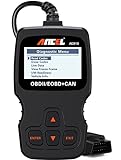
- CEL Doctor: The ANCEL AD310 is one of the best-selling OBD II scanners on the market and is recommended by Scotty Kilmer, a YouTuber and auto mechanic. It can easily determine the cause of the check engine light coming on. After repairing the vehicle's problems, it can quickly read and clear diagnostic trouble codes of emission system, read live data & hard memory data, view freeze frame, I/M monitor readiness and collect vehicle information
- Sturdy and Compact: Equipped with a 2.5 foot cable made of very thick, flexible insulation. It is important to have a sturdy scanner as it can easily fall to the ground when working in a car. The AD310 OBD2 scanner is a well-constructed mechanic tool with a sleek design. It weighs 12 ounces and measures 8.9 x 6.9 x 1.4 inches. Thanks to its compact design and light weight, transporting the device is not a problem. The buttons are clearly labelled and the screen is large and displays results clearly
- Accurate Fast and Easy to Use: The AD310 scanner can help you or your mechanic understand if your car is in good condition, provides exceptionally accurate and fast results, reads and clears engine trouble emission codes in seconds after you fixed the problem. This device will let you know immediately and fix the problem right away without any car knowledge. No need for batteries or a charger, get power directly from the OBDII Data Link Connector in your vehicle
- OBDII Protocols and Car Compatibility: Many cheap scan tools do not really support all OBD2 protocols. AD310 scanner as it can support all OBDII protocols such as KWP2000, J1850 VPW, ISO9141, J1850 PWM and CAN. This device also has extensive vehicle compatibility with 1996 US-based, 2000 EU-based and Asian cars, light trucks, SUVs, as well as newer OBD2 and CAN vehicles both domestic and foreign. Pls confirm with our customer service whether it is compatible with your vehicle before purchasing
- Home Necessity and Worthy to Own: This is an excellent code reader to travel or home with as it weighs less and it is compact in design. You can easily slide it in your backpack as you head to the garage, or put it on the dashboard, this will be a great fit for you. The AD310 is not only portable, but also accurate and fast in performance. Moreover, it covers various car brands and is suitable for people who just need a code reader to check their car

- 【Diagnose Check Engine Light in Seconds – No Mechanic Needed】The FOXWELL NT301 OBD2 scanner instantly reads & clears engine fault codes (DTCs) with one click. Simply plug into the 16-pin DLC port, turn ignition on, and get accurate results within seconds—No prior car knowledge required. Save hundreds on dealership fees by knowing exactly what’s wrong before you visit a shop. The #1 choice car scanner for DIYers and car owners who want to take control of their vehicle’s health
- 【Clear & Reset CEL with Confidence】Unlike cheap code readers that just erase codes temporarily, NT301 works like all professional vehicle code readers: It clears the check engine light only after you’ve fixed the underlying issue. If the problem isn’t fully repaired, the fault code will reappear. So you’ll never get a false pass. Use the foxwell scanner to verify your repair work and drive with peace of mind
- 【Sm-og Check Helper – Know Your Pass/Fail Status Before the Test】With dedicated one-click I/M readiness hotkeys and a simple Red-Yellow-Green LED indicator, you’ll instantly know if your vehicle is ready for annual testing. Built-in speaker provides clear audio feedback. No guesswork—just confidence before you head to the test center. One less thing to worry about when inspection day comes
- 【Advanced OBDII Modes – O- 2 Sensor & EVAP Testing】NT301 go beyond basic code reading with enhanced OBD2 modes. Run an EVAP system check to assess fuel tank condition, and use the O- 2 sensor test to optimize air-fuel ratio, boosting fuel economy, cutting em- issions, and saving you money at the pump. The code reader for cars and trucks is like having a mini em-issions lab in your glove box
- 【Live Data Graphing – Spot Engine Issues in Real Time】View and log live sensor data in easy-to-read graphs with this OBD2 scanner diagnostic tool. Monitor ox- ygen sensors, fuel trims, coolant temperature, RPM, and more to spot suspicious values instantly. This obd scanner gives you professional-grade insight without the pro price tag—a feature you won’t find on basic $20 car code readers


- Understand Your Check Engine Light – The ANCEL AD410 OBD2 scanner helps everyday drivers quickly read and clear engine-related fault codes, view code definitions, and understand why the check engine light is on before visiting a repair shop. With 42,000+ built-in DTC lookups, this car code reader helps reduce guesswork and makes basic vehicle diagnostics easier for beginners and DIY users
- Full OBD2 Diagnostics Made Simple – More than a basic engine code reader, this OBD2 scanner diagnostic tool supports key OBDII functions including reading/clearing codes, live data, freeze frame, I/M readiness, O2 sensor test, EVAP test, vehicle information, and MIL status. It helps you check your car’s condition, verify repairs after the issue is fixed, and communicate with mechanics more confidently
- Live Date & Real-time Vehicle Insights – View real-time engine data such as RPM, coolant temperature, fuel trim, oxygen sensor readings, and other available OBD2 parameters directly on the screen. These live data readings help you better understand how your vehicle is running, spot abnormal patterns, and make more informed repair decisions instead of relying only on a warning light
- Smog Check Readiness At A Glance – Use the I/M readiness function before a smog check or emissions inspection to see whether your vehicle’s monitors are ready. This OBD2 code scanner helps you confirm if recent repairs have brought the system back to a ready state, reducing the chance of failed inspections, retests, wasted trips, and unnecessary inspection fees
- Works With Most OBD2 Vehicles – Compatible with most 1996 and newer U.S.-based OBD2 cars, SUVs, and light trucks, as well as many 2000 and newer EU/Asian OBD2 vehicles. Supports major OBDII protocols including CAN, ISO9141, KWP2000, J1850 VPW, and J1850 PWM. This automotive diagnostic scanner is designed for wide vehicle coverage; please check compatibility with your vehicle before purchase

- Multi-Functions - Practical Multi-Functions OBD2 code reader features built-in OBD2 DTC lookup library, which help you to determine the cause of the engine light, read code, erase code, view freeze frame, I/M ready, vehicle information, data flow, real-time curve, get vehicle speed information, calculate load value, engine coolant temperature, get engine speed.
- Wide Capability - Supports 9 protocols compatible with most 1996 US-Based, 2000 EU-Based and Asian cars, and newer OBD II & CAN domestic or import vehicles. Supports 6 languages - English,German, Dutch, Spanish, French, Italian.
- 2.8" LCD Display - Designed with a clear display 2.8" Large LCD screen - white backlight and contrast adjustment. No need any battery or charger, OBD reader gets the power directly from your vehicle through the OBDII Data Link Connector.
- Compact Design - Car diagnostic scanner is equipped with a 2.5 feet long cable and made of a very thick flexible insulator.There are 6 buttons on OBD2 Scanner:scroll up/down,enter/exit and buttons that quick query VIN vehicle number& the DTC fault code.
- ABS / Airbag codes NOT Supported - It is able to read and clear check engine information which is part of OBDII system, but it cannot work with non-OBDII systems, including ABS / Airbag / Oil Service Light, etc.
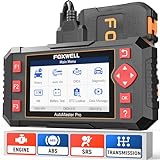
- [Easy to Use—Work Out of the Box] + [FOXWELL 2026 New Version] FOXWELL NT604 Elite scan tool is the 2026 new version from FOXWELL, designed for car owners who want to figure out the cause of issues before fixing car problems by scanning common systems like ABS, SRS, engine, and transmission. The NT604 Elite obd2 scanner diagnostic tool comes with the latest software—no need to waste time downloading software first. Plug the scanner into the OBDII port with OBDII cable to start the diagnosis.
- [Affordable] + [Reliable Car Health Monitor] Will you be confused what happens when the warning light of ABS/SRS/transmission/check engine flashes? Instead of taking your cars to dealership, this FOXWELL scanner will help you do a thorough scanning and detection for your cars and pinpoint the root cause. Note:The device is a diagnostic tool, not a repair tool. To turn off a warning light, you must first physically repair the issue causing it. Only then can the scanner be used to clear the corresponding fault code.
- [5 in 1 Car Diagnostic Scanner] Compared with obd scanners (50-100), NT604 Elite code scanner not only includes their OBDII diagnosis but also serves as ABS/SRS scanner, transmission and check engine code reader. When it’s an odb2 scanner, you can use it to check if your car is ready for annual test through I/M readiness menu. In addition, live data stream, built-in DTC library, data play back and print, all these features are a big plus for it. Note: doesn't support maintenance functions like reset or relearn. For the SRS system, NT604 Elite can read and clear common fault codes not caused by a crash, but crash/collision data cannot be cleared.
- [Fantastic AUTOVIN] + [No extra software fee] Through the AUTOVIN menu, this NT604 Elite car scanner allows you to get your V-IN and vehicle info rapidly, no need to take time to find your V-IN and input one by one. What's more, the NT604 Elite ABS SRS scanner supports 60+ car brands from worldwide (America/Asia/Europe). You don’t need to pay extra software fee. AUTOVIN may not work on some older vehicles or certain vehicle brands. If AUTOVIN fails, please input the vin code manually or go to the Diagnostic Menu to select your vehicle model.
- [Solid protective case KO plastic carrying bag] + [Lifetime update] Almost all same price-level car scanner diagnostic tool only offers plastic bag to hold the scanner.However, NT604 Elite automotive scanner is equipped with solid protective case, preventing your obd2 scanner from damage. Then you don’t need to pay extra money to buy a solid toolbox.
This product presentation was made with AAWP plugin.