
NHTSA ID Number: 10205932
Manufacturer Communication Number: Subaru TechTips
Summary
Special edition, transfer clutch system diagnostics consolidated.
ARTICLES CONTAINED IN THIS ISSUE
Click on a title below to jump to the article.
Click the date located in the footer to return to page 1.
CODE APPENDIXES…………………………… PAGE
(01) Diagnostic Trouble Chart …………………. 3
(02) Appendix A: How to Enter/Exit Front .
Wheel Drive (FWD) mode using
the SSM4…………………………………………..4
(03) Appendix B: Setting up – Transfer Clutch
Pressure test ……………………………………6
(04) Appendix C: Disassembly and .
Identification…………………………………….9
(05) Appendix D: Transfer Clutch, Transfer .
Reduction Gear Shaft, and Rear Drive .
Shaft Inspection………………………………10
(06) Appendix E: Installed Height .
Measurements and Installation
Press Etiquette and Craftsmanship .
Damage…………………………………………..13
1 Affected Product
Vehicle
1 Associated Document
Manufacturer Communications
TIPS_SE_Dec2021
Transfer Clutch System Diagnostics Consolidated Special Edition Newsletter
MC-10205932-0001.pdf 5591.789KB
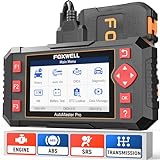
- [Easy to Use—Work Out of the Box] + [FOXWELL 2026 New Version] FOXWELL NT604 Elite scan tool is the 2026 new version from FOXWELL, designed for car owners who want to figure out the cause of issues before fixing car problems by scanning common systems like ABS, SRS, engine, and transmission. The NT604 Elite obd2 scanner diagnostic tool comes with the latest software—no need to waste time downloading software first. Plug the scanner into the OBDII port with OBDII cable to start the diagnosis.
- [Affordable] + [Reliable Car Health Monitor] Will you be confused what happens when the warning light of ABS/SRS/transmission/check engine flashes? Instead of taking your cars to dealership, this FOXWELL scanner will help you do a thorough scanning and detection for your cars and pinpoint the root cause. Note:The device is a diagnostic tool, not a repair tool. To turn off a warning light, you must first physically repair the issue causing it. Only then can the scanner be used to clear the corresponding fault code.
- [5 in 1 Car Diagnostic Scanner] Compared with obd scanners (50-100), NT604 Elite code scanner not only includes their OBDII diagnosis but also serves as ABS/SRS scanner, transmission and check engine code reader. When it’s an odb2 scanner, you can use it to check if your car is ready for annual test through I/M readiness menu. In addition, live data stream, built-in DTC library, data play back and print, all these features are a big plus for it. Note: doesn't support maintenance functions like reset or relearn. For the SRS system, NT604 Elite can read and clear common fault codes not caused by a crash, but crash/collision data cannot be cleared.
- [Fantastic AUTOVIN] + [No extra software fee] Through the AUTOVIN menu, this NT604 Elite car scanner allows you to get your V-IN and vehicle info rapidly, no need to take time to find your V-IN and input one by one. What's more, the NT604 Elite ABS SRS scanner supports 60+ car brands from worldwide (America/Asia/Europe). You don’t need to pay extra software fee. AUTOVIN may not work on some older vehicles or certain vehicle brands. If AUTOVIN fails, please input the vin code manually or go to the Diagnostic Menu to select your vehicle model.
- [Solid protective case KO plastic carrying bag] + [Lifetime update] Almost all same price-level car scanner diagnostic tool only offers plastic bag to hold the scanner.However, NT604 Elite automotive scanner is equipped with solid protective case, preventing your obd2 scanner from damage. Then you don’t need to pay extra money to buy a solid toolbox.

- 【Reset ABS/SRS/Transmission/Engine Lights】 More than an check engine code reader, OBDMATE OM901 obd2 scanner performs comprehensive diagnostics for the 4 most-used systems (ABS/SRS/Engine/Transmission). It quickly clears fault codes, turns off warning lights, read data stream and auto VIN.
- 【3.5" Handheld Scanner with 4 System Diagnose】 3.5" Super large TFT screen equipped displays an intuitive menu and clear readings of various sensors from ABS, SRS, ECM and TCM
 systems. It arrived with a silicone protective case and hard-shell carrying case, ensuring long-lived durability and drop resistance. The car diagnostic tool is plug-to-play designed, plug it and get diagnosis started without any batteries or updates required.
 - 【One-Click I/M Readines&Full OBD2 Functions】 Press F1 to get an intuitive corloured form about whether various emissions-related systems on the vehicle are operating properly. Help you get smog-check ready quickly. OM901 car scanner supports all essential OBD2 functions you need: read & clear codes, view freeze frame, read I/M readiness, retrieve VIN, live data stream (with graphing display), O2 sensor test, onboard monitoring mode, and EVAP leak test.
- 【Battery Voltage Check&DLC Pin Test】 It allows you to monitor battery health by testing current battery voltage. Plus, this obd2 diagnostic tool features DLC 16-PIN test to check current voltage of every pin.
- 【Automotive Scanner Diagnostic Kit】 The package comes with 1 car scanner, 1 USB-type c cable, 1 hard storage bag and 1 user manual(en). Free to update without any hidden fees. 5 languanges available in setting including English, French, Italian, German and Espanish. Valuable and Portable, making it a great tool kit for car owners, DIY enthusiasts, and professional mechanics.
 systems. It arrived with a silicone protective case and hard-shell carrying case, ensuring long-lived durability and drop resistance. The car diagnostic tool is plug-to-play designed, plug it and get diagnosis started without any
- [Diagnose Like a Pro] BlueDriver Pro is a professional OBD2 scanner and diagnostic tool that helps you scan, understand, and clear vehicle trouble codes with confidence. Turn your phone into a powerful car diagnostic scanner—no guesswork, no unnecessary repairs.
- [Read and Clear More Codes Than Ever] Read and clear more codes than basic car code readers. Access enhanced diagnostics for Check Engine, ABS, SRS, Airbag, TPMS, Transmission.
- [Verified Fixes and Real-Time Data] Get unlimited, technician-verified repair reports matched to your VIN, with definitions, causes, and confirmed fixes. Monitor live vehicle data as you drive, view freeze frames, check smog readiness, and analyze Mode 6 test results.
- [Wireless & Bluetooth Enabled] - Say goodbye to wires. BlueDriver connects with Bluetooth via your phone/tablet to a sensor that plugs into your car's OBDII port. Get all of the capabilities of an expensive code reader & scan tool without any annoying wires.
- [Broad Make & Model Coverage] Strong support for GM, Ford, Stellantis (RAM, Jeep, Chrysler), Toyota, Honda, Nissan, Mazda, Subaru, Hyundai, Mercedes-Benz, BMW, and VW.
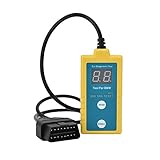
- ✔️【Professional SRS Reset for 1994-2003 BMW】 Designed specifically for classic BMW models (1994-2003). This B800 scanner reads & clears SRS airbag fault codes, turns off the warning light, and saves you a costly dealer visit. Confirmed compatible with: E36, E46 (EXCEPT 2001 330i), E34, E38, E39, Z3, and X5 (E53). NOT compatible with any BMW built before 1994 or after 2003.
- ✔️【Important: Two Different Connection Ports – Read Before Use】 To avoid “not working” issues, please note: For 1994–2000 BMWs (most E36, E34, Z3, early E39), the SRS diagnostic port is a round 20-pin connector under the hood. You MUST use the included 16-pin to 20-pin adapter cable. For 2000–2003 models (late E46, E39, X5), use the standard OBD-II port inside the cabin. Incorrect connection is the #1 reason for “incompatibility” reports.
- ✔️【Read & Clear Fault Codes in Minutes】 Quickly diagnose why your SRS light is on. The scanner accurately reads fault codes from airbag and seatbelt pretensioner systems. With one button press, clear the codes and reset the SRS warning light in seconds. No expensive dealer tools needed.
- ✔️【User-Friendly for DIYers – No Mechanic Required】 Easy operation with an intuitive button layout: ‘Enter’ to confirm, ‘Scroll’ to navigate. The clear LCD screen shows results instantly. Includes a step-by-step manual (revised for clarity) to guide you through the entire reset process.
- ✔️【Reliable Support with 1-Year Warranty】 We stand behind the quality of our B800 scanner. It comes with a 1-Year Hassle-Free Warranty. If you have any questions or need support, please contact us with your Order ID, and our dedicated team will assist you promptly.
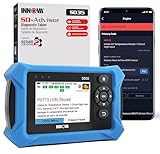
- OBD2 SCANNER FOR ALL SYSTEMS – The INNOVA SD35 is a tablet-based OBD2 scanner designed for advanced diagnostics. Read and clear check engine light, ABS, SRS, and TPMS codes, plus test your car battery and alternator to prevent unexpected failures. Vehicle coverage may vary. Please use Innova’s Coverage Checker to verify compatibility.
- ALL-SYSTEM DIAGNOSTICS & LIVE DATA – Unlike basic code readers, this OBD2 scanner for all vehicles scans engine, transmission, ABS, SRS, and more. Get real-time live data, including RPM, fuel trims, temperature readings, and oxygen sensor performance.
- OBD2 TABLET WITH USER-FRIENDLY INTERFACE – This automotive scan tool features a high-resolution display, making vehicle diagnostics faster and easier.
- ADVANCED TPMS, OIL RESET & SERVICE FUNCTIONS – Perform TPMS sensor checks, oil light reset, and other service resets with ease This professional diagnostic tool provides comprehensive vehicle maintenance capabilities in one device.
- WIDE VEHICLE COVERAGE (1996 & NEWER CARS & TRUCKS) – This OBD2 scanner Bluetooth tablet is compatible with Toyota, Ford, Honda, Chevrolet, Nissan, Dodge, and more. However, feature coverage may vary. Please use Innova's Coverage Checker to verify coverage.
SEOCONTENT-START
Subaru Service and Technical Support Line Newsletter The Subaru TechTIPS newsletter is intended for use by professional Technicians ONLY. Articles are written to inform those Technicians of conditions that may occur in some vehicles, or to provide information that could assist in the proper servicing of the vehicle. Properly trained Technicians have the equipment, tools, safety instructions, and know-how to do the job correctly and safely. If a condition is described, DO NOT assume that your vehicle has or will have that condition. Impreza, Legacy, Justy, Loyale, Outback, Forester, Subaru SVX, WRX, WRX STI, Baja, Tribeca, BRZ, XV Crosstrek and “Quality Driven” are Registered Trademarks. ISO 14001 is the international standard for excellence in Environmental Management Systems. Please recycle or dispose of automotive products in a manner that is friendly to our environment and in accordance with all local, state and federal laws and regulations. CAUTION: VEHICLE SERVICING PERFORMED BY UNTRAINED PERSONS COULD RESULT IN SERIOUS INJURY TO THOSE PERSONS OR TO OTHERS. SUBARU OF AMERICA, INC. IS ISO 14001 COMPLIANT The Subaru AWD system is a staple of our brand. Identifying a concern and addressing it correctly the first time is critical to servicing the vehicle right the first time. There have been many TechTIPs and service bulletins on this system in the past. This Special edition TechTIP will focus on the CVT transfer clutch system; both the TR690 and TR580. The document will help you determine if the concern is transfer clutch related or not. The transfer clutch unit is located at the rear of the CVT assembly in the extension housing. This system is considered serviceable on all CVT assemblies as per SOA Claims Policies and Procedures as well as shown in TSB 16-107-17R (multi-plate clutch system). Technicians repairing this area should have completed the CVT Web Based Training and Instructor Led Training to make this repair and have a strong understanding of transmission theory. Always duplicate the customer’s concern before making any repairs. The tires are a major component in the transfer clutch system. The transfer clutch applies power to the rear wheels to maintain traction. Originally posted in the December 2010 TechTIPs, the tire circumference difference should be no more than 6mm or ¼” of each other. This measurement is different than tread depth. This measurement should be made with all the tires at an equal pressure as found in the door jamb safety plate. If a tire is deformed or severely worn, it can be smaller than the opposing tire. This could result in transfer clutch damage. Tires that are mixed brands, size or even mismatched models can also potentially cause this concern. It is recommended to use a cloth tape measure to make this ©2021 Subaru of America, Inc. All rights reserved. CONTINUED ON THE NEXT PAGE home Click on a title below to jump to the article. Click the date located in the footer to return to page 1. SPECIAL EDITION Transfer Clutch System Diagnostics Consolidated Home Special Edition TechTIPS Page 1 of 16 measurement; typically, 120” in total length. A string can be substituted for the cloth tape measure and then marked and measured on the ground in a straight line if the string has no deflection (stretch). Be sure all tires match in terms of brand and type as even tires from the same brand listed as the same size can have some variation in circumference. A tread pattern difference can interfere with the system as well. All tires should have the same pattern. As an example, an Ascent with factory Falken Ziex tires and one or two Falken WildPeak replacement tires of the same size could experience a binding condition. Moving into the dianostic flow chart, the Technician will need the Subaru Select Monitor as well as the proper transmission pressure gauge. Avoid using aftermarket scanners and incorrect tools for the job. The secondary pressure gauge ST18801AA000 is not appropriate to measure transfer clutch pressure. This gauge will not provide enough detail to see a concern with the system. The proper gauge is displayed in Transmission/Transfer clutch pressure test and is typically ST498575400; the adapters required will vary per vehicle. Always follow the diagnostic steps outlined in STIS. It is good practice to document results on the repair order. There will be no confusion or repeat testing if the Technician needs to contact Techline. Please review Appendix B for Transfer clutch pressure testing. The transfer clutch pressure solenoid control is measured in two ways on Subaru vehicles. The older method is displayed on the SSM as Transfer Duty Ratio in a percentage. These vehicles will have the Technician raise the accelerator pedal opening angle until the Transfer Duty Ratio displays 60% and then read the gauge attached to the transmission. The newer method is displayed as AWD Sol Set Current in milliamps. It requires depressing the accelerator pedal until the current displayed is 600ma, then observing the gauge attached to the transmission. Special care should be taken when performing the test so it is done correctly. These tests are similar and can be easily mistaken or inaccurate. In addition, these tests should be performed at the CVT fluid temperatures specified on STIS, 60 – 80ºC (140 – 176ºF). Failure to perform testing correctly could lead to misdiagnosis. CONTINUED ON THE NEXT PAGE Special Edition TechTIPS Page 2 of 16 01 DIAGNOSTIC TROUBLE CHART CONTINUED ON THE NEXT PAGE Special Edition TechTIPS Page 3 of 16 02 APPENDIX A: HOW TO ENTER/EXIT FRONT WHEEL DRIVE (FWD) MODE USING THE SSM4 Following the example outlined below will help guide Technicians on the proper way to turn off the All Wheel Drive (AWD) system and enter FWD mode for diagnostic purposes. The example shown here is a TR690 CVT, and is the same for a TR580 CVT. The Subaru Select Monitor 3 will look similar and operate the same for 2014 and older CVT models. This mode will need to be activated in the vehicle while stationary, Key On Engine Off (KOEO). Once the SSM is connected to the vehicle, select Diagnosis -> Each System -> Transmission. CONTINUED ON THE NEXT PAGE Special Edition TechTIPS Page 4 of 16 APPENDIX A: HOW TO ENTER/EXIT FRONT WHEEL DRIVE (FWD) MODE USING THE SSM4 (CONTINUED) 02 The SSM will prompt the Technician to confirm the vehicle is stationary, and the ignition switch is on. Select OK. The SSM will now prompt the change in drive mode. Select Yes. The vehicle will now “ding”, and warn the operator on the combination meter of the change to the drive mode as shown below. The yellow warnings indicate the AWD system is disabled. Now start the vehicle and continue through the diagnostic trouble chart. When diagnostics are complete, the vehicle must re-enter AWD mode. Complete the same mode selection in Work Support to complete this. CONTINUED ON THE NEXT PAGE Special Edition TechTIPS Page 5 of 16 CONTINUED ON THE NEXT PAGE 03 APPENDIX B: SETTING UP TRANSFER CLUTCH PRESSURE TEST This Appendix will cover the testing of the transfer clutch pressure. Transfer clutch pressure is controlled by the transfer clutch solenoid inside the valve body. It is important to make this measurement during testing because if the solenoid has failed; the pressure could be zero or extremely high depending on the failure. First set the vehicle up safely on the lift. Prepare the scan tool for use by extending the cords and connecting to the vehicle’s OBD port. This measurement will require the vehicle to be warmed up. Be extremely careful working around the exhaust and hot transmission fluid. Some transmissions will require a special adapter tool to gain access to the transfer clutch pressure testing port. These are essential tools. If the retailer does not have them, they are available from the Special Tool and Equipment site on Subarunet. Next, prepare the Transfer clutch pressure gauge. Do not drop the glass-faced gauge, as this will cause damage. Do not use too small of a gauge, as doing so will ruin it’s calibration. Each retailer was provided a pressure gauge that goes to 300 or 600 PSI. Transfer clutch pressure is significantly less pressure than secondary line pressure. The correctly scaled gauge will need to be used to perform this test and provide an accurate reading. Here are some pictures of acceptable gauges. The gauge on the LEFT is the correct gauge. The gauge on the RIGHT is for secondary pressure and must NOT be used for this test. Special Edition TechTIPS Page 6 of 16 CONTINUED ON THE NEXT PAGE 03 APPENDIX B: SETTING UP TRANSFER CLUTCH PRESSURE TEST (CONTINUED) Here are pictures of the transfer clutch pressure gauge set up with the required adapters to achieve installation on a TR690. Insert the hex bit into the correct CVT access plug. Using the extension, remove the plug. Be careful of hot CVT fluid. The TR580 is similar depending on what vehicle it is installed in. Always refer to STIS->Transmission->Transfer clutch pressure test, for the required vehicle tools. Remember, the copper sealing washers are one time use and cannot be reused. Depending on the gauge being used, there may be an additional hydraulic adapter. Once the gauge is properly installed, start the engine, and check for leaks. Next, warm the CVT fluid up to 60-80C (140-176F). Connect the SSM scan tool and begin to document pressures on the repair order. The air conditioning system should be turned off. X-mode should be turned off. Pre-collision braking should be turned off. Always chock the wheels for safety. Special Edition TechTIPS Page 7 of 16 CONTINUED ON THE NEXT PAGE 03 APPENDIX B: SETTING UP TRANSFER CLUTCH PRESSURE TEST (CONTINUED) On the SSM4, enter Each System ->Transmission ->Data monitor. Select ALL the available PIDs to the right side of the screen. Activate Data Monitor. The transmission fluid should be between 140F and 176F. Accelerator Pedal Position will need to be displayed and the vehicle specific transfer clutch PID Transfer Duty Ratio OR AWD Sol Set Current (covered on page 1 of this document). The transfer clutch pressure idling in park should be zero. Move the selector to Drive with the foot brake firmly applied. Be sure all other personnel are safely away from the vehicle. The parking brake cannot be set for this test. The the wheel chocks are for safety. The test can be done in the air if needed, but it is important to keep brake pedal pressure applied during the whole test. Watch the Transfer Clutch Solenoid PID. With the brake pedal applied, in Drive, slowly press on the accelerator pedal until the duty cycle is at 60% or 600mA. At the desired point, observe the pressure gauge and document the result. Example A: 600mA is reached on a 2020 outback XT and the transfer clutch pressure is 75psi; this passes the test as per specifications according to STIS. Example B: select Drive on a 2020 outback XT and the transfer clutch pressure instantly reaches 200 psi and will not go down until Park is selected. This is a failed test. Lastly, perform the same test in Drive, at WOT (wide open throttle). Keep pressure on the brake and apply the throttle quickly and hold it just long enough to get a stable reading on the gauge. Be careful not to overheat the CVT fluid. Document the result and review the vehicle specifications on STIS. If the results are within specification, seek authorization to inspect the transfer clutch assembly. Example of the gauge display at 60% duty cycle or 600mA=50-80psi Example of the gauge display at WOT =150-180PSI Special Edition TechTIPS Page 8 of 16 CONTINUED ON THE NEXT PAGE 04 APPENDIX C: DISASSEMBLY AND IDENTIFICATION The transfer clutch system is made of multiple components that look very similar to one another. This section will help identify the components and their relationship to each other. Once the extension housing assembly (22) has been CAREFULLY removed; the rear drive shaft (16) splined into the transfer clutch assembly will now be visible. The clutch pack turns the rear drive shaft drum and shaft to apply power to the rear wheels. The transfer reduction drive gear can be seen, which will typically be stuck into the extension housing. This is normal. It will need to be inspected and clean to be sure no excess sealant gets into the bearing. Next, remove the reduction drive gear shaft (6). This houses the transfer clutch assembly. Set this component to the aside for inspection. Be sure to inspect all roller bearings for debris or physical damage. They should be clean and rotate smoothly. If they are not pressed off the transfer reduction driven gear, the assembly can be reused. The transfer clutches are identified as item number (14). The first component is the snap ring (15). This will be removed to gain access to the selective thickness pressure plate. Beneath that is a series of alternating steels and fictions for a total of twelve plates (six of each), and finally another pressure plate (13). The friction discs should be inspected for heat marks, burnt spots, and missing or patchy areas. These components should be ordered as a selectable set which will be covered in Appendix D. Special Edition TechTIPS Page 9 of 16 04 APPENDIX C: PARTS REMOVAL AND IDENTIFICATION (CONTINUED) Beneath the transfer clutches is the piston assembly. This piston receives the transfer clutch pressure and applies the clutch when power transfer is needed. This assembly should never be coated in any chemical other than CVTF. No transmission grease should be applied. The piston assembly has a special tool to lightly compress it. Only compress the spring (10) enough to remove the snap ring. Full compression will damage the spring and it will need to be replaced. The clutch piston seal (11) should be inspected for wear. The direction of these components should be noted. Be aware that any component marked with a black star ( ) is a one-time use component. If removed or pressed off another component, this is considered used. This includes 1,2,17,18,20, and 23. If the transfer reduction drive gear is replaced, the bearing (2) will need to be replaced along with the three sealing rings (1). Any component with the black circled is a selectable component and STIS will need be consulted on what measurements to make (7,13, and 21). APPENDIX D: TRANSFER CLUTCH, TRANSFER REDUCTION GEAR SHAFT, AND REAR DRIVE SHAFT INSPECTION 05 Inspection of the transfer clutch assembly after tear down is critical for fixed right the first time. These are held inside the larger drum like component, (6) on the component image shown in Appendix C. First, measure the transfer clutch clearance. This will require a feeler gauge. This check should be done with an offset gauge for best results. Insert the feeler gauge just under the snap ring starting with the smallest clearance. Pull up on the opposite side of the feeler gauge to help it insert smoothly and parallel to the disc. Always refer to STIS for the proper specifications. This example is from a 2020 Ascent, TR690. Start with the smallest measurement to determine if the end gap is too tight or too small. Ideally it should be near the middle of the specification, in this case 0.7mm – 1.2mm, the ideal measurement is 0.9mm – 1.0mm. The picture shown below on the left is using a 45° feeler gauge and the picture on the right is using a 90° gauge. Both are acceptable and will provide the desired result. If the transfer reduction gear shaft is replaced, this measurement should be made with all new components installed. Then, the desired selectable plate at the top should be ordered. Measure the original selectable plate as a reference when ordering selectable parts. When the reduction gear shaft is new, it is necessary to measure the transfer clutch end gap. This will be done by installing the original bottom selectable plate. Then, install the new transfer clutch pack set in alternating fashion. Finally, install the new selectable pressure plate. Install the snap ring and perform the gap measurement. If the measurement is too tight or too loose, the Technician will need to order a different selectable transfer clutch set. The bottom selectable pressure plate can be replaced if a significant change is needed. Special Edition TechTIPS Page 10 of 16 APPENDIX D: TRANSFER CLUTCH, TRANSFER REDUCTION GEAR SHAFT, AND REAR DRIVE SHAFT INSPECTION (CONTINUED) 05 Next, remove the snap ring. Be sure to use the appropriate tools as this is reusable. The snap ring has storing energy under tension, always have safety glass on and the proper PPE. After the snap ring is removed, start to remove the transfer clutches. Remove the top selectable pressure plate. This plate will need to be measured with a caliper to determine the stack set size. Next, inspect the alternating friction and steel plates until the bottom pressure plate is reached. Remove it and clean the drum. Using a flashlight and fingernail, inspect the inside of the “drum” looking for very tiny teeth marks. This is where the transfer clutches can damage the drum. The red arrows show the first major scoring found. This component is now considered damaged and should be replaced. Special Edition TechTIPS Page 11 of 16 APPENDIX D: TRANSFER CLUTCH, TRANSFER REDUCTION GEAR SHAFT, AND REAR DRIVE SHAFT INSPECTION (CONTINUED) 05 Next, inspect the rear drive shaft hub. This component slides inside the transfer clutches and is turned by the assembly. The transfer clutches can mark the rear drive shaft hub. This component is also considered damaged and should be replaced. Special Edition TechTIPS Page 12 of 16 APPENDIX D: TRANSFER CLUTCH, TRANSFER REDUCTION GEAR SHAFT, AND REAR DRIVE SHAFT INSPECTION (CONTINUED) 05 If the reduction gear shaft or the rear drive shaft are replaced, there are measurements that will need to be done to correct the installed heights of the components. This will ensure the components do not fail prematurely. This will be covered in Appendix E. If the transfer gear reduction shaft is being replaced, it will need to have the bearing pressed off to remove the gear and parking pawl gear. Technicians have called into Techline to report finding rust under the parking pawl and gear assembly. This condition is normal and not detrimental to the operation of the gearset unless there is shaft or spline damage. The rust can be cleared off with a simple brush. Do not use air or pneumatic tools to clean the component. The gear set will need to be transferred to the new components. The gear set should fit smoothly, with a minimal amount of movement. The new bearing is then pressed on until it touches the ledge on the shaft. There may be a minimal amount of slack to allow the parking pawl to mesh. 06 APPENDIX D: INSTALLED HEIGHT MEASUREMENTS AND INSTALLATION When replacing the rear drive shaft or bearing, it is necessary to make the installed height measurements. First, measure down the rear drive shaft center lip. NOTE: it is extremely important to only measure to the center of the drum where there is a machined lip. Below are pictures demonstrating this measurement compared to STIS (A) compared to the measurement made in the shop. Special Edition TechTIPS Page 13 of 16 06 APPENDIX D: INSTALLED HEIGHT MEASUREMENTS AND INSTALLATION (CONTINUED) Shown here is the installed height of the reduction gear shaft measurement. This measurement should be made with the transmission in the upright position and could require multiple special tools. Be extremely careful with the bridge, it should never be dropped. Set the bridge up as shown below for the measurement. The reduction gear shaft should be fully assembled for this measurement. Measure the depth of the case from the bridge. If the caliper is not tall enough to make this measurement, you can use special tool block from the previous step to assist. Remember you will need to add the tool block thickness to the measurement for a total value (B). Special Edition TechTIPS Page 14 of 16 06 APPENDIX D: INSTALLED HEIGHT MEASUREMENTS AND INSTALLATION (CONTINUED) Finally, measure the center height of the reduction gear shaft drum from the bridge tool. Measure down to ONLY the specified landing on the shaft. This machined area is shown below. Once all the measurements have been gathered, complete the provided formula in STIS and select the rear drive shaft shim needed to complete the repair. IMPORTANT REMINDER: all the components should be clean of sealant. There is also an O-ring to seal the extension housing to the rear cover. This O-ring is a one time use component and must always be replaced. Press Etiquette and Craftsmanship Damage: Special Edition TechTIPS Page 15 of 16 06 APPENDIX D: INSTALLED HEIGHT MEASUREMENTS AND INSTALLATION (CONTINUED) Techline has received calls with a common concern of the transfer clutch pack set not fitting under the snap ring in the reduction drive gear shaft (the transfer clutch basket). This concern has been traced back to workmanship error when installing the reduction drive gear shaft bearing. When pressing the bearing on, if excessive force is applied to the component, the drum backing will start to bend in on itself decreasing the amount of space available for clutch packs. When installing the bearing onto the shaft, STIS shows the shaft sitting on the drum surface against the press blocks (right). This can be done by an experienced Technician with strong hydraulic press experience. When the bearing touches the seating surface on the shaft and is fully seated, the hydraulic pressure gauge needle on the press will start to rise. This means the bearing is seated. Applying more pressure to the component will start to cause damage. (Note the gap between the parking pawl gear and the drum shell, if this gap is gone, the component has been damaged.) If the shop press does not have a hydraulic pressure gauge, use a generic press tool to support the shaft as pictured (left). This will protect the drum assembly. Pay close attention to the feel of the press, once the bearing is seated and tension starts to build in the handle, STOP pressing. Special Edition TechTIPS Page 16 of 16
**************************************************************************************************************
SEOCONTENT-END
This product presentation was made with AAWP plugin.